A drain that blocks once may simply need clearing. A drain that blocks again days or weeks later, especially alongside bad smells or wet ground, needs a closer look. Knowing how to spot a collapsed drain can help you act before wastewater backs up into the property, causes damage outside or leaves a more costly repair to deal with.
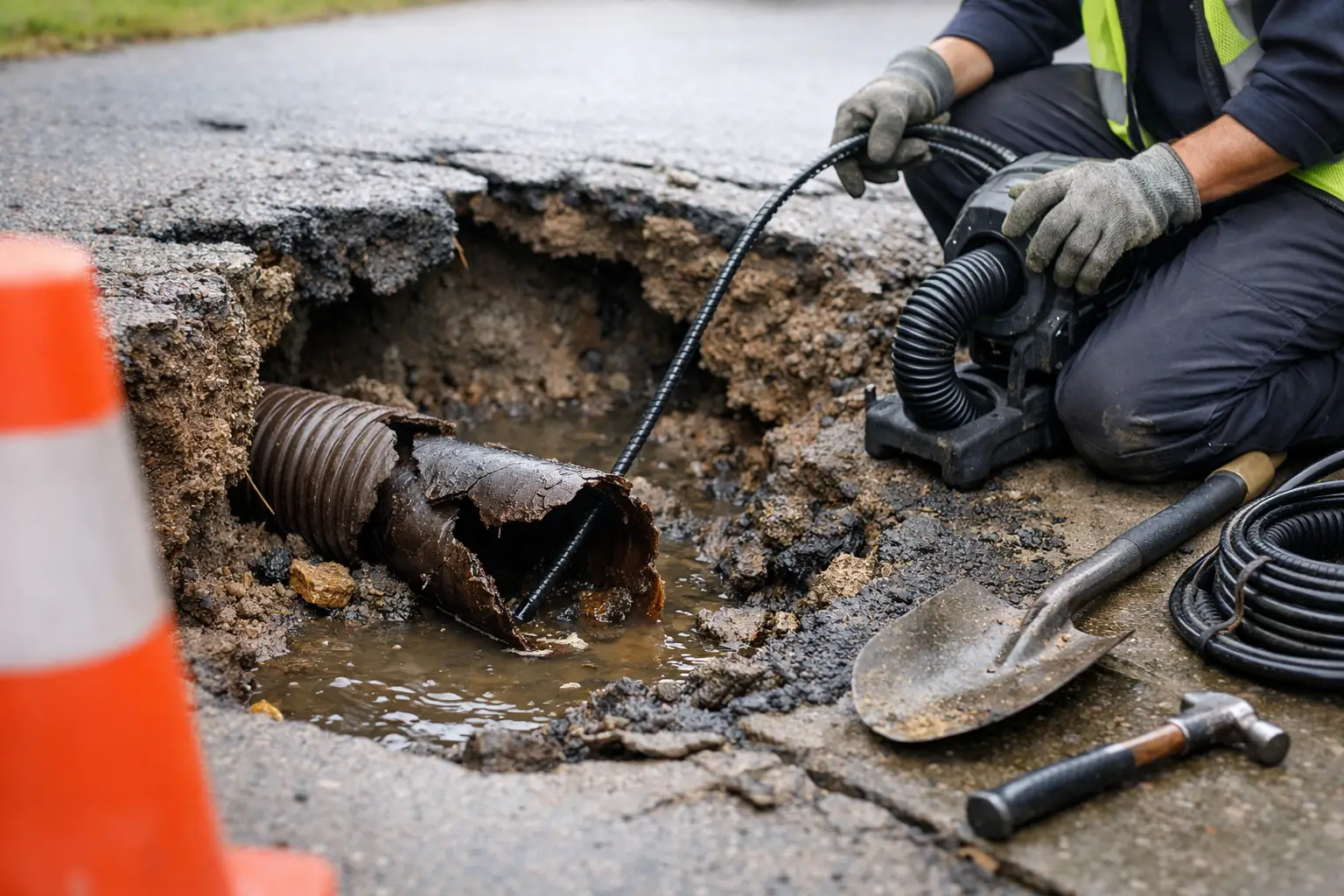
A collapsed drain is not always completely crushed. It may have cracked, shifted out of line, sagged under the ground or lost part of its structure. Any of these faults can restrict flow, catch waste and allow soil to enter the pipe. The problem is underground, so the signs often appear around the property long before anyone can see the damaged section.
How to spot a collapsed drain from everyday warning signs
The clearest sign is a recurring blockage. If a toilet, sink, shower or external gully keeps backing up after it has been cleared, the issue may be more than a build-up of wipes, fat or leaves. Waste can snag on a broken pipe edge, while a displaced joint or partial collapse creates a restriction that ordinary drain cleaning cannot remove for long.
Pay attention to which fittings are affected. One slow basin may point to a local waste pipe issue. However, when several fixtures drain slowly, toilets bubble, or water rises through an outside gully when appliances are running, the fault is more likely to sit further along the drainage run.
Unpleasant odours are another warning. Drain smells can come from a dry trap or a temporary blockage, but a persistent sewage smell outside, near inspection chambers or around a particular part of the garden can indicate a damaged pipe leaking wastewater into the surrounding soil.
Ground movement deserves immediate attention. A dip in paving, a soft patch of lawn, new cracks in a driveway, or a depression around a drain line can develop where escaping water has washed away soil. On older properties across Wolverhampton and the wider West Midlands, ageing clay pipework can be particularly vulnerable to movement, failed joints and root intrusion.
You may also notice that an inspection chamber is repeatedly full when it should be clear, or that the water level falls away unusually slowly after use. This does not prove a collapse on its own, but it is a good reason to investigate rather than keep paying for repeated call-outs.
Signs that call for urgent action
Some drainage problems can be booked in for planned investigation. Others should be treated as urgent, particularly where foul water is involved. Arrange professional help promptly if wastewater is backing up into the house or commercial premises, sewage is surfacing outdoors, a toilet cannot be used, or ground near the suspected drain is visibly sinking.
Keep people and pets away from contaminated water, particularly children. Do not attempt to rod a badly damaged drain yourself. Rods can become stuck, force debris further into the pipe or worsen a weak section. Avoid using strong chemical drain cleaners too. They rarely solve a structural defect and may create a hazard for anyone inspecting the system afterwards.
If the problem is contained to an external gully, reduce water use until the drain has been assessed. That means postponing washing machine loads, long showers and dishwasher cycles where possible. It will not repair the fault, but it may reduce the chance of a full backup while help is on the way.
What causes a drain to collapse?
Drain collapse is usually the result of age, movement or damage rather than one sudden event. Older clay pipes can crack as the ground settles over decades. Plastic pipework may be crushed if it was poorly bedded during installation or if heavy vehicles have passed over an unsuitable area. Excavation work, nearby building projects and tree roots can all shift or damage a drain line.
Roots are a frequent factor but are often misunderstood. Roots normally enter through an existing gap, crack or failed joint in search of moisture. Once inside, they trap paper and waste, creating recurring blockages. Left untreated, the pipe can deteriorate further and eventually deform or collapse.
There is also a difference between a blockage and a collapse. Grease, scale, wipes and foreign objects can obstruct an otherwise sound drain. High-pressure water jetting may clear these effectively. But if the pipe is fractured, displaced or has lost its shape, clearing the blockage only treats the symptom. The debris will likely build up again until the structural fault is repaired.
Why a CCTV drain survey gives a clear answer
The only reliable way to confirm a suspected collapse is to inspect the drain internally. A CCTV drain survey sends a specialist camera through the pipe, allowing the operator to identify the exact location and condition of the defect without guessing or digging up the whole garden.
The footage can show cracks, root ingress, open joints, standing water, displaced sections and complete collapses. It also establishes whether a blockage can be cleared, whether the pipe can be repaired without excavation, or whether a section needs to be dug out and replaced. This diagnosis-led approach matters because two properties can have similar symptoms but need very different work.
For homeowners, a survey provides evidence before agreeing to repairs and can be useful for an insurer where accidental damage or escape of water is involved. Landlords and commercial property managers also benefit from a written record of the fault, particularly when planning works, managing tenant reports or preventing a repeat disruption.
A pre-purchase CCTV survey is worth considering where a property is older, has mature trees, shows signs of damp around external drainage or has had a history of drainage issues. It is far easier to understand the condition of underground pipes before contracts are exchanged than after a hidden fault becomes your responsibility.
Repairing a collapsed drain: the right option depends on the damage
A confirmed defect does not automatically mean a major excavation. If the pipe is still largely intact and the damage is localised, no-dig drain relining may be suitable. This involves installing a resin liner inside the existing pipe to form a new, sealed section. It can be a practical option where access is difficult or where digging would mean lifting a driveway, patio or landscaped area.
Relining is not suitable for every collapse. A pipe that is badly crushed, significantly displaced or missing a section may need excavation and replacement. While this is more disruptive, it is sometimes the only durable fix. A proper assessment should explain the extent of the damage, the access required, the available repair options and the likely cost before work starts.
For recurring root problems, clearing the roots alone is rarely enough. The point where they entered must be sealed through repair or relining, otherwise the roots can return and the cycle begins again. The same applies to repeated blockages caused by a sagging pipe section, often called a belly. Waste settles in the low point until the pipe is corrected.
West Midlands Drainage uses CCTV inspection and professional drain cleaning equipment to identify the root cause before recommending repairs. The aim is straightforward: clear what can be cleared, repair what is damaged and avoid selling unnecessary excavation where a sound no-dig repair will do the job properly.
Do not wait for the drain to fail completely
A partially collapsed drain can still carry some water, which is why it is easy to put off investigating it. But continued use sends more waste through a pipe that may already be holding debris or leaking into the ground. That can turn a manageable repair into internal flooding, damaged paving or a larger excavation.
If you have repeat blockages, foul smells, slow drainage across several fittings or sunken ground near the drain route, treat those signs as a reason to get a clear diagnosis. A prompt CCTV survey replaces guesswork with evidence and gives you a practical route to a lasting repair.