Standing water beside an extension, a waterlogged lawn or overflowing guttering is not just a nuisance. Left unresolved, surface water can saturate foundations, damage paving and leave paths unsafe. This guide to soakaway installation explains what a soakaway does, when it is suitable and why a proper ground test must come before any excavation.
A soakaway is an underground structure that lets clean surface water drain gradually into the surrounding soil. It is commonly used for rainwater from roofs, driveways and patios where a connection to a surface-water sewer is not available or is not the right option. It is not designed for foul water from toilets, sinks or washing machines.
What a soakaway needs to achieve
The job is simple in principle: collect rainwater, hold it temporarily and allow it to infiltrate safely into the ground. Getting that right depends on three things – how much water arrives, how quickly the soil absorbs it and where the soakaway sits in relation to the property.
A small soakaway may handle the downpipes from a garage. A larger system may be required for an extension, a new-build roof or a sizeable paved area. Installing an oversized unit in unsuitable ground still will not solve the problem. Equally, an undersized unit can fill during heavy rain and send water back towards the building.
The preferred drainage route should always be considered first. Depending on the property and local arrangements, surface water may be directed to a watercourse or surface-water sewer. A soakaway is often the practical choice, but it needs to be justified by site conditions rather than chosen as a quick fix.
Start with an infiltration test, not a trench
The most useful first step in any guide to soakaway installation is also the one most often missed: test the ground. A soakaway relies on infiltration. Clay-heavy, compacted or waterlogged ground may drain too slowly to make one viable.
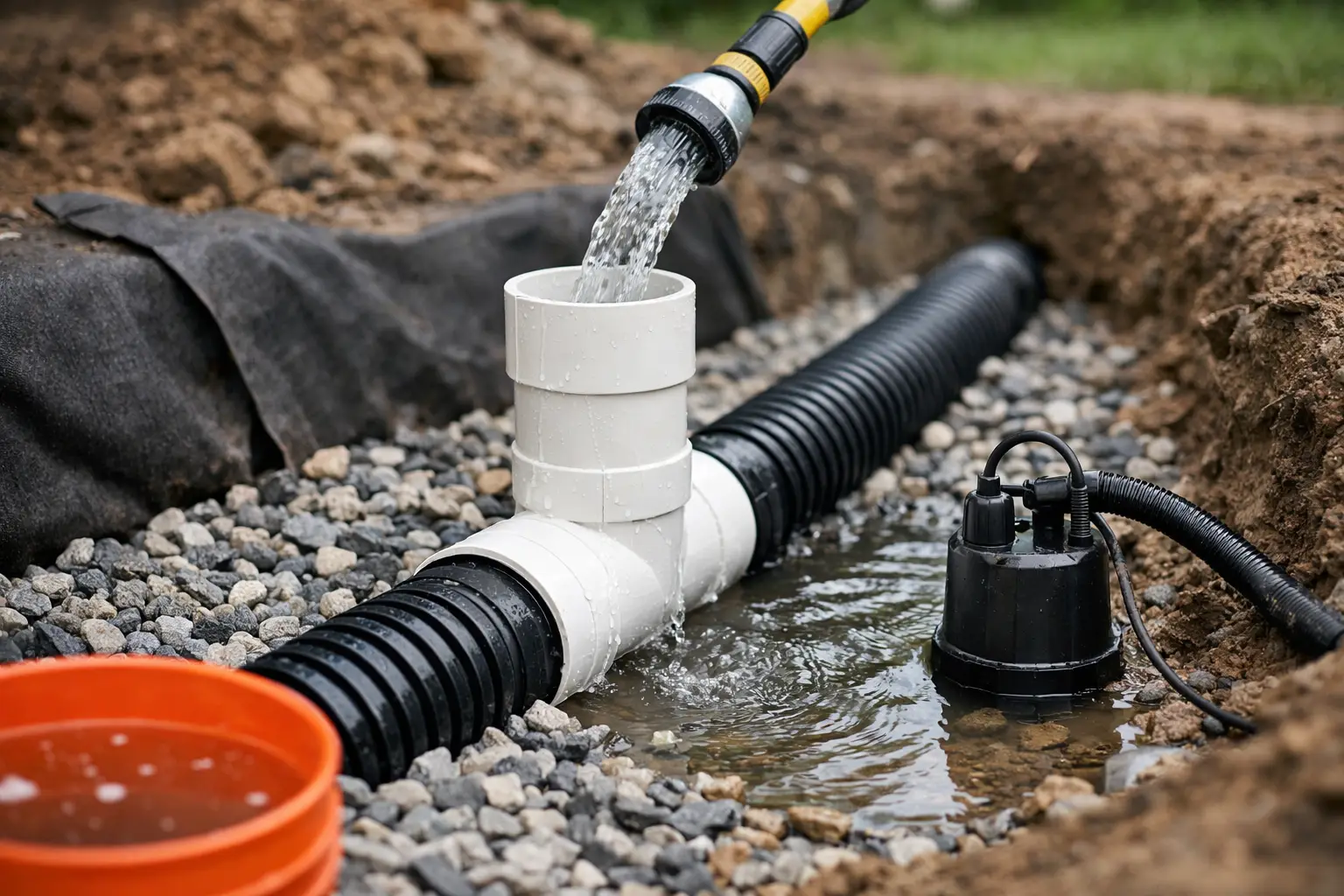
A professional assessment normally follows the principles set out in BRE 365. Test pits are dug at the proposed depth, filled with water and monitored to establish the infiltration rate. More than one test may be needed, especially where soil conditions vary across a plot. Testing should take place at a representative time of year where possible, because dry summer ground can give a misleading result.
The survey should also identify the groundwater level, made ground, buried services and any signs of historic drainage. If groundwater rises close to the base of the proposed soakaway, there may be too little capacity for safe drainage. In some locations, a soakaway simply is not appropriate, and a different surface-water solution will be needed.
Choosing the right position
Location is about protecting the building as well as finding spare space in the garden. A soakaway should generally be at least 5 metres from a building, with the final position based on the ground conditions, foundation depth and the size of the system. It should not be placed beneath a building, where future access and the risk of ground movement become serious issues.
Keep it clear of retaining walls, neighbouring structures and known services. Do not assume the route of an old drain, water pipe or electrical cable from memory. Service checks and careful excavation are essential before work begins.
The finished ground level matters too. Water must flow to the soakaway through correctly graded pipework, without creating low points where silt can settle. On sloping sites, the design needs extra care so discharged water does not migrate back towards foundations or across a neighbour’s land.
Building Regulations requirements, planning conditions and local authority drainage policies can affect the design. This is particularly relevant for new builds, significant extensions and larger hardstanding areas. A competent drainage installer can confirm what applies before work is committed.
Sizing the soakaway properly
Soakaway size is not guessed from the number of crates that fit in a hole. It is calculated from the roof or paved area being drained, the local rainfall allowance and the measured infiltration rate. The slower the soil absorbs water, the more storage volume is required – up to the point where a soakaway is no longer viable.
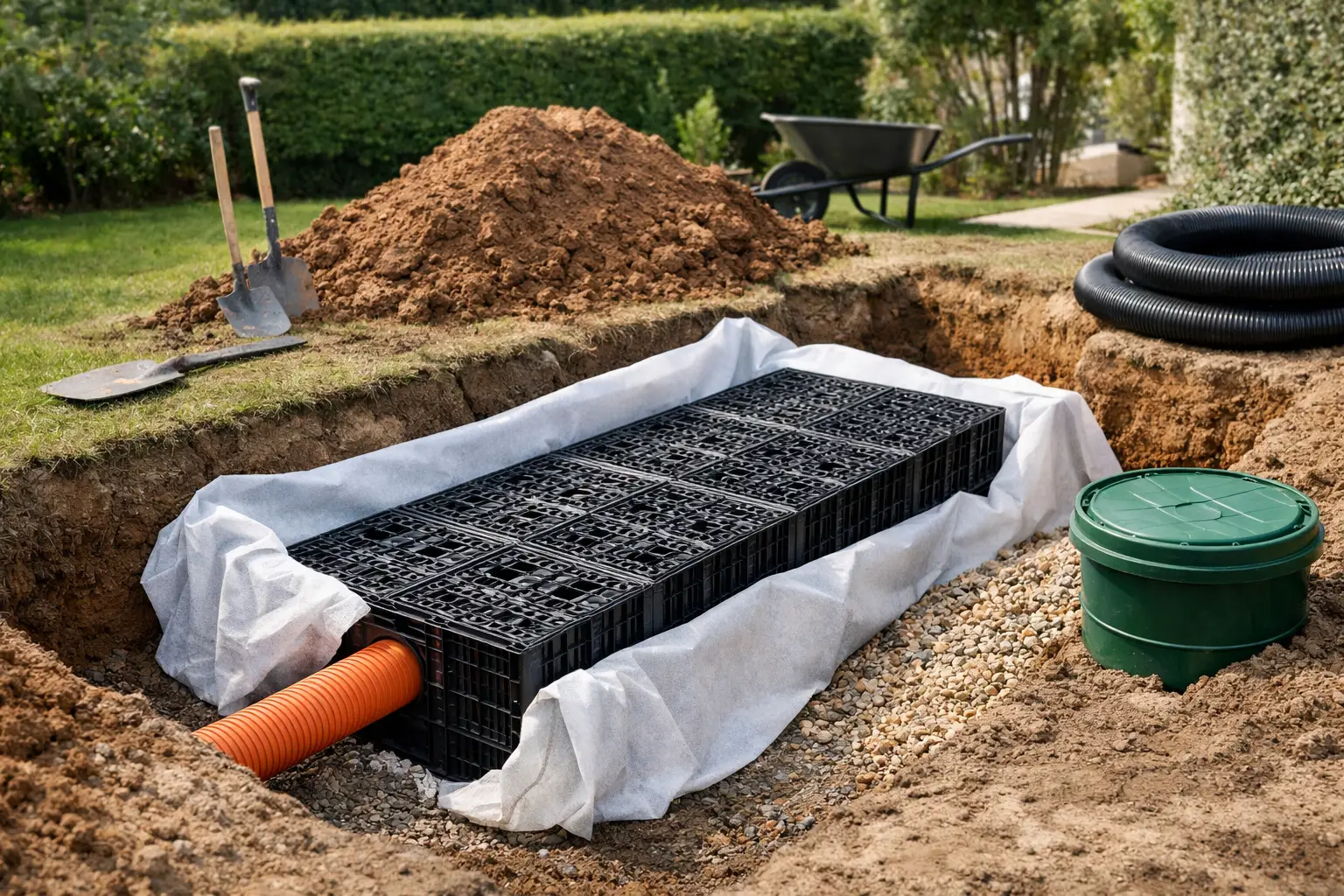
For most domestic projects, the structure will be formed using purpose-made attenuation crates wrapped in permeable geotextile. The crates create a high void volume for temporary water storage, while the membrane prevents surrounding soil from clogging the system. In some circumstances, granular stone-filled soakaways are used, but they provide less usable storage per cubic metre and must still be designed correctly.
The inlet pipe should enter at a suitable level, and the system should include accessible rodding or inspection points where maintenance is likely. Where roof water carries leaves, moss or grit, fit suitable leaf guards and traps upstream. A soakaway that receives a constant supply of debris will lose performance long before its time.
For driveways and parking areas, the water quality matters as much as the volume. Run-off from areas used by vehicles may contain oil, silt and other contaminants. Additional treatment measures may be needed before infiltration, particularly at commercial premises. Clean roof water is usually the more straightforward application.
How a professional installation is carried out
Once the design is agreed, the work should follow a controlled sequence. This prevents damage to the crates and avoids burying problems that will only appear after the first heavy downpour.
The area is excavated to the specified dimensions and depth, with safe excavation practices used throughout. The base is checked for level and prepared in line with the system manufacturer’s requirements. A protective geotextile is then installed around the excavation, with enough overlap to wrap the completed crate structure fully.
Crates are assembled and placed carefully, then connected to the incoming surface-water pipework. Before the structure is wrapped and backfilled, the pipe joints, falls and connection points should be checked. The membrane must not be torn, stretched carelessly or left with gaps that allow fines into the crates.
Backfill is placed in suitable layers around and above the structure. The final surface is reinstated according to its use, whether that is lawn, paving or a driveway. Heavy plant should not pass over the installation unless the design and cover depth allow for it. A soakaway beneath a trafficked area requires a system rated and installed for that load.
Common mistakes that lead to repeat problems
The familiar failure is connecting roof water to a shallow hole filled with rubble and hoping for the best. It may appear to work initially, then clog, flood or settle once the ground becomes saturated. Old rubble can also be unpredictable and may contain materials that should not be buried.
Other avoidable mistakes include running a downpipe into a foul drain, placing the soakaway too close to the house, ignoring clay ground and failing to provide access for maintenance. Another is treating all rainwater alike. A small porch roof and a large extension roof need very different calculations.
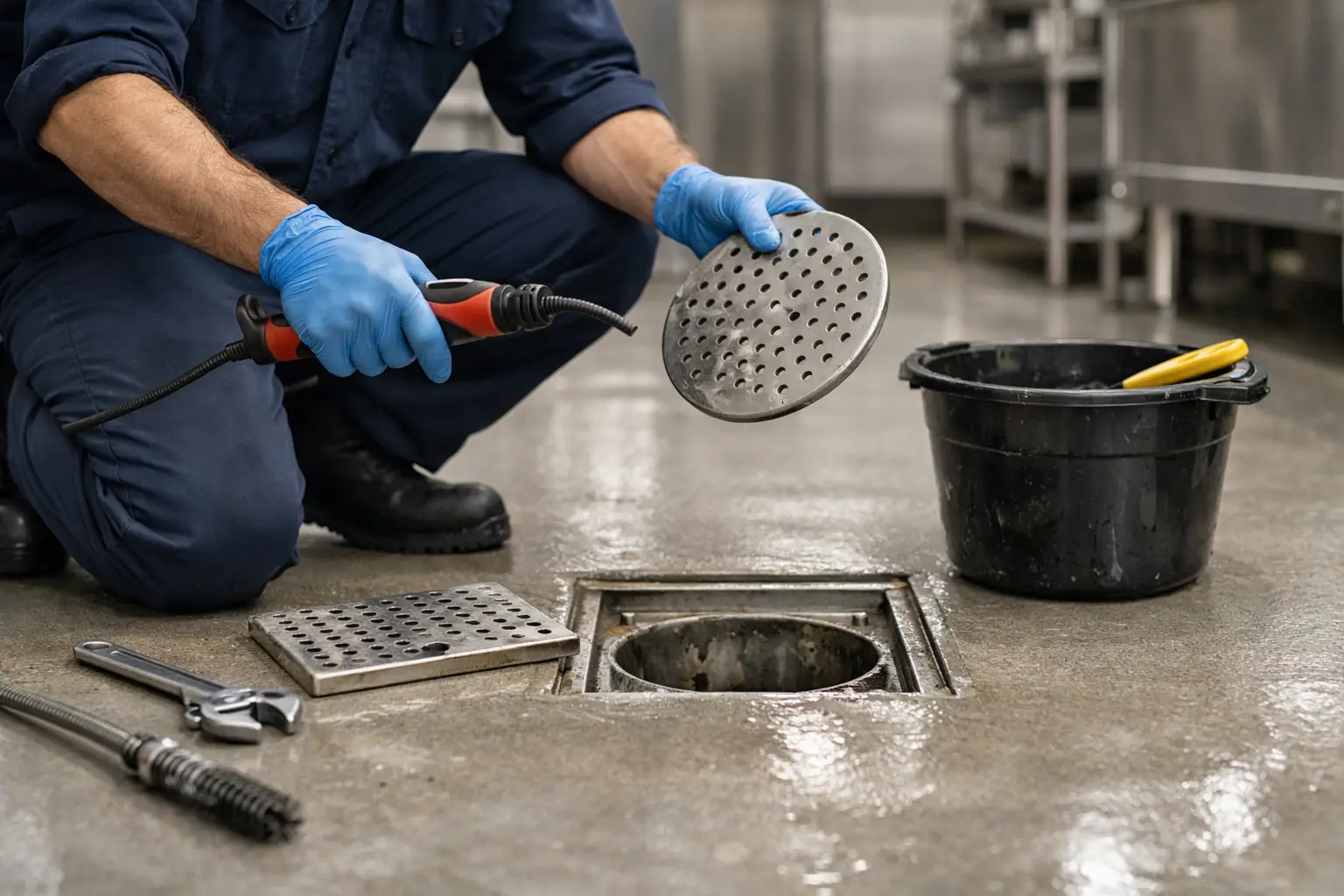
If a soakaway has already been installed but the ground remains wet, the cause may not be the soakaway itself. Blocked gullies, collapsed pipework, a damaged downpipe connection or a drain laid without adequate fall can all produce similar symptoms. CCTV inspection is often the quickest way to establish whether the issue lies in the pipework before excavation starts.
When to call in a drainage specialist
A planned soakaway installation is worth professional input when it serves an extension, new build, commercial site or large paved area. The same applies where water is close to the property, the site has poor-draining ground or there is uncertainty over existing underground drainage.
At West Midlands Drainage, we assess the cause before recommending work, whether that means checking existing pipework with CCTV or designing a new surface-water route. The aim is not to sell the largest system. It is to install a drainage solution that suits the ground, the property and the volume of water it needs to handle.
A well-designed soakaway is rarely noticed once it is in place, which is exactly the point. When the next spell of heavy rain arrives, water should move away from the building quietly, safely and without another emergency call-out.