A drain survey for insurance evidence is often requested after a collapse, recurring blockage, sewage escape or suspected leak has damaged a property. When an insurer asks for proof, a verbal opinion that the drain is “probably damaged” will rarely be enough. They need clear, dated findings that identify what has failed, where it is, and whether the damage is likely to be covered.
For homeowners, landlords and commercial property managers, this can feel like another hurdle at the worst possible time. The right CCTV survey gives you a factual starting point, helps prevent unnecessary excavation, and provides a clear scope for any repair work. It does not guarantee an insurance payout, but it gives the claims handler something solid to assess.
What insurers need from drainage evidence
Insurance policies vary, and the final decision always rests with the insurer. Most will look closely at the cause of the problem, the condition of the pipework before the incident and the resulting damage. A policy may cover accidental damage or an unexpected collapse, for example, while excluding gradual wear, poor installation, lack of maintenance or root ingress that has developed over years.
That is why an effective drain survey report needs more than a short video clip. It should set out the condition of the drainage system in plain English and support its findings with footage and precise observations. The aim is not to overstate the case. It is to document the facts properly.
A useful insurance report will normally include the property address, survey date, drainage route inspected, pipe sizes and materials where identifiable, as well as the location and depth of each defect where this can be established. It should also record the likely issue, such as a displaced joint, fractured pipe, collapse, ingress of roots, scale build-up, deformation or a connection fault.
Photographs or stills taken from the CCTV footage help a claims handler understand the defect quickly. A marked-up drainage plan or location reference is equally valuable, particularly where repairs may affect a driveway, garden, shop floor or shared access route.
When to arrange a drain survey for insurance evidence
The best time is usually as soon as the immediate problem is under control. If wastewater is backing up into the property, the priority is to make the area safe and restore flow. Once the drain has been cleared enough to inspect, a CCTV camera can show whether the blockage was a one-off obstruction or a symptom of structural failure further along the line.
Do not keep arranging repeated drain unblocking visits without investigating a recurring issue. If the same drain blocks every few weeks, there may be a break, a poor fall, root entry or a displaced joint catching debris. Repeated call-outs can cost more than an early survey and may make it harder to show when the underlying damage became apparent.
A survey is also sensible after signs such as a sinkhole or soft ground, persistent foul smells, unexplained damp around external drains, subsidence concerns, rodent activity, slow-draining fixtures across the property, or water appearing around inspection chambers. These symptoms do not always mean the drain is at fault, but they justify a proper diagnosis before repair decisions are made.
For landlords and commercial operators, speed matters even more. A drainage issue can affect tenants, customers, hygiene standards and day-to-day trading. Clear evidence allows you to report the issue quickly, arrange temporary measures where needed and make informed decisions about permanent work.
How a CCTV survey builds the evidence
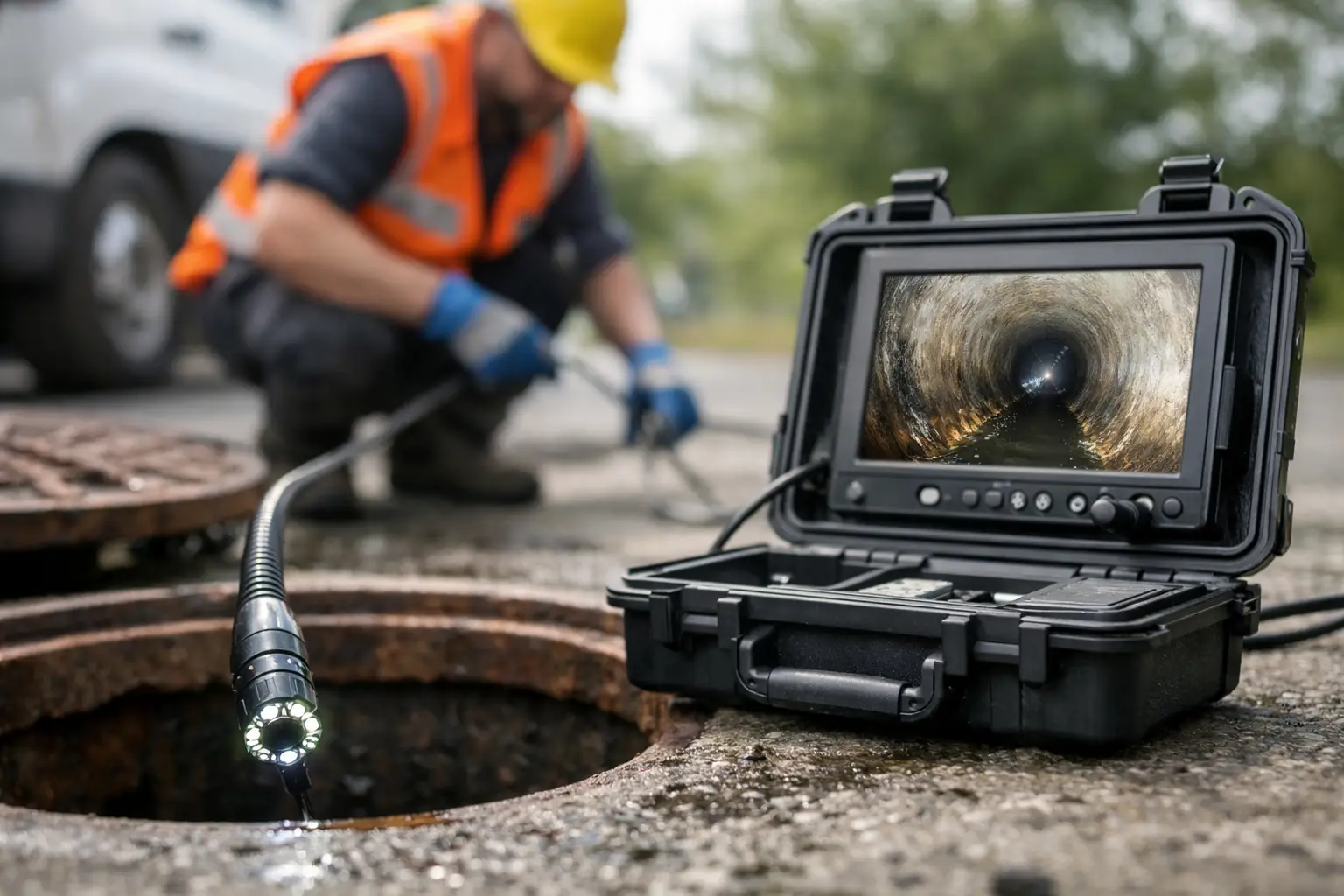
A drainage engineer feeds a specialist camera through an access point, such as an inspection chamber, rodding eye or suitable internal connection. The live camera feed shows the pipe’s internal condition without digging up the whole area first. This is particularly useful under concrete, patios, landscaped gardens and commercial premises where excavation could be disruptive.
The camera head is tracked through the system to identify the line of the drain and pinpoint defects. Where conditions allow, the report can identify the distance of the fault from the access point and its approximate position. This helps establish whether the problem sits within private pipework or may need to be referred to the relevant water company.
The quality of the survey depends on access and pipe condition. A fully collapsed drain, heavy standing water or a solid blockage may prevent the camera from travelling beyond the affected section. In those cases, clearing or jetting may be needed before a full inspection can take place. That does not weaken the evidence – it simply needs recording honestly in the report.
At West Midlands Drainage, surveys are carried out with professional CCTV equipment and diagnosis comes before recommending repairs. If a repair is required, the findings can be used to explain whether no-dig CIPP relining is suitable or whether excavation is the safer long-term option.
The difference between a survey and an estimate
An estimate tells you what a contractor expects the work to cost. A survey report shows why that work may be required. Both are useful for an insurance claim, but they are not interchangeable.
The survey should describe the defect and provide visual evidence. The repair estimate should then set out the proposed method, labour, materials, access requirements and any reinstatement work. If excavation is needed, it should be clear whether the price includes lifting and replacing paving, concrete, turf or other surface finishes.
Keeping these documents separate makes the claim easier to follow. It also lets the insurer review the evidence before major work begins, except where urgent action is necessary to prevent further damage or a health risk.
What to do before repairs begin
Contact your insurer or claims handler as early as possible and ask what evidence they require. Some insurers appoint their own loss adjuster or ask for specific photographs, reports or quotes before authorising non-emergency repairs. Others will allow you to proceed, provided you retain all records and invoices.
If sewage is entering the building, a pipe has collapsed and caused an unsafe surface, or water is causing ongoing damage, take reasonable steps to limit the loss. Keep photographs of the area before and after emergency work, retain damaged materials where practical, and save every invoice. Waiting for approval is not always sensible if the problem is actively worsening.
Avoid authorising a full replacement based solely on an assumption. A drain may look beyond repair from above but prove suitable for relining once surveyed. Equally, relining is not a cure for every fault. Severe collapses, major changes in level, badly displaced sections or pipes with no viable route may need excavation and replacement.
Who is responsible for the damaged drain?
Responsibility can be less straightforward than people expect. In general, drains serving one property within its boundary are often private, while shared sewers and some lateral drains may be the responsibility of the local water company. The exact position depends on the drainage layout, ownership and where the pipe runs.
A CCTV survey can help establish the route and location of the affected section, but it does not by itself settle legal ownership. If there is any doubt, the evidence can be passed to the water company and insurer for review. This is worth doing before paying for extensive work on a line that may not be yours to repair.
For flats, converted buildings and commercial sites, responsibility may also sit with a freeholder, management company or leaseholder arrangement. Check the lease, maintenance agreement and insurance policy rather than relying on assumptions.
Making the report easier for an insurer to assess
A report that is clear and consistent is far more useful than pages of technical jargon. Ask for a written summary alongside the footage, with each defect identified against a location reference. If the engineer can only confirm the visible condition rather than the exact cause, that should be stated plainly.
It also helps to provide the insurer with a short timeline: when you first noticed the issue, what symptoms occurred, any previous blockages or repairs, and what emergency work was required. Be accurate. Previous drainage history may affect the outcome, but withholding it can create more difficulty later.
Where an insurer declines a claim because it believes the issue is gradual deterioration, you can ask for the decision and policy wording in writing. A detailed report may help you challenge an incorrect assumption, but it cannot turn maintenance-related defects into insured events. The value lies in knowing the position clearly and choosing the right next step.
A drainage problem is stressful enough without guesswork, repeated call-outs or unnecessary digging. Arrange the survey early, keep the evidence together, and make sure any repair is based on what the camera actually shows.