A blocked drain rarely starts as a dramatic emergency. Water may take longer to clear from the kitchen sink, a toilet may gurgle after flushing, or an outside gulley may hold water after rain. Acting early gives you more options. The best drain unblocking methods depend on where the blockage sits, what is causing it and whether it is a one-off obstruction or evidence of a fault further along the pipework.
The right approach is not always the most aggressive one. A simple local blockage can often be cleared safely with basic tools, while repeated back-ups, foul smells or overflowing drains need proper diagnosis. Forcing a blockage through without finding the cause can leave you paying for another call-out a few weeks later.
Start by working out which drain is blocked
Before reaching for a product or tool, look at which fittings are affected. If only one basin is slow to empty, the restriction is likely close to that fixture, often in the trap or short waste pipe. A slow kitchen sink commonly points to fat, oil and food residue. A shower or bath blockage is more likely to be hair and soap build-up.
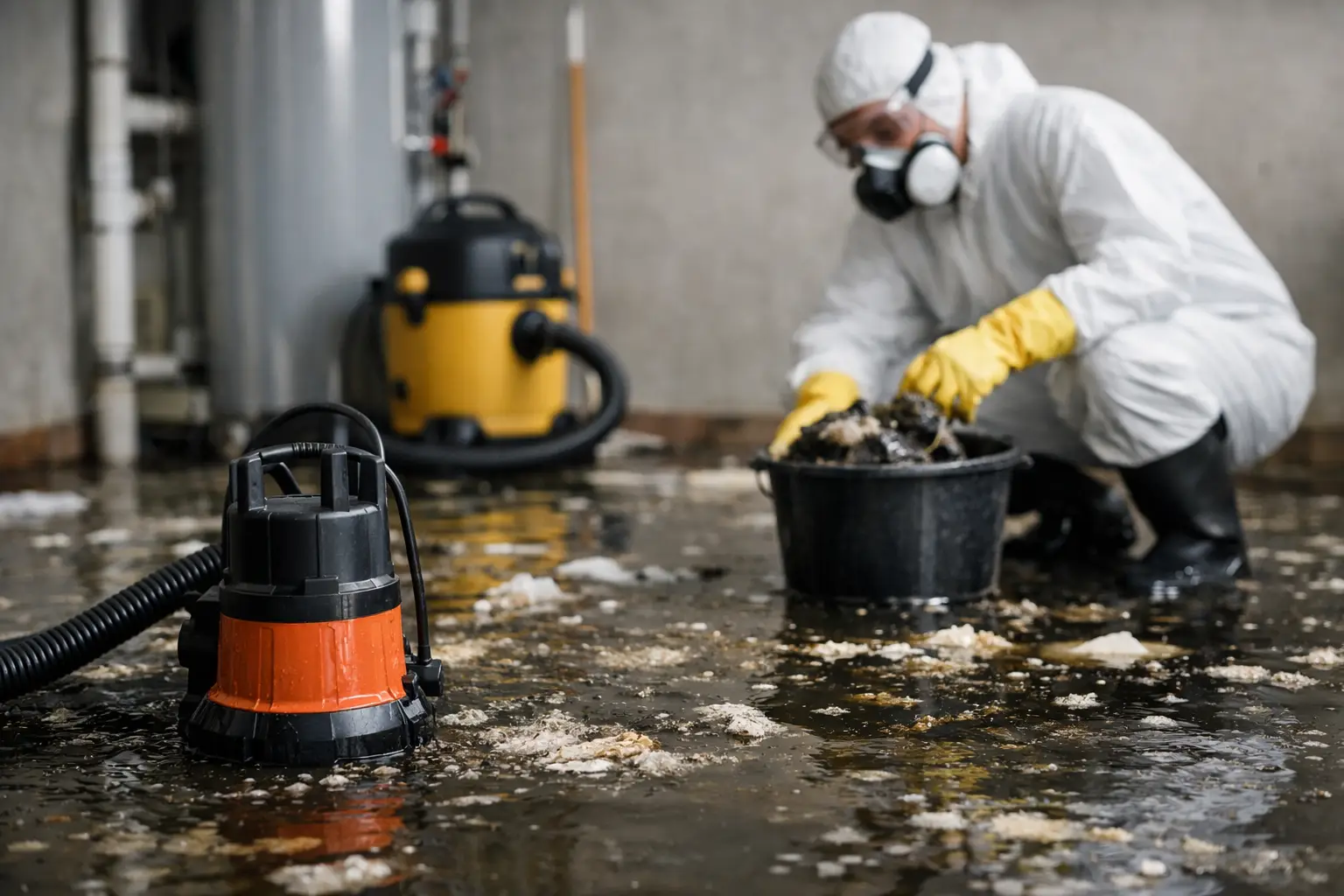
If several appliances are draining slowly, water is backing up into a shower tray when the toilet is flushed, or an outside drain is overflowing, the problem may be in the shared branch or underground drain. This is where household remedies stop being a sensible answer. External drains can be blocked by wipes, scale, roots, collapsed pipework or displaced joints, and each requires a different remedy.
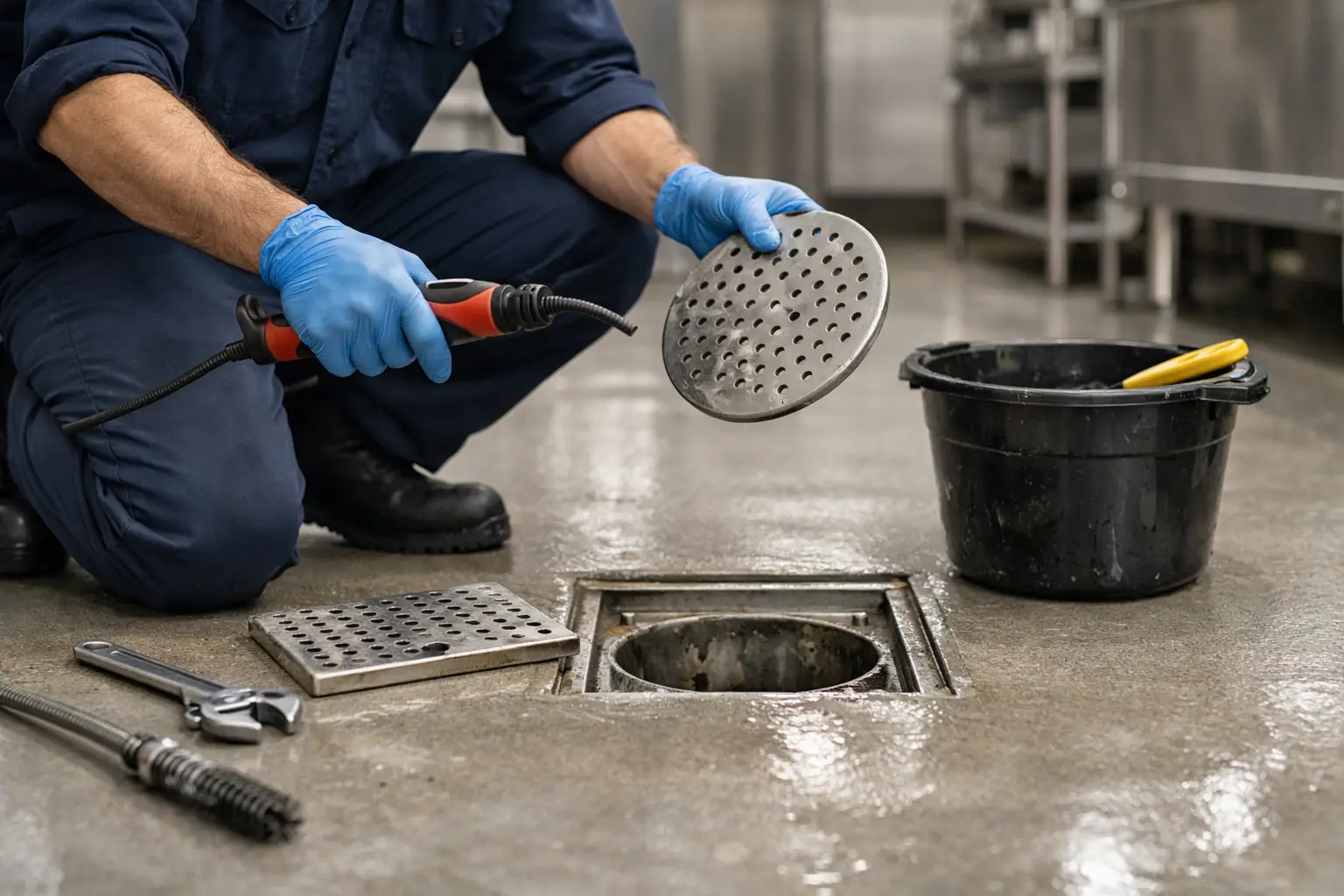
For commercial premises, it is also worth checking when the issue occurs. A blockage that appears after busy service periods in a café, pub or staff kitchen may be caused by grease accumulation. A recurring issue in a rental property may point to misuse, poor pipe falls or a damaged section of drain.
The best drain unblocking methods for minor blockages
Clean the trap and remove visible debris
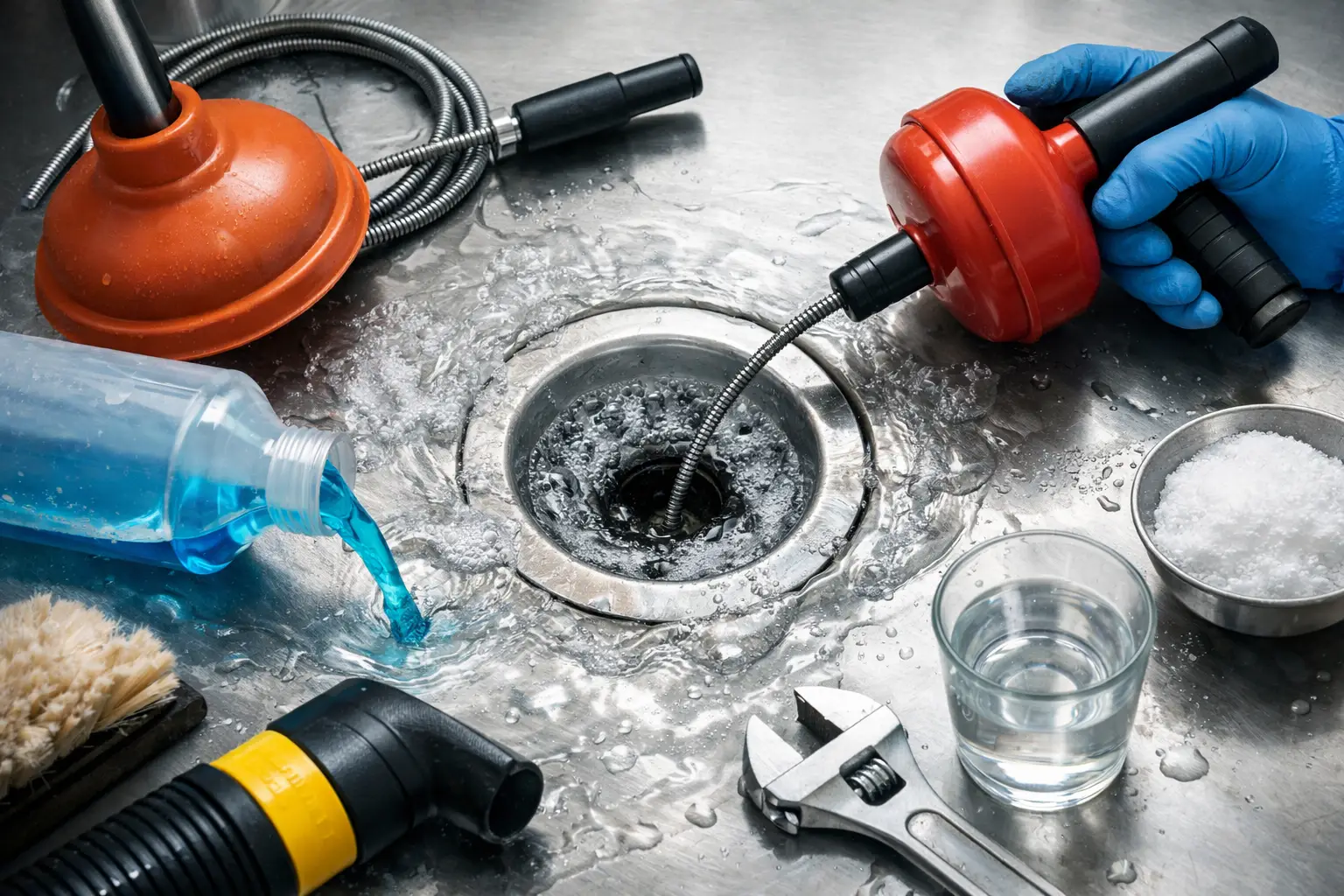
For basins and sinks, start with the obvious. Remove the plug and lift out hair, soap residue or food waste from the plughole. If that does not restore flow, place a bowl beneath the trap, carefully unscrew it and clean it out. Wear gloves and keep a cloth handy, as trapped water will spill.
This is often the most effective method for a local basin blockage because it deals directly with the material causing it. Refit the seals carefully and run water slowly at first to check for leaks. Do not force old plastic fittings, as brittle connections can crack.
Use a plunger correctly
A plunger works by creating pressure and suction to shift a soft blockage. It is particularly useful for toilets, sinks and baths where the obstruction is close to the outlet. Use a clean, suitable plunger for the fixture and make sure there is enough water to cover the rubber cup.
For a sink with an overflow opening, cover the overflow with a damp cloth before plunging. This helps the plunger direct pressure towards the blockage rather than losing it through the opening. Several firm, controlled strokes are usually more useful than frantic pumping.
A plunger is a low-risk first step, but it will not solve a blocked underground drain, a compacted mass of wipes or a pipe damaged by roots. If the water level rises rather than falls, stop before it overflows.
Use a drain snake with care
A hand drain snake, sometimes called a plumber’s auger, can remove hair and debris from short waste pipes. Feed it in gently, turn the handle and withdraw it slowly. It is more effective than chemicals for compacted hair in shower and bath wastes.
Take care with older pipework and avoid pushing aggressively. A cable can snag in bends, damage lightweight fittings or simply punch a small hole through a soft blockage without clearing the build-up around it. If you cannot feel progress after a few attempts, it is time to stop rather than make the problem worse.
Flush kitchen build-up with hot water and washing-up liquid
For a kitchen sink that is draining slowly but not fully blocked, hot water and washing-up liquid can help loosen fresh grease deposits. Use hot tap water rather than boiling water, particularly if you have plastic waste pipes. Pour it through slowly, then test the flow.
This method can help with light residue, but it is not a cure for a solid fat blockage. Grease may soften temporarily and then set again further down the pipe. The best prevention is to let fats and oils cool in a container before putting them in the bin, rather than washing them into the sink.
Why chemical drain cleaners are rarely the best answer
Chemical drain cleaners are marketed as a quick fix, but they come with real drawbacks. Strong products can burn skin and eyes, damage seals and older pipework, and create a hazard for anyone who later removes the trap or works on the drain. They can also react dangerously if mixed with another cleaner.
More importantly, chemicals are unreliable against many common causes of serious blockages. They will not remove wipes, stones, tree roots, a collapsed drain or a badly scaled pipe. If the drain is fully blocked, the chemical may sit in the pipe without reaching the obstruction.
Avoid mixing products or adding chemicals before calling a drainage engineer. Let the engineer know what has been used, as this affects how they can work safely. In most cases, mechanical clearance or water jetting is safer and more effective.
When high-pressure water jetting is the right method
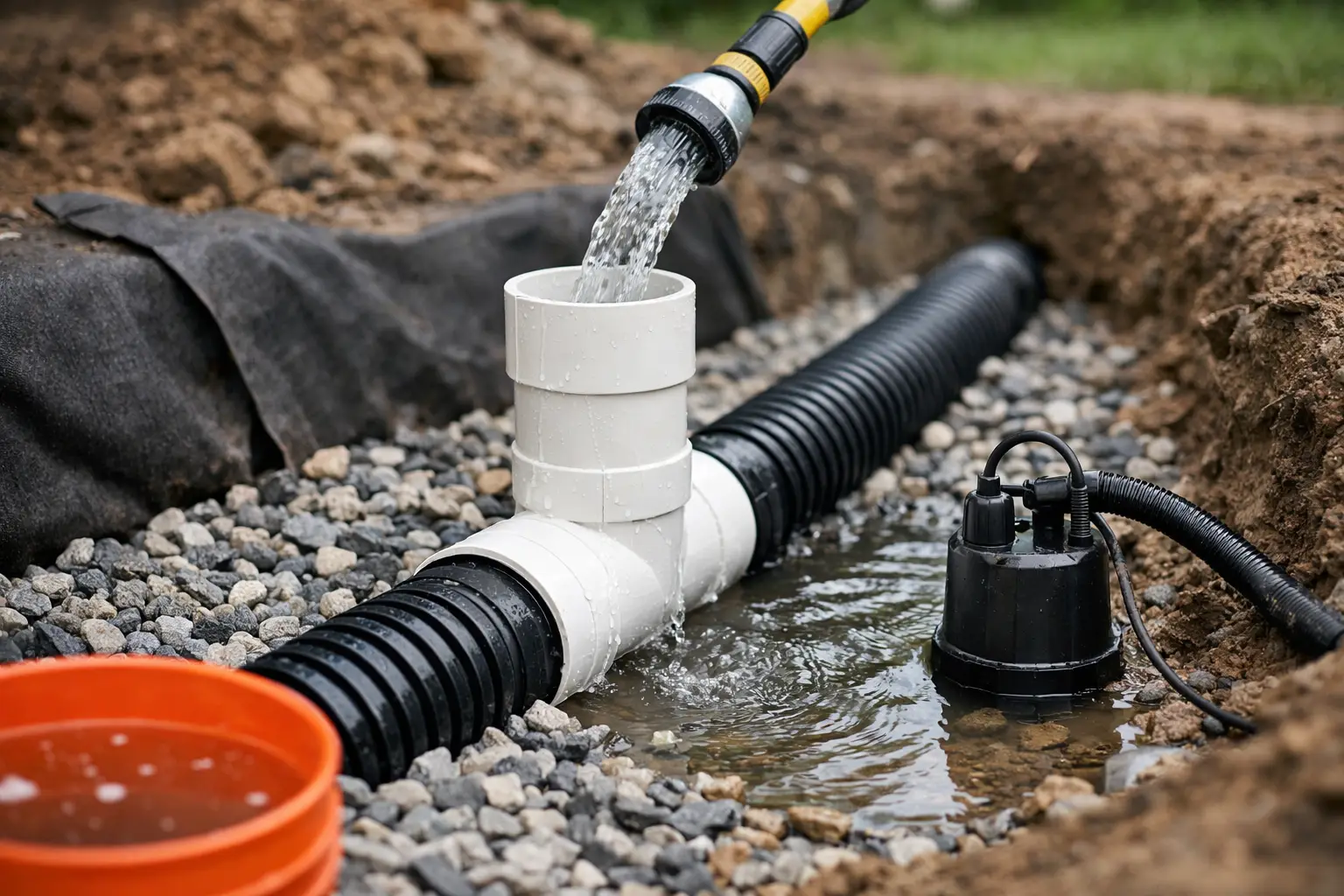
For blocked external drains and more stubborn internal pipework, high-pressure water jetting is often the most reliable clearance method. A specialist jetting hose is fed through the drain, using controlled water pressure to break up deposits and flush debris away. Unlike a basic rod, it can clean the inside of the pipe as it clears the blockage.
Jetting is particularly effective for fat, scale, silt, soap residue, leaves and compacted waste. It is commonly used for domestic drain blockages as well as planned maintenance in commercial kitchens, communal buildings and busy premises.
However, jetting should be carried out by a trained drainage professional who has assessed the situation. If there is a suspected collapse, badly displaced joint or very fragile pipe, blasting water into the line without care can expose a larger issue. The aim should be to clear the drain safely and understand its condition, not just get water moving for the afternoon.
Recurring blockages need a CCTV drain survey
A drain that blocks repeatedly is telling you something. The cause may be roots entering through a joint, a cracked pipe, a section with poor fall, heavy scale, or an obstruction that has only been partly cleared. Repeated plunging, rodding or chemical treatment can become expensive without solving any of these faults.
A CCTV drain survey allows an engineer to inspect the pipe internally and identify the exact cause and location of the issue. This is especially useful before buying a property, after ground movement, when an insurer needs evidence, or where a landlord needs clarity on responsibility.
Once the fault is known, the repair can be matched to the problem. Some drains need excavation and replacement. Others can be repaired from within using no-dig CIPP relining, which creates a new pipe lining inside the damaged section and can avoid unnecessary disruption to paving, gardens or floors.
Signs you should call a drainage professional now
Do not wait for a minor blockage to become sewage backing up into the property. Professional help is the sensible option when you notice four or more warning signs such as:
- more than one fixture draining slowly or backing up;
- foul smells coming from inside or outside drains;
- water overflowing from a manhole or external gulley;
- a blockage returning soon after you have cleared it;
- gurgling toilets, bubbling plugholes or unexplained damp ground near the drain run.
A local drainage engineer can assess the issue, clear the obstruction with the appropriate equipment and explain whether further investigation is needed. At West Midlands Drainage, the focus is on identifying the root cause, with clear pricing and a solution that is intended to last rather than a temporary clearance.
Keep wipes, cotton buds, sanitary products, fats and food scraps out of drains, and deal with slow drainage before it becomes a full blockage. If water is backing up, the drain is overflowing or the same problem keeps returning, stop experimenting and arrange a proper inspection. A clear diagnosis at the right time is usually the quickest route back to a working drainage system.