A basin that takes minutes to empty is more than an irritation when you are trying to get out of the door. It is often the first warning that soap residue, hair, grease or a fault further along the pipe is building up. If you are searching for how to fix slow draining sink problems, start with the simple checks – but do not keep forcing treatments through a drain that is repeatedly slowing down.
For most bathroom and kitchen sinks, a gradual blockage can be cleared without major work. The right approach depends on where the restriction is and what has caused it. A sink that has always drained poorly after a recent installation needs a different investigation from one that suddenly slows after years of normal use.
How to Fix a Slow Draining Sink Safely
Before taking anything apart, put on rubber gloves and clear the cupboard below the sink. Have an old towel and a washing-up bowl ready, particularly if you will be removing the trap. Avoid mixing cleaning products. Bleach, acidic descalers and chemical drain cleaners can react with each other, creating harmful fumes and damaging pipework.
If there is standing water, remove as much as possible with a jug before you begin. This makes every following step cleaner and gives you a better idea of whether the water level is dropping at all.
1. Clean the plughole and waste fitting
The most common cause in a bathroom basin is a plughole clogged with hair, toothpaste, soap and grooming products. Lift out the plug if it is removable and use a torch to look into the waste. A plastic drain hook or a small, flexible cleaning tool can pull out the material sitting near the top.
Do not push a screwdriver, wire coat hanger or other rigid metal object down the pipe. It can damage plastic waste fittings, scratch the basin, or compact the blockage further into the pipe. Clean the plug and surrounding fitting thoroughly, then run hot water to see whether the flow has improved.
Kitchen sinks are different. The obstruction is more likely to be cooled fat, food particles and detergent residue. Wipe grease from pans into the bin rather than rinsing it away. Hot water can soften a light grease build-up, but boiling water is not a cure-all and may not be suitable for every plastic waste system. Use hot tap water rather than a full kettle if you are unsure.
2. Use a plunger correctly
A small cup plunger can shift a soft, local blockage, provided it can make a seal over the plughole. Fill the basin with enough water to cover the rubber cup, block the overflow opening with a damp cloth, then pump firmly 10 to 15 times. The overflow must be covered or the pressure will escape instead of working on the blockage.
On a double kitchen sink, seal the second waste opening too. Check the flow after each attempt. A few controlled plunges are sensible; aggressive, repeated plunging is not. If waste water starts backing up elsewhere, stop. That points to a blockage beyond the sink trap or possibly in a shared branch pipe.
3. Remove and clean the trap
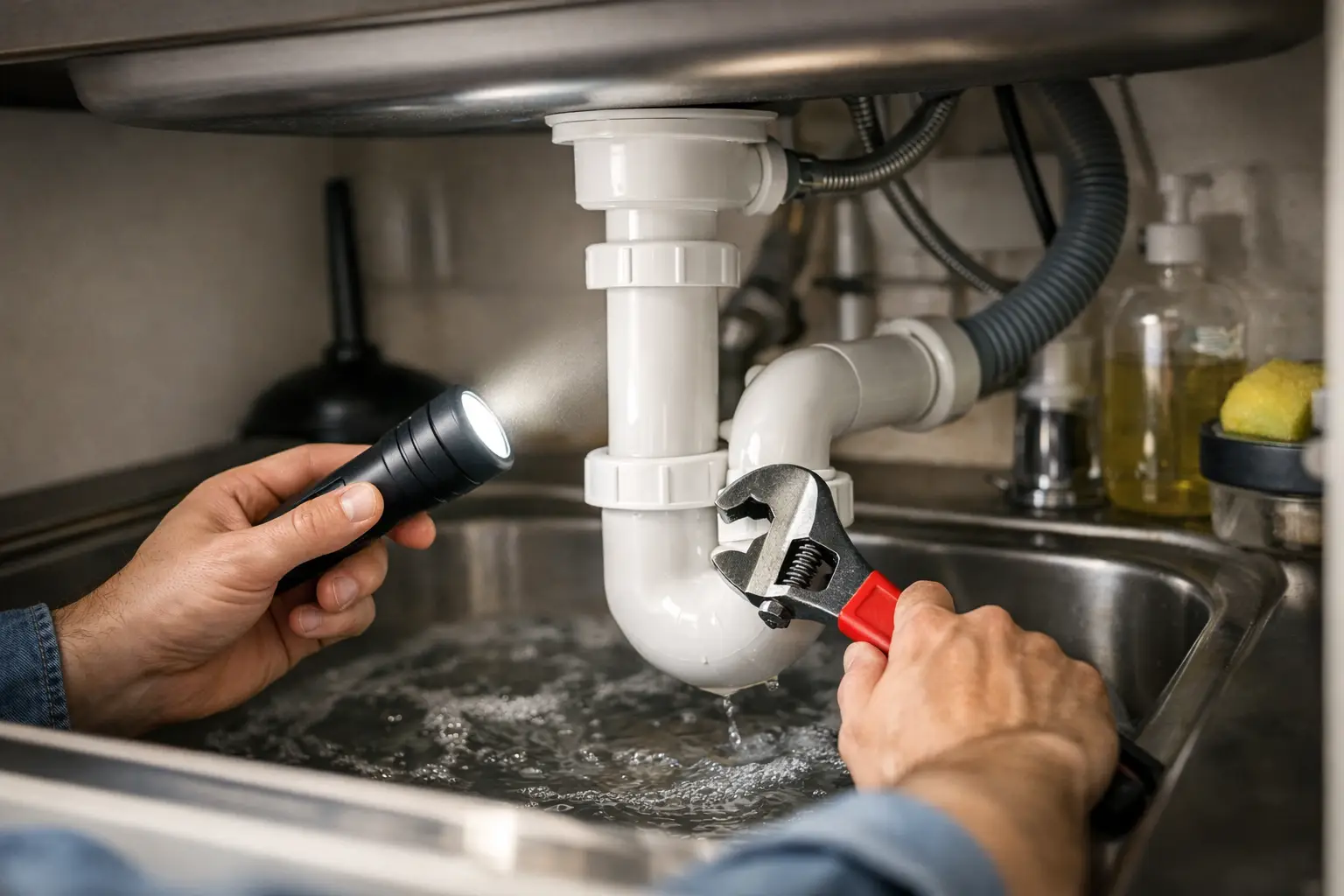
The U-shaped section beneath most sinks is called the trap. It holds water to prevent drain odours entering the room, and it also catches a surprising amount of debris. Place your bowl beneath it, unscrew the slip nuts by hand where possible, and lower the trap carefully.
Empty the contents into the bowl, not directly into another drain. Remove sludge and debris, rinse the trap, and inspect the washers before putting it back. Refit all connections hand-tight, then run water while checking underneath for leaks. Over-tightening plastic fittings can crack them or distort the seals.
If the trap is clean but the pipe leading into the wall is blocked, a short hand auger may help. Use it gently and stop if you meet solid resistance. Older properties around the West Midlands can have mixed pipe materials and awkward alterations from previous kitchen or bathroom work. Forcing a cable into unknown pipework can turn a clearance job into a repair.
4. Flush with hot water and washing-up liquid
Once the visible debris has been removed, a kitchen sink may benefit from a simple flush. Add a small amount of washing-up liquid, followed by hot tap water, to help loosen light grease residue. This is useful as a finishing step, not as a replacement for removing a proper blockage.
Bicarbonate of soda and vinegar are often recommended online. They may freshen a waste pipe and loosen minor residue, but the fizz is not powerful enough to clear compacted fat, heavy scale or a blockage deeper in the run. Do not rely on home remedies if the same sink slows again within days.
5. Be cautious with chemical drain cleaners
Chemical cleaners can be tempting when the water is barely moving. The trade-off is that strong products may sit in the pipe without reaching the blockage, giving off fumes and making later hands-on work hazardous. They can also harm older metal pipework, rubber seals and certain plastic fittings when used repeatedly.
If you have already used a chemical cleaner, tell any drainage engineer before they start work. This is a basic safety point. Never plunge or dismantle a trap immediately after adding chemicals, as contaminated water can splash back.
When a Slow Sink Suggests a Bigger Drainage Problem
A one-off slow basin is usually local to the waste fitting or trap. A recurring blockage, however, is worth taking seriously. The cause may be further down the internal pipework, in the external drain, or in a poorly installed section with insufficient fall.
Look beyond the sink if you notice gurgling sounds, unpleasant smells that return after cleaning, water rising in another appliance, or more than one fixture draining slowly. For example, a kitchen sink that backs up when the washing machine empties is unlikely to be fixed by cleaning the plughole alone.
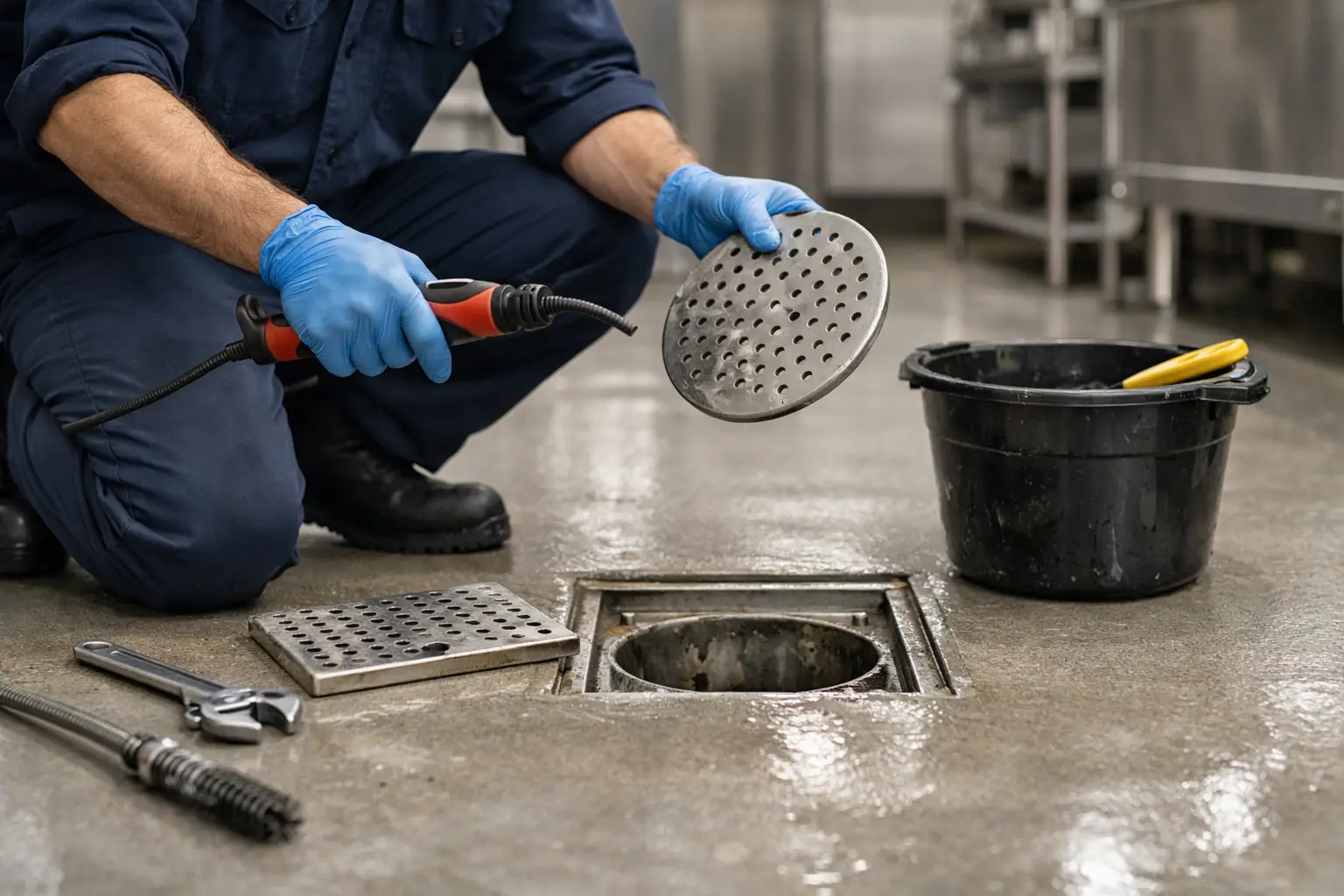
Landlords and commercial premises should act promptly where repeated slow drainage affects shared kitchens, staff washrooms or customer facilities. What begins as a slow waste pipe can become an overflow, hygiene issue and disruption to the property. Recording when the problem occurs and which outlets are affected helps identify the right next step.
Why repeat blockages need diagnosis
Repeated call-outs for the same sink often mean the visible debris is only the symptom. Grease can be accumulating in a longer run of pipework. Tree roots, damaged drains, displaced joints or scale can restrict flow below ground. In some cases, a renovation has connected new fittings into an older drain that is already undersized or compromised.
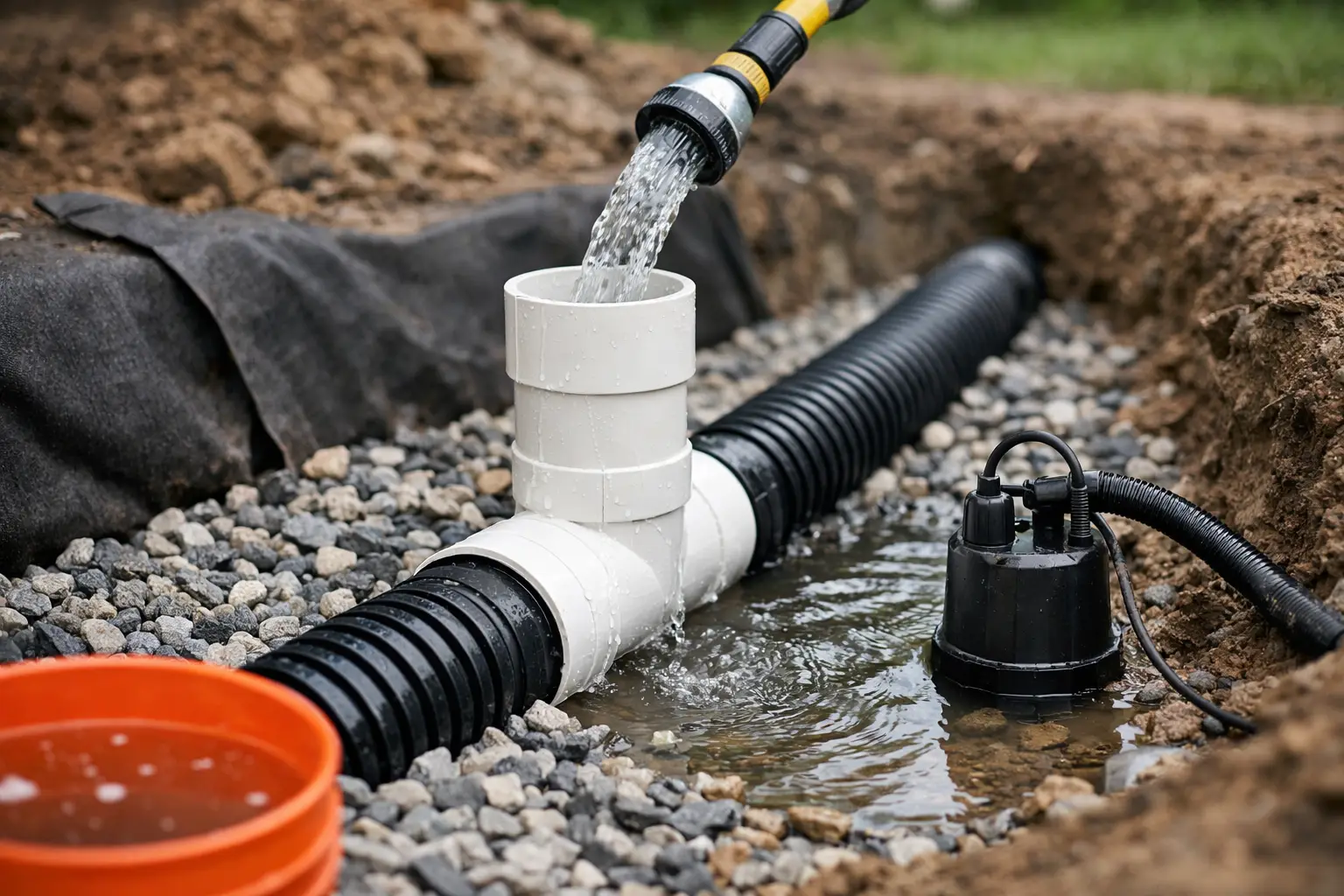
This is where professional equipment makes a practical difference. High-pressure water jetting can clear a substantial build-up rather than punching a small hole through it. A CCTV drain survey can then show whether the pipe is cracked, root-affected, badly scaled or holding water because of a structural defect. It avoids guesswork and helps prevent paying for the same temporary clearance twice.
When to Call a Drainage Engineer
Call for professional help if plunging and trap cleaning have not restored normal flow, if waste water is backing up, or if the problem keeps returning. You should also avoid dismantling pipework where there is a leak, an inaccessible waste run, old or brittle fittings, or a suspected blockage in the external drain.
A proper drainage visit should begin with an explanation of the likely cause and the work required, not a vague promise to pour something down the pipe. West Midlands Drainage uses diagnosis-led clearance and inspection work across Wolverhampton and the wider region, with direct access to the in-house team and clear pricing before work proceeds. Where a damaged pipe is found, a durable repair may be more sensible than repeated emergency unblocking.
For homeowners, the sensible rule is simple: clean what you can safely reach, test the flow, and stop when the signs point beyond the sink. A slow drain is easiest to deal with before it becomes a blocked one, but a lasting result comes from finding out why the water slowed in the first place.