A drain problem rarely waits for a convenient moment. One day the toilet is slow to clear, the next there is a bad smell outside or wastewater backing up where it should not. When that happens, one of the first questions people ask is who is responsible for drain repairs – and the answer depends on exactly where the pipe runs, what type of property you have, and whether the issue sits inside your boundary or beyond it.
This is where many people get caught out. A lot of customers assume every pipe connected to their home is their responsibility. Others assume the water company covers the lot. In practice, it is more specific than that, and getting the diagnosis right early can save a lot of time, cost and frustration.
Who is responsible for drain repairs at your property?
The basic rule is simple. If the pipe serves only your property and is within your boundary, it is usually your responsibility. That generally includes private drains carrying wastewater from your kitchen, bathroom or toilets up to the point where they connect to a shared pipe or public sewer.
Once the pipe becomes shared with another property, it may be classed as a lateral drain or public sewer. In many cases, that shifts responsibility to the local water company. The difficulty is that most underground drainage is out of sight, so the handover point is not always obvious without a proper inspection.
A private drain usually runs from your home to the edge of your property or until it joins another drain. If that section collapses, cracks, becomes displaced by tree roots or needs relining, the property owner normally arranges and pays for the repair.
A lateral drain is the part that runs beyond your boundary but still carries waste from your property towards the public sewer. In England, these are often the responsibility of the water company, not the homeowner. Public sewers, which serve more than one property, are also normally maintained by the water company.
The difference between a drain, lateral drain and sewer
This matters because people use the word drain for everything underground, but ownership changes based on the pipe type.
A drain serves one property only. A lateral drain continues away from that property, often outside the boundary, before joining the public sewer. A sewer takes wastewater from multiple properties.
If you are dealing with a blocked or damaged pipe under your driveway, garden or extension footprint, that is often a private drain issue. If the problem is in a shared line running under the pavement or road, it is more likely to sit with the water company.
That said, not every case is neat and tidy. Older properties, converted buildings and extensions can have unusual drainage layouts. We regularly see homes where the pipe route is not where the owner thought it was, or where previous building work has altered access and made responsibility less clear.
When the homeowner is responsible
Homeowners are usually responsible for drains within the property boundary that serve only their house. That includes damage caused by wear and tear, ground movement, poor historic installation, root ingress, scale build-up or misuse.
A few common examples make it clearer. If your kitchen gully backs up because the private pipe between the house and the inspection chamber has cracked, that repair is typically down to you. If a section of pipe under your front garden has collapsed and it serves only your home, that is also generally your responsibility. The same applies if a CCTV survey shows displaced joints or fractures on your private line.
In some cases, buildings insurance may help with the cost of repair, especially where the damage is sudden or linked to an insured event. Policies vary, so it is worth checking the wording rather than assuming. Insurers often want evidence, and that is where a clear CCTV survey and written findings can make the process easier.
When the water company is responsible
If the problem affects a shared sewer or lateral drain, the water company is often responsible for repair and maintenance. This can include collapsed pipework outside your boundary, shared underground lines serving neighbouring properties, and public sewers under roads, pavements or shared access areas.
This is often good news for property owners, but it does not mean you should wait and guess. If the symptoms suggest a sewer issue, a proper diagnosis helps establish whether the fault is on your private system or the adopted network. Without that, people can waste days calling the wrong party while the problem gets worse.
There is also a practical point here. The water company may be responsible for the repair itself, but you may still need an independent drainage contractor to identify the fault properly in the first place, especially when the issue is recurring and the source is unclear.
What about landlords and tenants?
For rented property, the landlord is usually responsible for drain repairs to the fixed drainage system, unless the tenant has caused the problem through misuse. Structural faults, collapsed drains, root ingress and ageing pipework would usually fall to the landlord.
Tenants, on the other hand, may be liable if the blockage has been caused by inappropriate items being flushed or washed into the system. Wet wipes, sanitary products, fats, oils and food waste are common culprits. The same principle applies in commercial premises where staff or customers have contributed to the blockage.
The key issue is cause. A blocked drain is not always a repair issue. Sometimes it is simply an obstruction that needs clearing. Sometimes the blockage is a symptom of damaged pipework beneath. Good diagnosis matters because the right fix depends on what is actually wrong.
Shared drains and neighbour disputes
Shared drainage can become awkward quickly. If two or more properties use the same private section before it reaches an adopted sewer, there can be confusion over who should arrange works and who pays.
In some cases, neighbours agree to split the cost where the damaged section benefits both properties. In others, the pipe may already fall under water company responsibility. The problem is that assumptions often lead to arguments. A CCTV survey can show the pipe route, connection points and condition so everyone is working from the same facts.
If you are buying a property and there is any sign of historic drainage trouble, this is worth checking early. It is much easier to understand responsibility before exchange than after a collapse or repeated backup becomes your problem.
How to find out who is responsible for drain repairs
The quickest route is to identify where the fault sits and what type of pipe is affected. That usually starts with symptoms, but symptoms alone are not enough. Slow drainage, foul smells, overflowing gullies and recurring blockages can all point to different faults.
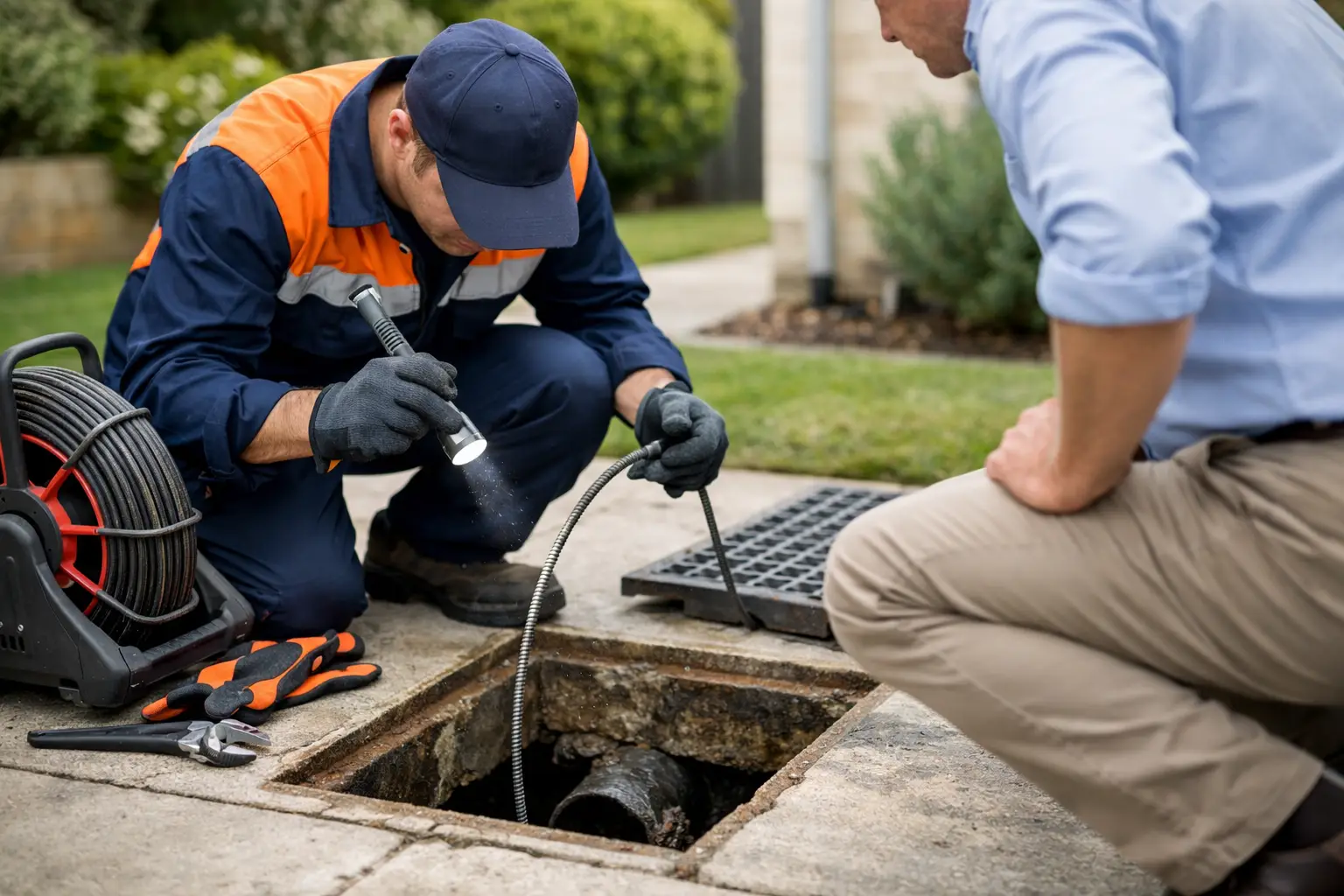
A professional drainage contractor will normally assess access points, test flow and use CCTV inspection to locate the issue accurately. That shows whether you are dealing with a simple blockage, cracked pipe, root ingress, displaced joint or partial collapse. It also helps establish whether the affected section is private, shared or likely adopted.
This diagnosis-first approach matters because it avoids the usual cycle of guesswork. If a drain is repeatedly unblocked without dealing with the cracked section that keeps catching waste, you end up paying for the same problem more than once.
For homeowners, landlords and commercial site managers, the sensible approach is straightforward. Confirm the pipe route, confirm the defect, then confirm ownership. Once you know those three things, the next step becomes much clearer.
Why proper diagnosis matters before repair
Drain repair is not one single job. A minor fracture might be suitable for no-dig patch repair or CIPP relining. A collapsed section may need excavation and replacement. A blockage caused by roots might clear with jetting, but if the roots entered through broken joints, the repair still needs doing or they will come back.
That is why quick fixes can be expensive in the long run. The cheapest first visit is not always the cheapest outcome. What most customers want is a proper answer, a clear price and a durable repair that deals with the cause, not just the mess on the day.
For that reason, if you are unsure who is responsible for drain repairs, start by getting the line inspected rather than relying on guesswork from surface symptoms alone. It is usually the fastest way to work out whether you need to contact your insurer, your water company, your landlord, or a drainage specialist to carry out the repair.
If there is one thing worth remembering, it is this: underground drainage problems are stressful enough without being passed from one party to another. Get the fault located properly, get ownership confirmed, and you will be in a much better position to sort it once – and sort it properly.