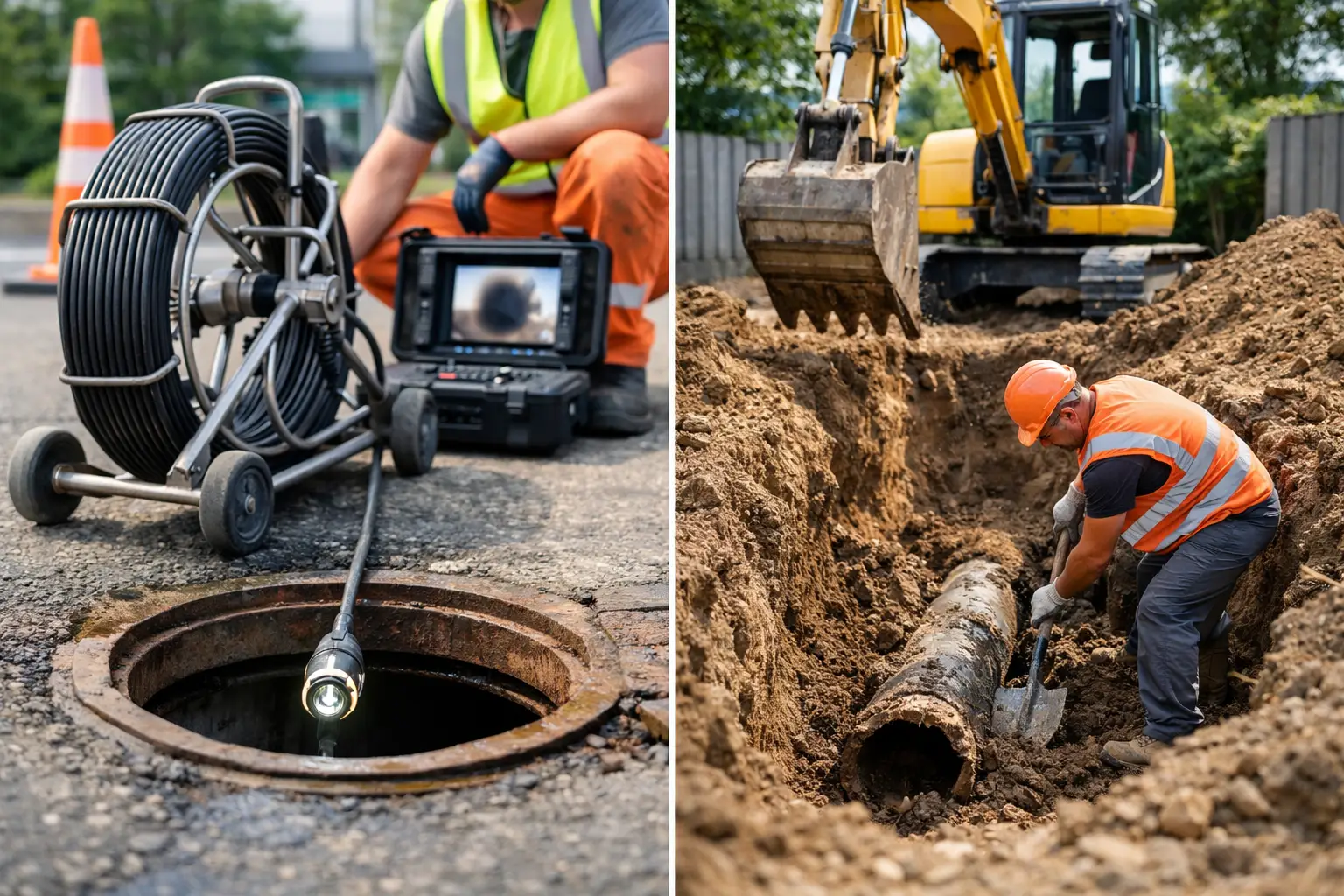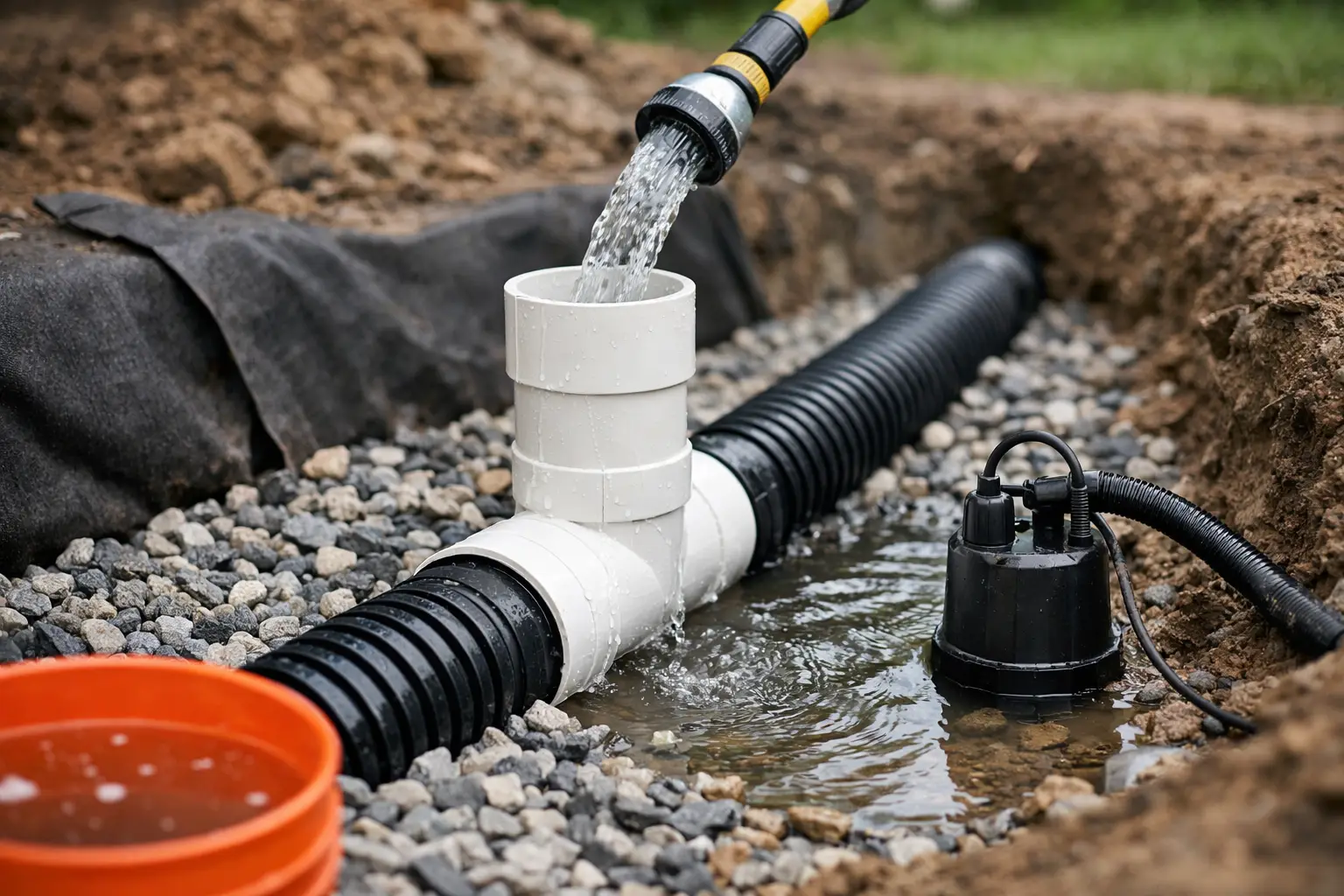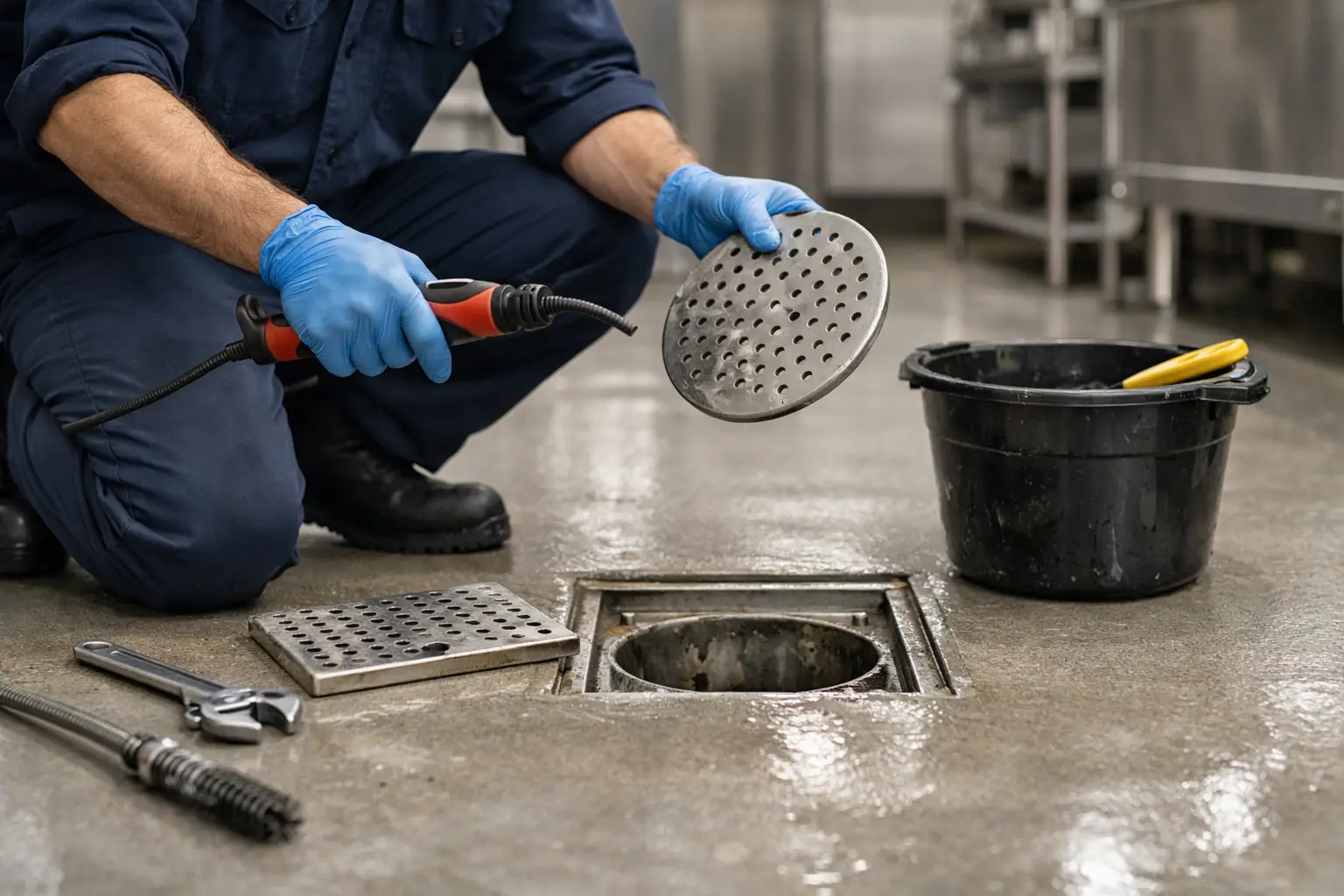
A drain has backed up for the third time, there is a damp patch outside, or a survey has flagged a possible defect beneath the ground. The immediate question is often CCTV drainage survey versus excavation: should you investigate the pipe with a camera, or start digging? In most cases, those are not competing choices. A CCTV survey establishes what is wrong and where. Excavation is one possible repair method if the findings show it is necessary.
Getting that order right matters. Digging without a clear diagnosis can mean unnecessary disruption, avoidable cost and still no guarantee that the actual fault has been reached. Equally, relying on a camera inspection alone when a drain has collapsed or is badly displaced will not put the problem right. The sensible approach is to match the repair to the condition of the pipe.
CCTV drainage survey versus excavation: the real difference
A CCTV drain survey is a non-invasive inspection. A trained operative feeds a specialist camera through the drainage system and records the condition of the pipe from inside. The footage can show blockages, root ingress, cracks, open joints, displaced sections, scale build-up, standing water and evidence of a collapse. It also helps identify the depth, direction and approximate location of a defect.
Excavation is physical access to the drain. It involves carefully opening the ground, exposing the damaged pipework, removing the faulty section and installing new drainage materials. Once tested, the excavation is backfilled and the surface reinstated as far as practical.
A survey is therefore about diagnosis. Excavation is about repair. For a homeowner, landlord or facilities manager, the key benefit of starting with CCTV is certainty. You can see whether a targeted no-dig repair is viable, whether excavation is genuinely required, and where work needs to take place before anyone lifts paving, turf or tarmac.
When a CCTV drain survey is usually the best first step
CCTV inspection is particularly useful where the problem is recurring but the drain is still flowing after clearance. High-pressure water jetting may remove the immediate blockage, but repeated blockages often point to an underlying defect. Roots may be entering through joints, a pipe may have cracked, or a section may have dropped and created a low point where waste collects.
It is also a sensible first step before buying a property, planning an extension or making an insurance claim. For property buyers, a written report and recorded footage can reveal drainage defects that would not be visible during a standard viewing. For planned building work, the survey can confirm the route and condition of existing pipework before new foundations, patios or drainage runs are installed.
In commercial settings, the value is often in reducing disruption. A camera survey can inspect long runs beneath car parks, service yards, shop floors or communal areas without immediately closing off a large area for groundworks. That allows decision-makers to plan repairs around trading hours, tenant access and site safety.
A proper survey should not simply say that a drain is ‘damaged’. It should explain the type of defect, its location, the likely impact on flow and the recommended next step. Clear evidence helps customers compare repair options on facts rather than being pressured into the most expensive route.
What a camera can and cannot tell you
CCTV equipment provides a detailed view inside the pipe, but it has limits. Heavy standing water, a complete blockage or a crushed section can prevent the camera travelling further. In those cases, cleaning may be needed before inspection, or the visible evidence may already indicate that excavation is unavoidable.
A survey can identify signs of poor falls, deformation and structural failure, but the exact depth and ground conditions may need further tracing or investigation before excavation begins. This is why an experienced drainage engineer will explain what is confirmed, what is likely, and what needs checking rather than making promises from a short piece of footage.
When excavation is the right repair
Excavation is not a failure of the survey process. It is the correct durable repair where the pipe has suffered major structural damage that cannot be repaired from inside.
A full or partial collapse is the clearest example. If the drain has flattened, fractured badly or separated at a joint, wastewater and debris cannot pass reliably. Relining needs a reasonably continuous host pipe to work within. Where there is no sound shape left to line, the damaged section normally needs to be exposed and replaced.
Excavation may also be necessary where pipework has been installed at the wrong gradient, where an old drain is severely displaced, or where a connection needs changing as part of an extension or new build. If the pipe is shallow and accessible in a garden or driveway, targeted excavation can sometimes be more straightforward and cost-effective than attempting a specialist no-dig repair.
There are practical considerations too. Work near gas, water, electricity or telecoms services needs careful planning. Access, ground type, the surface to be reinstated and the depth of the drain all affect the job. A trustworthy contractor will not quote excavation as though every site is the same.
Where no-dig relining fits between the two
The comparison is often not simply CCTV survey or excavation. Once CCTV has identified a crack, leaking joint or root-damaged section, CIPP drain relining may provide the middle ground.
With this method, the drain is cleaned and prepared, then a resin liner is installed within the existing pipe. Once cured, it forms a new pipe inside the old one. This can seal cracks and joints, bridge minor defects and prevent further root ingress without digging up the surface above.
Relining is often a strong option beneath buildings, landscaped gardens, driveways, roads and other areas where excavation would cause significant disruption. It is not suitable for every fault. A pipe that has collapsed completely, has severe loss of line or contains major voids may still require excavation. The footage and site conditions should decide, not a preference for one method over another.
Cost, disruption and long-term value
A CCTV survey has a lower upfront cost than excavation because no ground is opened and the work is normally completed quickly. More importantly, it can stop money being spent in the wrong place. Finding a defect accurately may mean one small repair rather than a long trench across a driveway.
Excavation usually costs more because it includes labour, plant where required, replacement pipework, safety measures, spoil removal and reinstatement. Costs can rise where access is restricted or where block paving, concrete, tarmac or landscaped surfaces need restoring. That does not make it poor value when the drain is beyond repair. Replacing a failed section properly can prevent repeated call-outs, leaks and further ground damage.
The cheapest immediate option is not always the lowest-cost outcome. Repeated drain clearing may keep a compromised pipe moving for a while, but it will not cure root ingress, a collapsed section or a faulty joint. A diagnosis-led repair gives you a clearer route to a permanent solution and, where appropriate, written evidence for insurers, buyers or property records.
A practical way to decide
If a drain is blocked, start by having it cleared safely and properly. If it has blocked before, smells persist, water returns slowly, gullies overflow or there are signs of movement in the ground, arrange a CCTV survey before agreeing to major works. The results should then lead to one of three outcomes: ongoing maintenance where the pipe is sound, a no-dig repair where the defect is suitable, or targeted excavation where replacement is the only reliable answer.
For urgent issues across Wolverhampton and the wider West Midlands, West Midlands Drainage takes this evidence-first approach: identify the fault, explain the options plainly, and carry out only the work the drain actually needs.
The ground above a drain is often the most expensive part to disturb. Before approving excavation, ask to see what is happening below it and make sure the proposed repair deals with the root cause, not just the latest blockage.