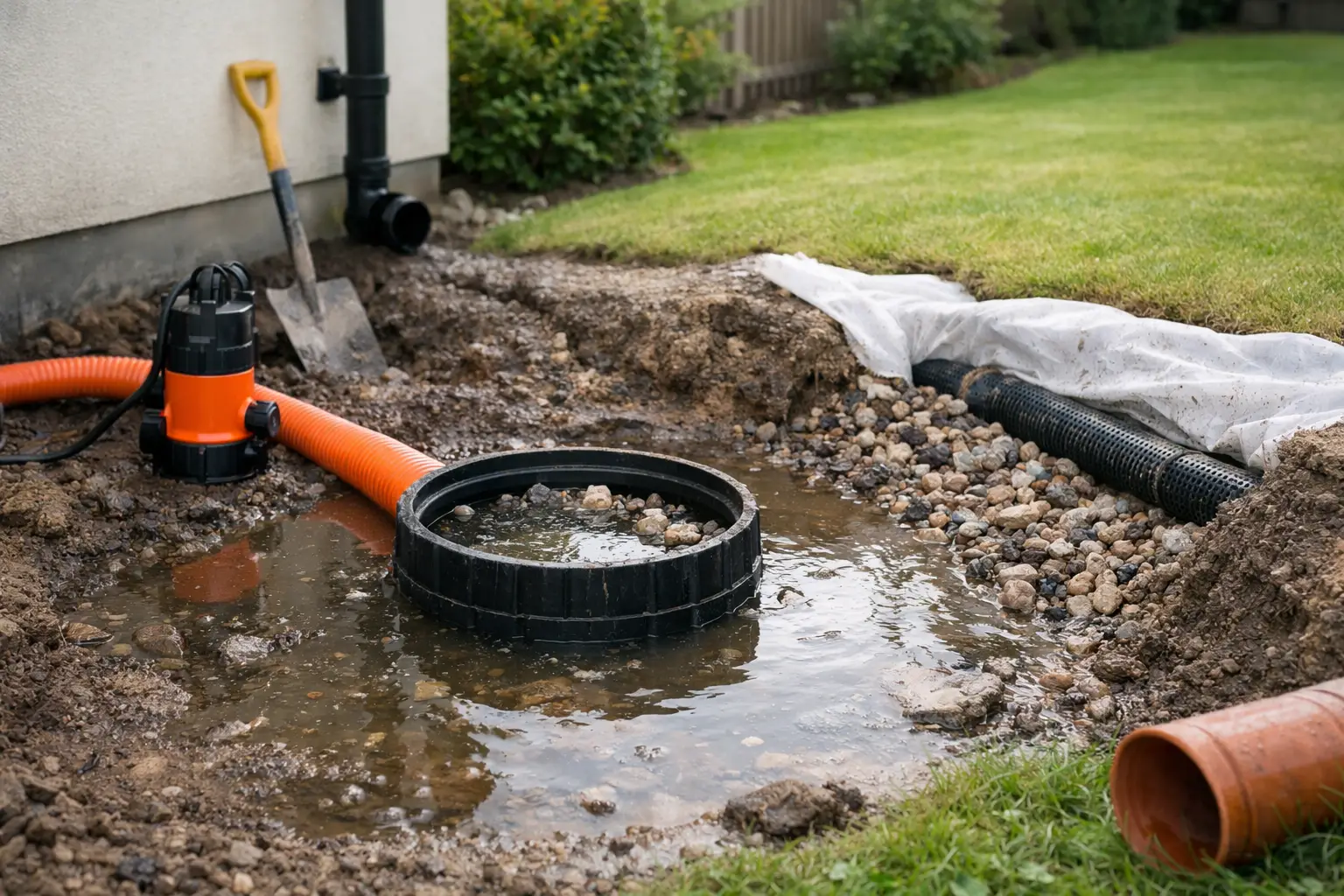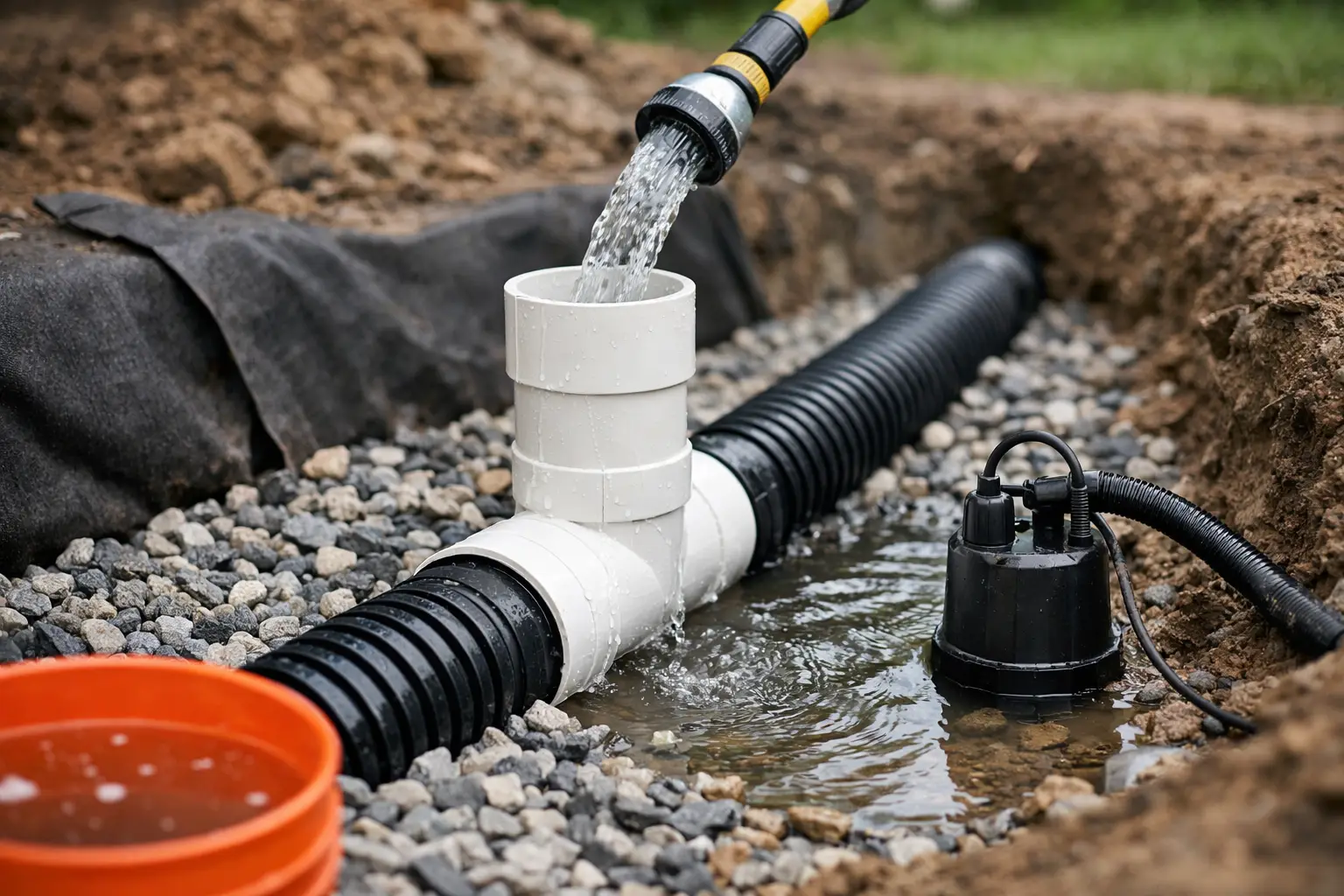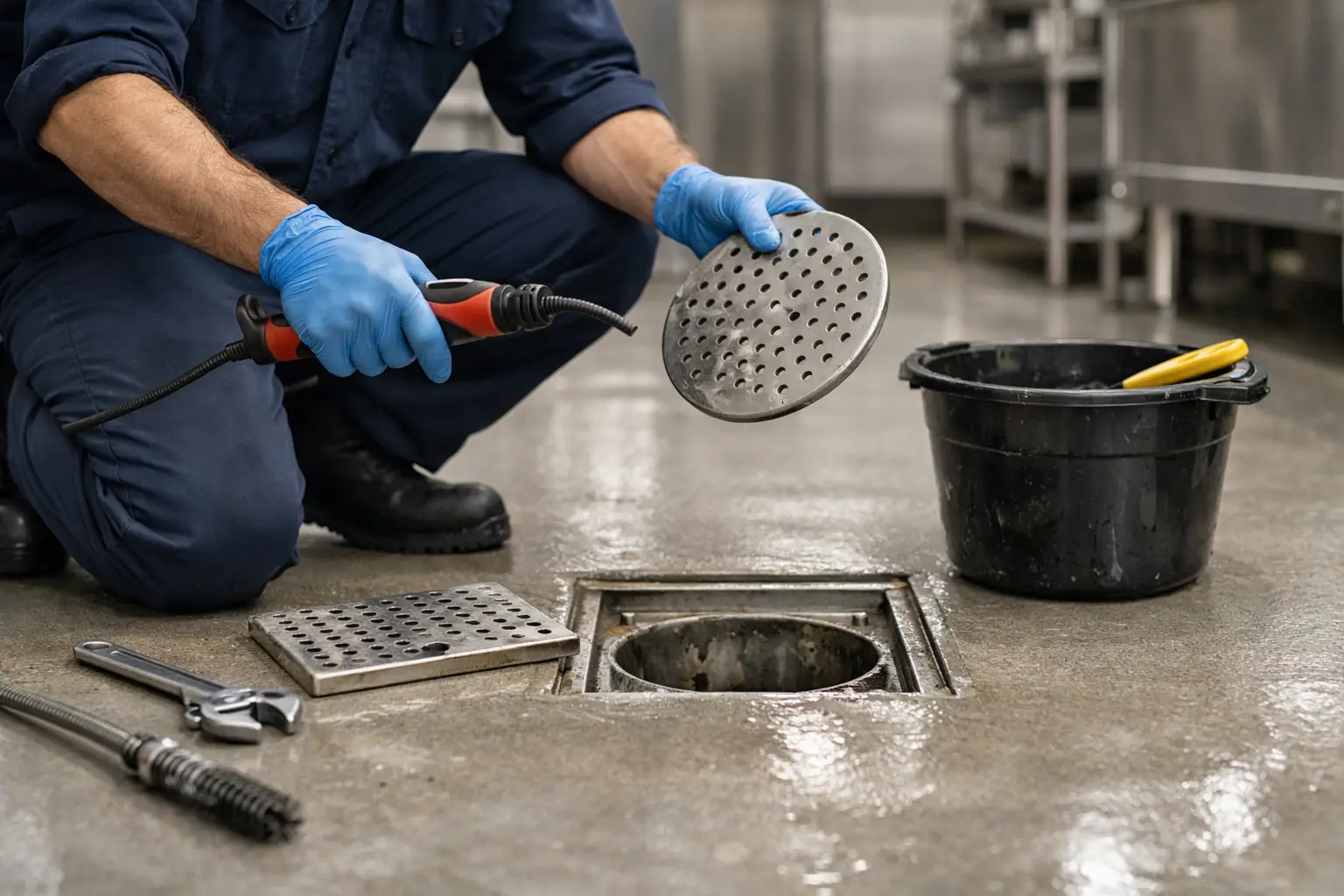
A soakaway is meant to deal with rainwater quietly underground. When it stops doing that, the first signs are often puddles that linger beside the house, water overflowing from gullies, or a patch of lawn that stays boggy long after the rain has passed. This guide has soakaway drainage problems explained in plain English, including what causes them, when they need urgent attention, and how a proper diagnosis avoids paying for a short-term fix.
What a soakaway should do
A soakaway is an underground structure that receives surface water from roofs, gutters, driveways or paved areas and lets it disperse gradually into the surrounding ground. Older systems may be a simple pit filled with rubble or stone. Modern installations often use purpose-made crates wrapped in a geotextile membrane, sized to hold a calculated volume of water.
It is not the same as a foul drain. A soakaway should take rainwater only, not wastewater from toilets, sinks, washing machines or kitchens. It also relies on suitable ground conditions. If the soil cannot absorb water at a workable rate, or the system is too small for the roof and hardstanding it serves, it will struggle even when the pipework itself is clear.
During heavy West Midlands rainfall, a correctly designed soakaway may temporarily hold water while it drains away. Standing water that remains for many hours or days, however, points to a problem worth investigating.
Soakaway drainage problems explained: the common causes
Most failed soakaways come down to a combination of blocked inlets, reduced capacity, poor ground conditions or an installation that was never right for the property.
Silt, leaves and roof debris
Gullies, gutters and downpipes collect more than rainwater. Leaves, moss, grit from roof tiles and silt from driveways can travel into the system over time. Fine material is particularly troublesome because it can work through gaps in old stone-filled pits and clog the surrounding soil.
The water may still disappear in light rain, which makes the issue easy to miss. A downpour then overwhelms the restricted system and sends water back towards the property or across paths and patios.
A collapsed, cracked or displaced pipe
The pipe between a downpipe and the soakaway can crack, become disjointed or collapse because of ground movement, vehicle loading or age. Tree roots can also enter joints and create a solid blockage. In these cases, clearing the gully alone will not solve the underlying fault.
A CCTV drain survey is often the most reliable way to establish what is happening underground. It can show whether water is reaching the soakaway, where a blockage sits, and whether the pipe needs cleaning, repair or replacement.
The soakaway has reached the end of its life
A traditional soakaway can gradually fill with silt and compacted debris. The voids that once held water become blocked, reducing capacity until the pit effectively acts like a sealed container. Some older installations were built without suitable membrane protection, which can allow soil to migrate into the stone over time.
Jetting may remove debris from connecting pipework, but it cannot always restore a silted-up soakaway chamber. Depending on the construction and access, excavation and replacement may be the sensible long-term option.
Poor soil drainage or a changing water table
Clay-heavy ground absorbs water slowly. Some areas also have high groundwater levels at certain times of year, leaving little room for rainwater to disperse. A soakaway that seemed adequate in a dry period may fail repeatedly through winter.
This does not automatically mean the installation is defective. It may mean the original system was undersized, the ground conditions have changed, or extra roof area has been added through an extension, conservatory or garage conversion. A percolation test and site assessment help determine whether a larger soakaway, a different location or an alternative surface-water solution is needed.
Incorrect connections and poor installation
Rainwater should not be routed into a foul drainage system unless there is a lawful, approved arrangement for the property. Equally, foul water must not discharge into a soakaway. Incorrect connections can cause blockages, unpleasant smells, pollution risks and compliance issues.
Poor falls on pipework, crushed crates, inadequate capacity and a soakaway installed too close to foundations are other installation faults that can cause trouble. These are not jobs for guesswork. The right design depends on the drainage layout, ground conditions, runoff area and the position of buildings, boundaries and nearby services.
Signs you should not ignore
A single puddle after exceptional rainfall is not always an emergency. Repeated symptoms are different, especially where water is approaching the building. Look out for:
- water backing up through a gully or downpipe connection;
- persistent pooling on a driveway, patio or lawn;
- damp patches or water collecting near external walls;
- sinkholes, soft ground or unexplained dips above the soakaway area;
- a musty smell around gullies or visible dirty water after rainfall.
If water is entering the property, threatening electrics, or undermining paving and foundations, treat it as urgent. Keep people away from soft or sunken ground, as a failed chamber can leave voids below the surface.
Why clearing it is not always the answer
It is tempting to assume a soakaway problem is simply a blockage. Sometimes it is. Clearing leaves from gutters and gullies, then jetting a blocked surface-water pipe, can restore normal flow where the soakaway itself remains sound.
But repeated flooding after clearing is a warning that the cause lies further down the system. Sending more water under pressure into a collapsed pipe or saturated soakaway can make little difference and may mask the real issue. The practical approach is diagnosis first: inspect the accessible gullies, trace the surface-water run, use CCTV where suitable, and assess whether the soakaway is receiving and dispersing water.
For properties with an older drainage layout, records may be incomplete or inaccurate. A survey can provide a clear picture before work starts, which is particularly useful for landlords, buyers and commercial property managers who need evidence for planned repairs or insurance discussions.
Repair, replacement or a new design?
The right remedy depends on what the investigation finds. A blocked inlet or pipe may need professional cleaning with high-pressure water jetting. Root-damaged or cracked pipework may be repaired locally, and some defects can be addressed with no-dig relining where the pipe condition and route allow it.
If the soakaway chamber is full of silt, structurally damaged or too small, replacement is usually more reliable than repeated call-outs. A new crate system can be designed around the runoff it needs to handle, but only after checking the ground is suitable. On slow-draining ground, the answer may be a redesigned surface-water arrangement rather than simply digging a larger hole.
There are trade-offs. Excavation causes disruption and cost, but it may be the only durable answer for a failed chamber. No-dig repairs reduce disturbance to gardens, paths and driveways, but they cannot fix a soakaway that no longer has the capacity to drain. A trustworthy contractor should explain which work is necessary, what can wait, and why.
Preventing future soakaway failures
Basic maintenance makes a real difference. Keep gutters clear, remove leaves and silt from gullies, and make sure downpipes discharge as intended. After heavy rain, take note of how long water remains around the system. Changes in drainage behaviour are easier and cheaper to deal with before water starts reaching walls or internal spaces.
Avoid driving heavy vehicles over a soakaway unless it was specifically designed and protected for loading. Do not build over it, pave over access points without thought, or direct additional roof water into it following an extension. Any alteration that increases runoff should be assessed rather than assumed to be harmless.
When a soakaway keeps failing, a clear diagnosis is more valuable than another temporary clearance. West Midlands Drainage can investigate the surface-water route, inspect pipework and explain the practical repair options without hidden fees. The useful next step is simple: act when the first repeat signs appear, while the issue is still outside the property and the choices are wider.