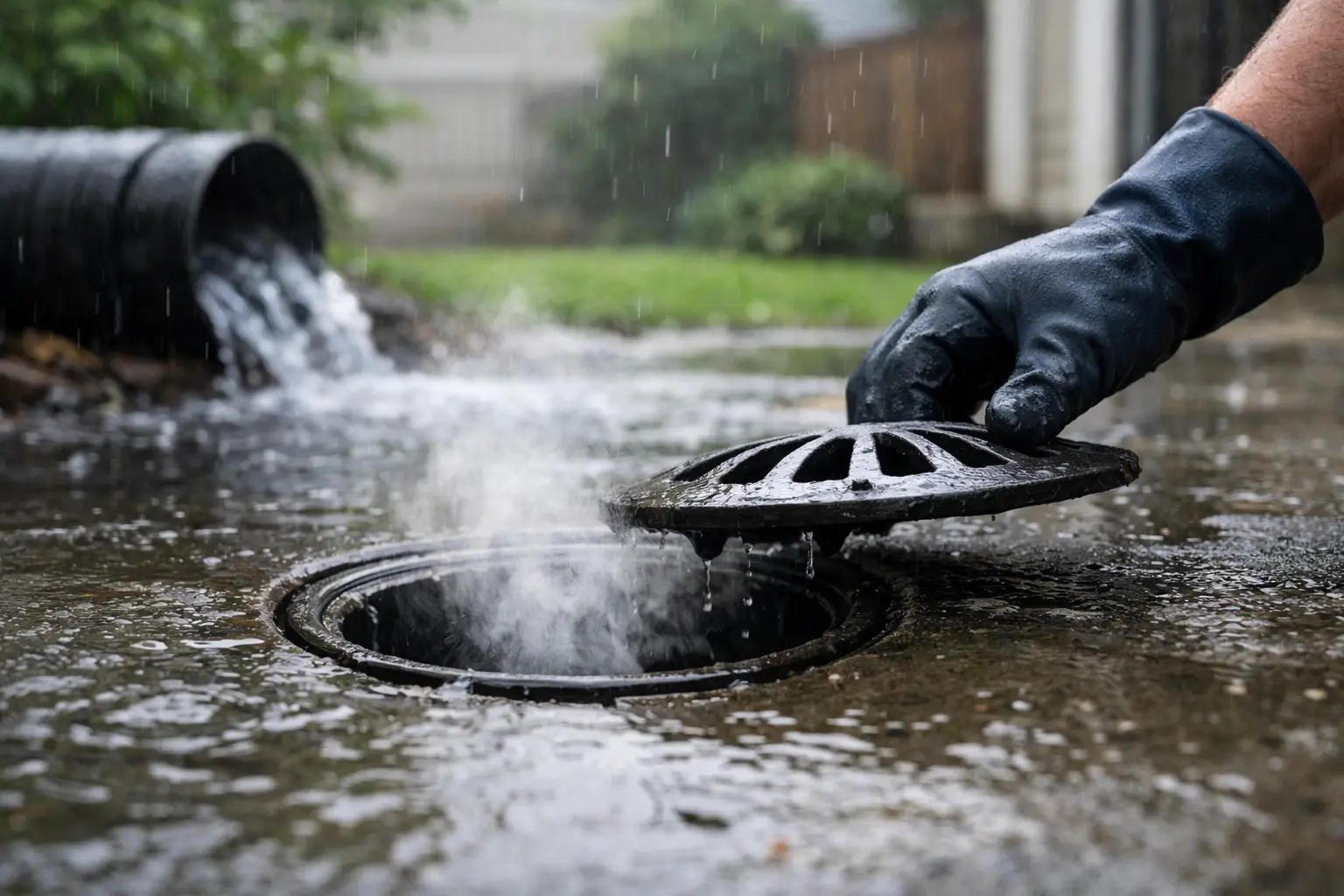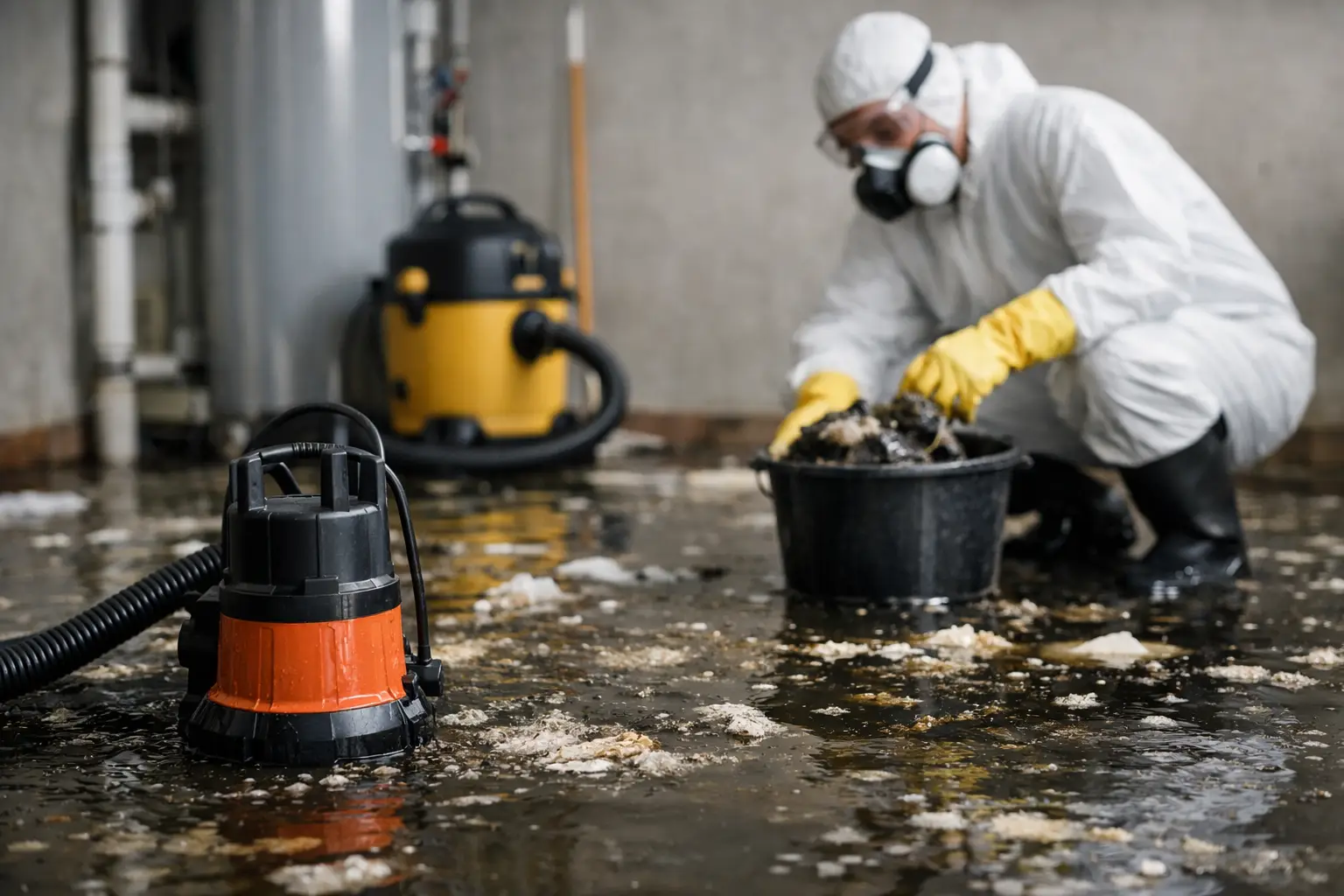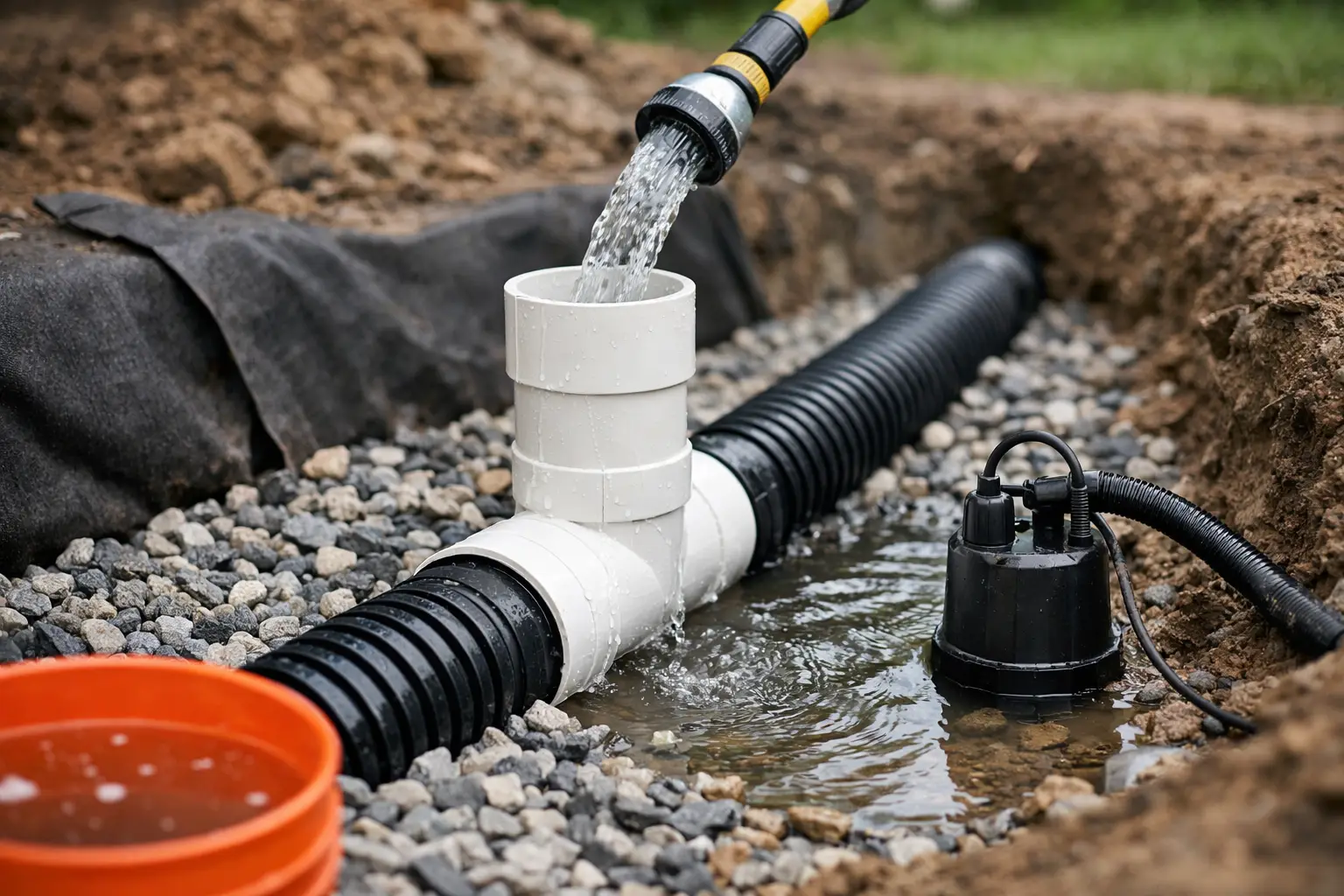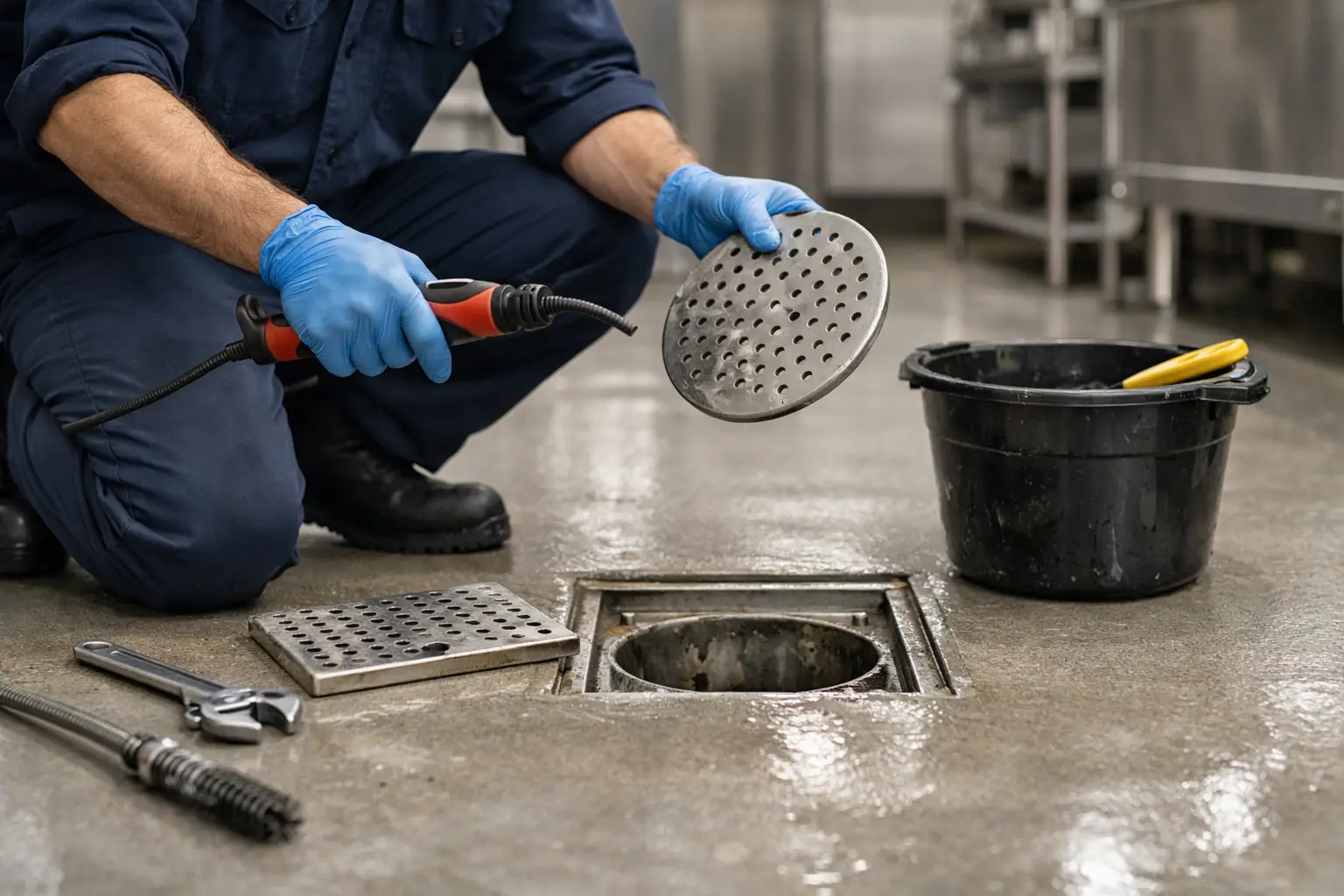
A drain smell after heavy rain is more than an unpleasant nuisance. If the smell appears around a gully, bathroom, kitchen or outside manhole soon after a downpour, the extra water may be exposing a blockage, poor ventilation or damage below ground. It is often a warning sign that a drain is no longer moving water as it should.
A brief smell that clears as surfaces dry may have a simple cause. A smell that returns after every spell of wet weather, comes with slow-draining fixtures or is strongest near an inspection chamber needs proper investigation. The aim is not to mask the odour. It is to find where sewer gases are escaping and why.
Why drains can smell after heavy rain
Drainage systems are designed to carry foul water and rainwater away while keeping odours outside the property. Heavy rainfall puts that system under extra pressure. Water can fill a partially blocked pipe, lift debris into a gully, or expose a fault that is barely noticeable in dry weather.
The cause depends on the type and age of the drainage around your property. Many older homes across Wolverhampton and the wider West Midlands have shared or combined arrangements, where rainwater and wastewater enter connected pipework. A sudden volume of rain can make an existing weakness much more obvious.
A blocked gully or drain run
Leaves, silt, moss, soil and general debris collect in gullies over time. During heavy rain, water should pass quickly through the gully and into the drain. If it cannot, dirty standing water can disturb waste in the pipework and release a strong sewer smell.
You may also see bubbling, slow drainage, water sitting around the grate or a gully overflowing near a wall or patio. Clearing only the visible debris may improve things for a while, but it will not remove a blockage further along the line. Professional high-pressure water jetting is often the right way to clear the pipe properly and confirm water is flowing freely again.
A dry or faulty trap
Traps are the curved sections of pipe beneath sinks, baths, showers and some external gullies. They hold water to create a seal against smells rising from the drain. If a trap has dried out, cracked or been siphoned empty, sewer gases can enter the property.
This is particularly common in little-used bathrooms, utility rooms, vacant rental properties and outbuildings. Heavy rain does not always cause the dry trap itself, but the change in air pressure within the drainage system can make an existing problem more noticeable. Running water into rarely used sinks, showers and floor drains can restore the seal, provided the trap is sound.
Drain ventilation problems
Your drainage system needs ventilation so gases can escape safely and pressure can balance as water moves through the pipes. A blocked, damaged or poorly installed soil vent pipe can leave those gases looking for another route, often through a gully or an internal appliance trap.
Signs can include gurgling from toilets or plugholes, a smell that worsens after flushing, or odours appearing in more than one room. Ventilation faults should be checked by an experienced drainage engineer. The solution may be straightforward, but guessing can lead to unnecessary work or miss a separate blockage.
Cracked pipes, displaced joints or root ingress
Rainwater can enter damaged underground drains through cracks and open joints. At the same time, wastewater can seep into surrounding soil rather than reaching the sewer as intended. This can produce persistent odours, wet patches, subsidence around paving, or recurring blockages after wet weather.
Tree roots are another common issue. They follow moisture and can work their way into small gaps in older pipework, gradually trapping waste and causing joints to shift. A drain may still work in normal conditions, then struggle badly when rainwater increases the flow.
A CCTV drain survey is the reliable way to identify this type of fault. It shows the condition of the pipe internally, including cracks, root intrusion, collapses and poor connections, without digging up the garden or driveway first.
What you can safely check before calling for help
Start outside if it is safe to do so. Look at visible gullies and channel drains once the rain has eased. Remove leaves and loose debris from the grate using gloves, but do not put your hands into the drain or use harsh chemical cleaners. Chemicals rarely resolve a serious blockage and can create a hazard for anyone working on the system later.
Inside, run water into sinks, baths and showers that are not regularly used. Check whether the smell reduces and whether any fixture drains slowly or makes a gurgling sound. Note where the smell is strongest and whether it seems to come from a specific room, gully or manhole. These details help narrow down the cause quickly.
Do not lift a heavy inspection chamber cover without the right equipment and help. Covers can be awkward, damaged or unsafe to handle, and drains may contain harmful gases. If sewage is backing up, a toilet is bubbling, or dirty water is coming into the property, treat it as an urgent drainage problem rather than a job for home remedies.
When a rain-related drain smell needs professional attention
A one-off odour from an external gully after exceptional rainfall may settle once water levels drop. Repeated smells are different. They suggest the system is not coping under load, and the next storm could bring an overflow or internal backup.
Arrange an inspection promptly if you notice a smell after every heavy shower, standing water that does not clear, repeated blockages, damp ground near the drain line, or foul water around a manhole. Landlords should also act quickly where tenants report sewer odours, as the issue may affect hygiene, comfort and the condition of the property.
For shops, offices, restaurants, warehouses and managed sites, a drainage smell can be disruptive long before it becomes a visible flood. Planned cleaning and CCTV inspection can be more practical than waiting for a busy period or another storm to expose the fault.
How a drainage engineer finds the real cause
A proper visit should begin with diagnosis, not an automatic recommendation for excavation. The engineer will assess the affected gullies, fixtures and accessible chambers, then consider the recent weather, drainage layout and symptoms.
If a blockage is suspected, high-pressure jetting can clear silt, grease, scale and debris from the pipework. Water flow can then be tested to check whether the issue has been resolved. Where there is evidence of damage or a recurring fault, a CCTV camera inspection provides a clear view of the drain’s internal condition.
That evidence matters. It separates a removable blockage from a fractured pipe, root ingress or a collapsed section. If repair is needed, no-dig CIPP relining may be suitable for some pipes, creating a new structural lining inside the existing drain with far less disruption than excavation. It depends on the location, extent of the damage and condition of the pipe, so a survey should always come first.
Preventing the smell from returning
Keep external gullies free of leaves and garden debris, especially before autumn and periods of forecast heavy rain. Avoid washing fats, oils, food scraps, wipes or sanitary products into the drainage system. They are frequent causes of blockages, even where a drain appears to cope most of the time.
Run water through unused fixtures every few weeks to keep their traps full. If you are responsible for a rental property or commercial premises, scheduled maintenance is worth considering where the site has mature trees, older drains, frequent usage or a history of wet-weather problems.
West Midlands Drainage can inspect, clear and repair drains across the region, with straightforward advice on what has been found and what work is actually needed. A drain smell should not become part of life every time the weather turns. Getting the cause checked early is usually cleaner, cheaper and far less stressful than dealing with a backup later.