A sewer backup is not the sort of problem you leave until morning. The smell is bad enough, but the bigger issue is contamination. If foul water has come up through a toilet, gully, shower tray or basement drain, the right sewer backup cleanup steps can protect your health, limit property damage and stop a bad situation getting worse.
The first thing to understand is simple: sewage is hazardous. It can contain bacteria, viruses and other contaminants that should never be handled like ordinary flood water. That matters whether you are a homeowner in Wolverhampton, a landlord in Walsall or managing a small commercial premises in Birmingham. Fast action helps, but it needs to be the right action.
First sewer backup cleanup steps to take
Start by keeping people and pets out of the affected area. If sewage has backed up into a kitchen, utility room, cellar or ground-floor toilet, close the door if you can and stop anyone walking through it. The more foot traffic there is, the more contamination gets spread through the property.
If it is safe to do so, turn off electricity to affected rooms. Do not step into standing water to reach switches or sockets. If water levels are near electrics and you are not certain it is safe, leave it alone and get professional help. The same applies to gas appliances in flooded areas.
Next, stop using water in the property. Do not flush toilets, run taps, put on the washing machine or use the dishwasher. A lot of customers make this mistake because they are trying to clean up quickly, but adding more wastewater to a blocked or overloaded drainage system usually makes the backup worse.
Then identify where the issue appears to be coming from. If only one sink or toilet is affected, the blockage may be local to that branch. If multiple fixtures are backing up at once, or sewage is rising from an outside inspection chamber or internal floor drain, the problem is often further down the line. That is usually a sign that a proper diagnosis is needed rather than a quick attempt with household chemicals.
What you should not do during sewer backup cleanup
There are a few common reactions that cause more damage than they solve. One is using bleach or drain cleaner straight away. Disinfecting has its place after contamination is removed, but pouring chemicals into a live drainage problem can react with other substances, create fumes and make later repair work more difficult.
Another is trying to save every item immediately. Soft furnishings, cardboard, rugs and anything porous that has been in contact with sewage may not be recoverable. It depends on the level of contamination, how long it has been sitting there and what the item is made from. Hard surfaces can often be cleaned and disinfected properly. Absorbent materials are a different matter.
It is also worth avoiding DIY drain rods or pressure equipment unless you know exactly what you are dealing with. In the wrong hands, rods can disconnect pipe joints, and badly used jetting equipment can force contaminated water into places it should never reach. If the drainage run is damaged, blocked by roots or partially collapsed, guesswork usually wastes time.
How to clean up sewage safely
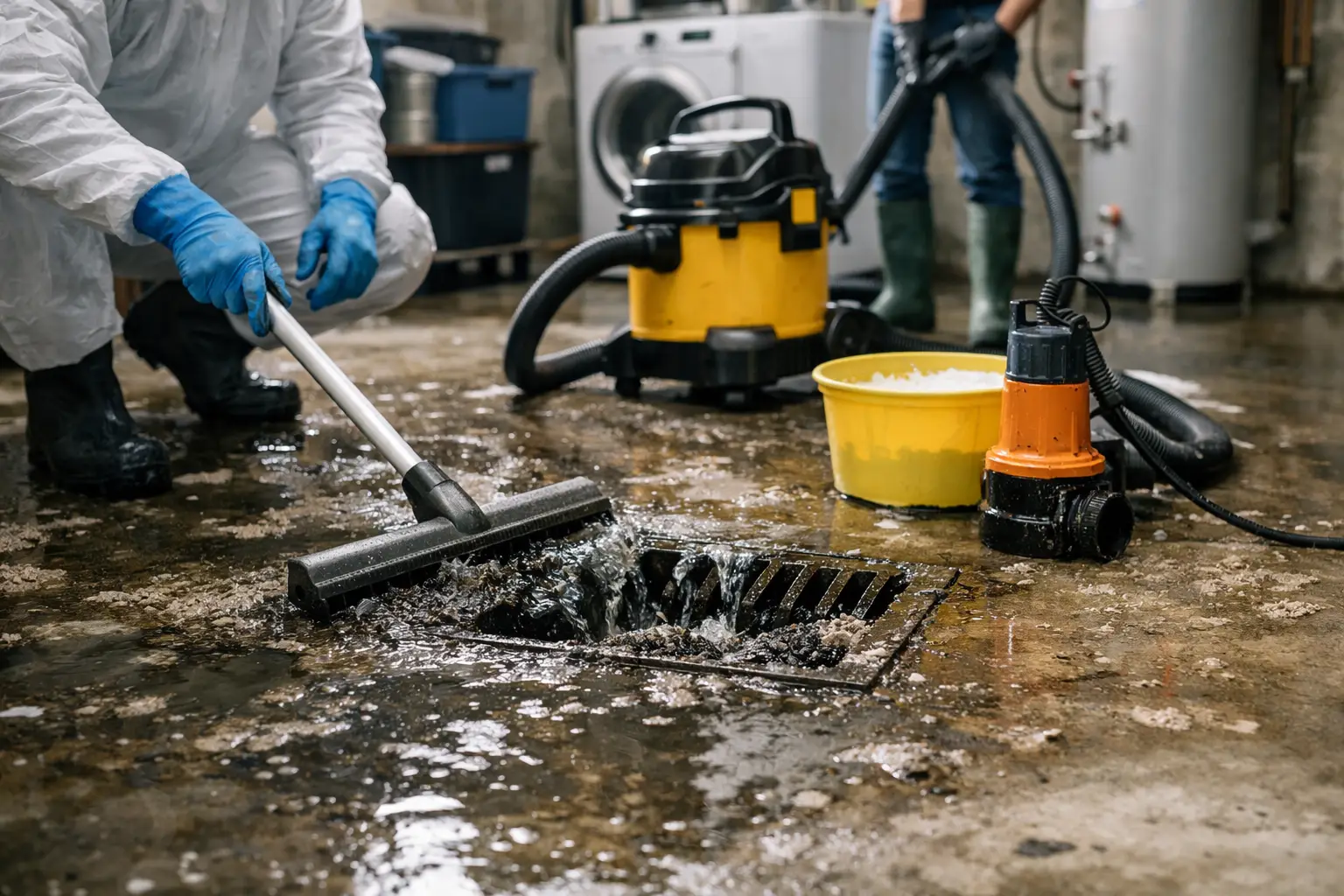
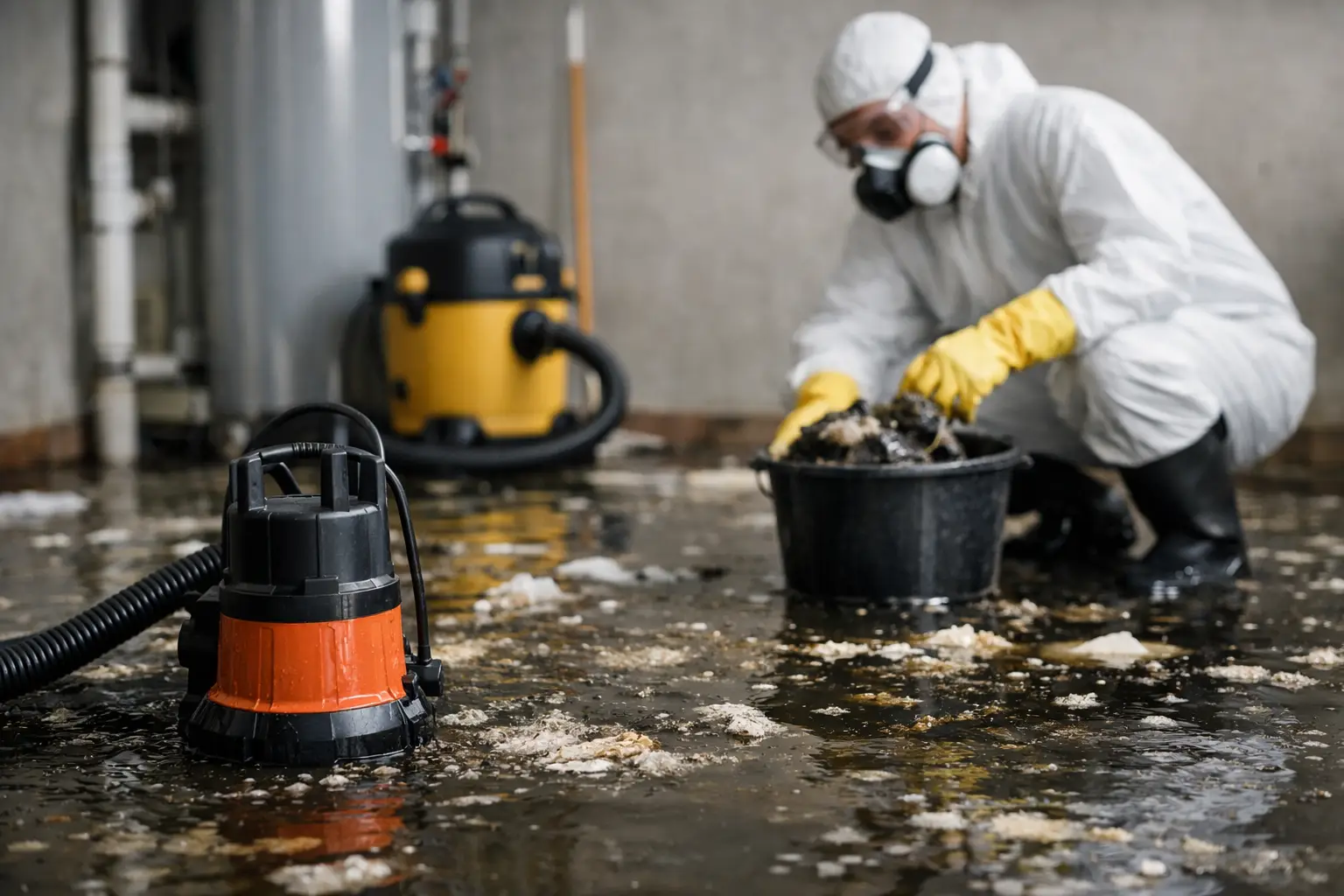
If the affected area is small and you are dealing with minor contamination only, wear proper protection before touching anything. That means waterproof gloves, boots, old clothing that can be washed hot or disposed of, and ideally eye protection and a mask. Open windows where possible to improve ventilation, but do not use fans that may spread contaminants around the room.
Remove standing sewage and contaminated debris carefully. Disposable absorbent materials can help with small volumes, but anything heavily contaminated should be bagged securely and handled with care. Keep clean and dirty areas separate as best you can. It sounds basic, but using the same mop, bucket or footwear throughout the house spreads bacteria far beyond the original problem.
Once visible waste is removed, wash hard surfaces with hot water and detergent first. After that, use an appropriate disinfectant according to the manufacturer’s instructions. The order matters. Dirt and organic matter reduce the effectiveness of disinfectants, so cleaning first and disinfecting second gives you a better result.
Drying the area properly is just as important as cleaning it. Lingering moisture encourages mould, odours and further damage to flooring, skirting boards and plaster. If sewage has soaked under laminate, into chipboard units or behind wall finishes, surface cleaning alone will not be enough.
When sewer backup cleanup steps are not enough
There is a clear point where cleanup becomes a drainage fault rather than a cleaning job. If sewage keeps returning, drains are slow across the property, external manholes are surcharging, or the backup affects more than one room, the main issue is unlikely to be inside the house. At that stage, you need the cause identified and dealt with properly.
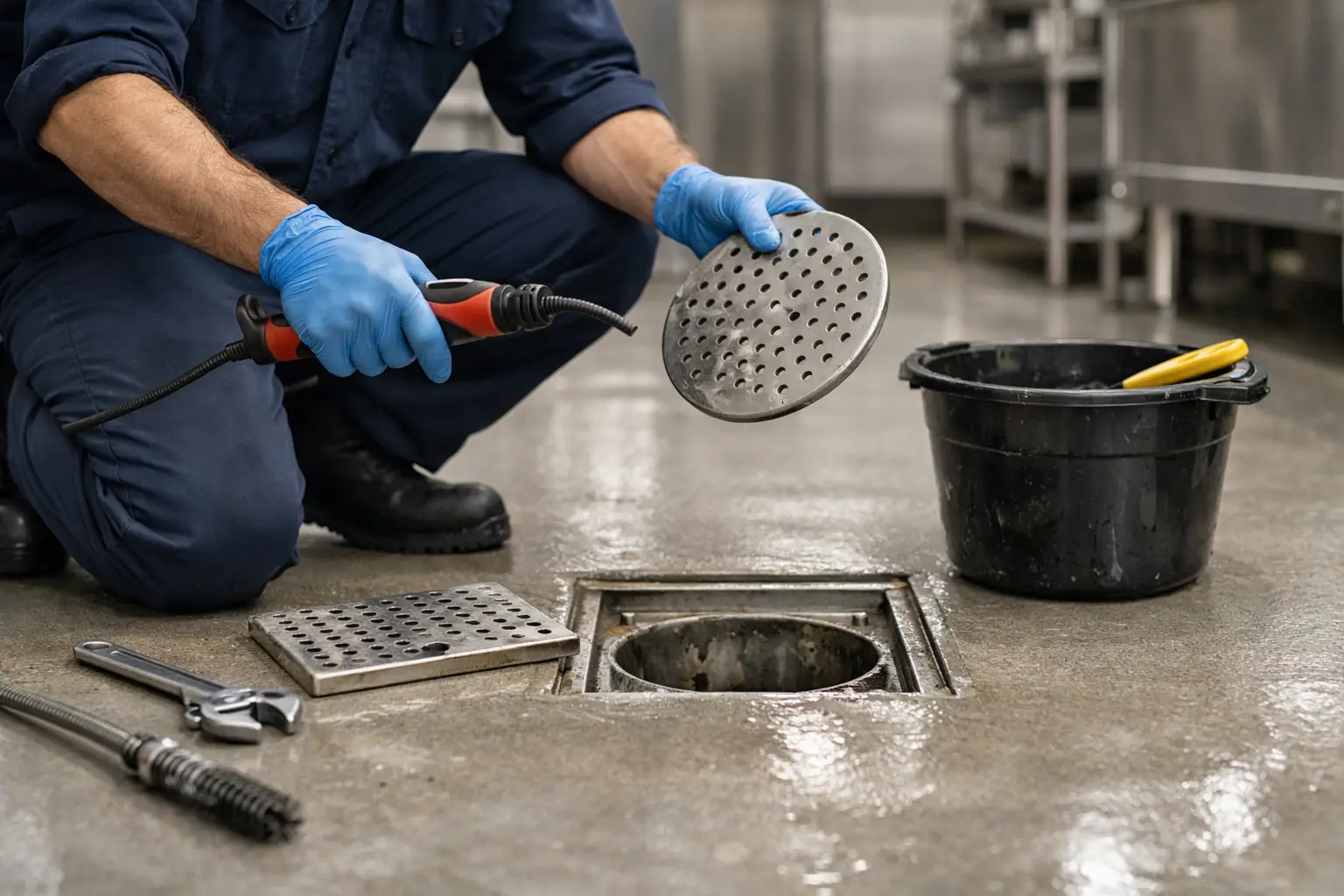
This is where professional drainage equipment matters. A proper inspection can show whether the issue is a simple blockage, a build-up of wipes or grease, root ingress, displaced joints or a cracked pipe. High-pressure water jetting may clear the obstruction, but if the line is damaged, it is only part of the answer. A camera survey gives a clear picture of what is happening underground so you are not paying for repeat call-outs on the same problem.
For some properties, especially older homes and converted buildings, recurring sewage backups are linked to defects that have developed over time. Tree roots, scale build-up, poor falls and ageing pipework are all common causes. In those cases, cleanup is only the first stage. Repair or no-dig relining may be the part that stops the next incident.
Landlords and commercial sites need to think beyond the immediate mess
If you manage tenanted property or commercial premises, there is a duty-of-care issue as well as a practical one. Occupiers need clear instructions, the affected area may need isolating, and there should be a record of what happened, what was damaged and what action was taken. Photos taken early can help with insurance and maintenance records.
It is also worth checking whether the backup has affected shared drainage, neighbouring units or external runs serving more than one part of the site. In shops, offices and small industrial units, a sewage backup can disrupt trading quickly. The temptation is to clean, reopen and hope for the best. That can backfire if the underlying restriction is still there.
After cleanup, focus on the cause
The property may look cleaner once the waste is removed, but the job is not finished until the system is checked. A backup usually happens for a reason, and that reason is not always obvious from the room where the sewage appeared.
Sometimes the cause is straightforward, such as wipes, sanitary products or cooking fat building up in the line. Sometimes it is structural, such as a cracked drain letting in roots or causing waste to snag. And sometimes it is outside the property altogether, particularly after heavy rainfall or where shared drainage is involved. That is why diagnosis-led work matters. Clearing symptoms without finding the fault is how people end up paying twice.
A local drainage specialist should be able to explain what they have found in plain English, what needs doing now, and what can wait if there are options. That matters to homeowners trying to protect the property and to landlords balancing urgency with budget. Honest advice is part of doing the job properly.
How to reduce the risk of another backup
No drainage system is completely immune, but a few sensible habits lower the chances. Do not flush wipes, cotton pads, nappies or sanitary products, even if packaging says flushable. Keep fats, oils and grease out of kitchen sinks. If a property has older drains or a history of repeat problems, periodic inspection can spot developing faults before they become an emergency.
For commercial kitchens, rented properties and buildings with heavier use, planned maintenance often makes more financial sense than repeated reactive call-outs. That is especially true where a blockage would stop business or leave tenants without facilities.
If you are dealing with sewage indoors, speed matters, but so does accuracy. Clean what you can safely, isolate the area, and do not keep using water while the fault is unresolved. If the backup is more than minor, or if there is any doubt about safety or the cause, get a proper drainage engineer involved. A fast temporary fix is not much use if the same foul water is back through the floor next week.