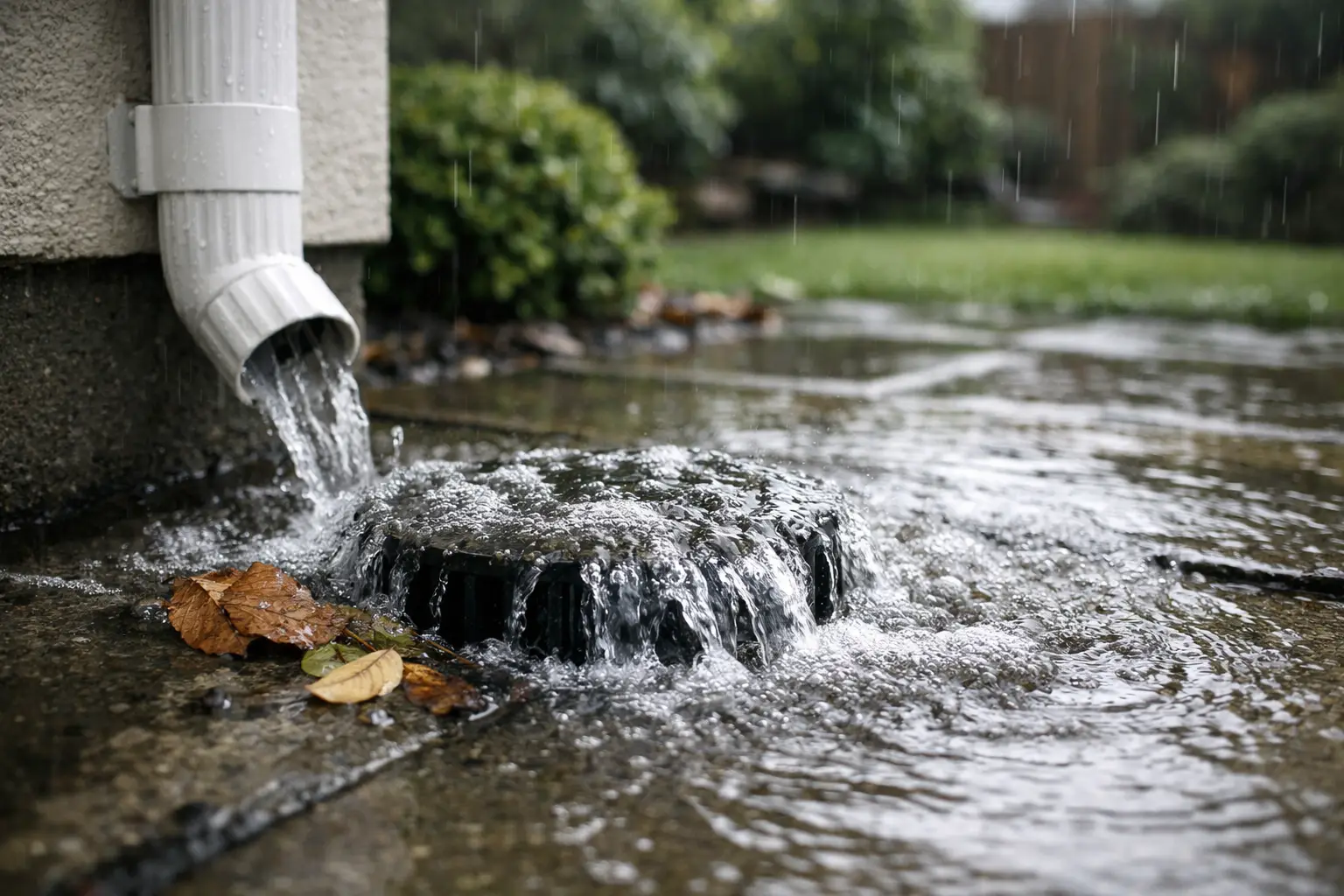
If you have got an outside drain overflowing after rain, the problem is rarely just the weather. Heavy rainfall can expose a drainage weakness that has been building up for months or even years – a partial blockage, collapsed pipework, poor installation, or a soakaway that is no longer doing its job. The rain is usually the trigger, not the root cause.
That distinction matters. If you only clear the visible water and hope it passes, the same issue often comes back with the next downpour. In some cases it gets worse, leading to foul smells, standing water near the property, backed-up gullies, or even internal drainage problems.
Why an outside drain overflowing after rain is happening
Most external drains are designed to cope with normal rainfall. When they overflow, it usually means capacity has been reduced somewhere in the system or the water has nowhere to go. In domestic settings, that often points to silt, leaves, grease, debris, or tree root ingress. In older properties across the West Midlands, it can also mean cracked or displaced pipe sections underground.
A common issue is a blockage in the line serving the gully or surface water drain. Rainwater runs into the system quickly, hits the restriction, and backs up to the nearest low point. That is why homeowners often notice water bubbling up from a drain cover, pooling around a gully, or spilling back across a patio or drive.
Another possibility is that the drainage layout itself is not suitable for the amount of water reaching it. Extensions, new paving, conservatories, and altered landscaping can all change how water moves around a property. If more hard surfacing has been added without proper drainage design, the existing system may be overwhelmed during heavy rain.
Then there is the question of whether the affected drain is carrying surface water, foul water, or a combined flow. That changes the urgency. If rain is causing foul water to surcharge from an external drain, the issue needs proper investigation quickly, because it may indicate a deeper defect or a significant obstruction downstream.
The most likely causes on domestic and small commercial properties
Blockages are still the first thing to check, but not all blockages are the same. A simple build-up of leaves around a gully grid is very different from a fat, silt, and debris restriction ten metres down the line. One may be a quick clean. The other may need high-pressure water jetting and a CCTV inspection to make sure the pipe is fully clear and still structurally sound.
Tree roots are another frequent cause, especially where pipe joints have weakened over time. Roots do not need a large opening to get in. Once inside, they trap wipes, paper, silt, and other debris, gradually reducing flow until heavy rainfall pushes the system past its limit.
Damaged pipework is also high on the list. A drain can crack, deform, or partially collapse without any obvious sign above ground at first. During dry weather, the reduced flow may go unnoticed. Once rain arrives, the defect reveals itself through slow discharge and overflow.
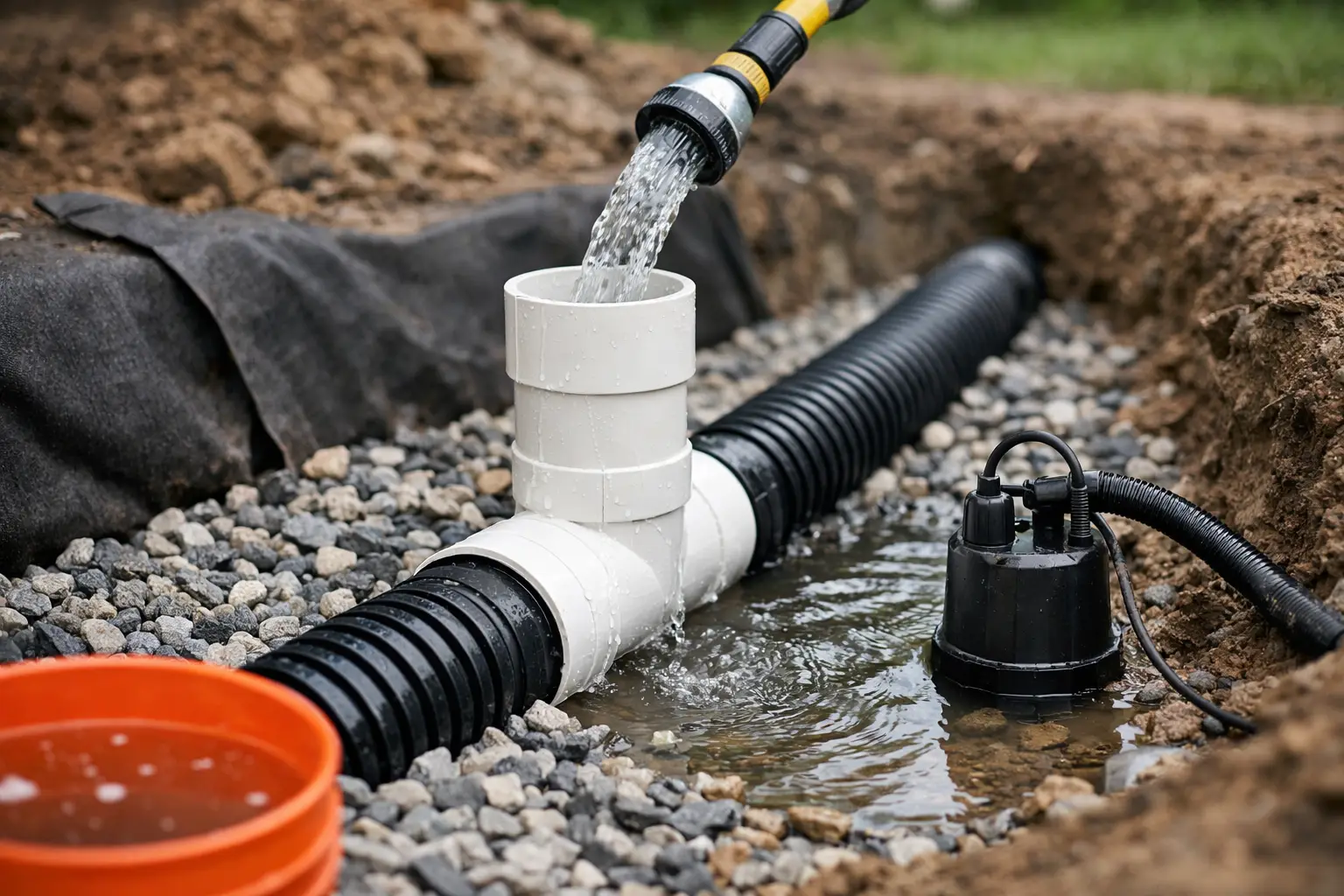
There are also cases where the issue is not a blockage in the traditional sense. A soakaway may be saturated or failed, a channel drain may be poorly connected, or the property may have an incorrectly configured system. We see this more often after renovation work where drainage has been altered without a full understanding of gradients, pipe sizes, and discharge points.
What you should do first
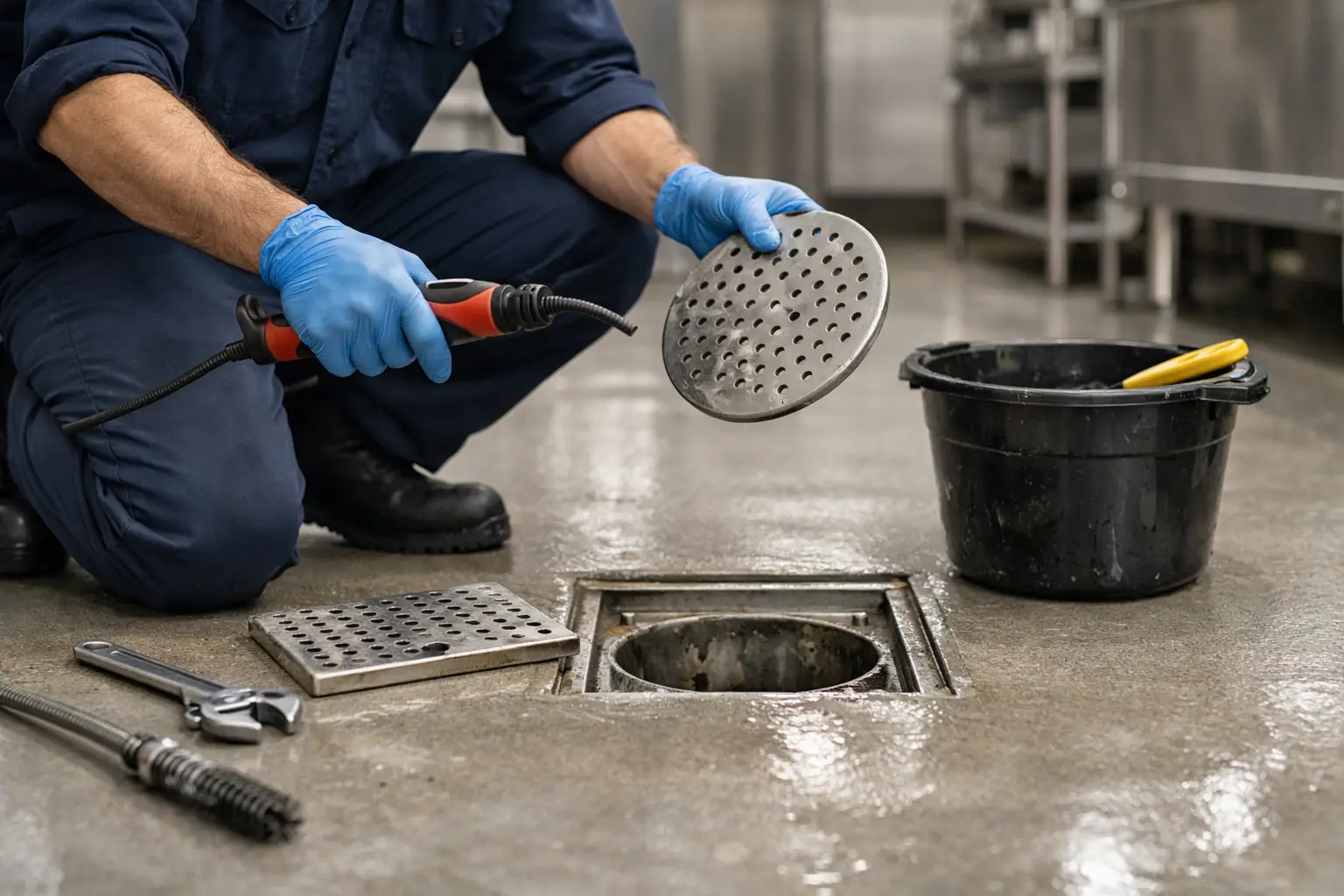
Start with the obvious but do it safely. If water is overflowing around an external drain, check whether the grate or gully top is covered with leaves, mud, or garden debris. Clearing the top surface may help if the problem is very localised. Wear gloves and avoid direct contact if there is any chance the water includes foul waste.
Next, see whether the issue affects only one drain or several. If one gully is overflowing but nearby drains are working normally, the blockage may be close to that point. If multiple drains are backing up, the obstruction is likely further down the system and may need professional equipment to locate and remove.
Pay attention to what type of water is coming up. Clearer rainwater and muddy runoff usually suggest a surface water issue. Grey or foul-smelling discharge points to a more serious drainage problem. If toilets, sinks, or internal waste outlets are also slow, stop using water where possible until the cause is checked.
What you should not do is keep pouring drain chemicals into outside drains and hope for the best. They are often ineffective against silt, roots, or structural defects, and they can make later inspection and repair more unpleasant than it needs to be.
When it is more than just a blockage
If the same drain overflows every time there is heavy rain, that is a strong sign the problem needs diagnosing properly. Repeated overflow usually means there is an underlying fault that has not been dealt with. Clearing a drain without checking the pipe condition can be a short-term fix, but it is not always the right one.
This is where CCTV drain surveys become useful. A camera inspection shows whether the line is blocked, cracked, root-affected, poorly jointed, or partially collapsed. It also helps confirm whether the system has been installed correctly in the first place. For landlords, buyers, and commercial site managers, that kind of evidence matters because it removes guesswork and helps you authorise the right repair.
There is a trade-off here. A straightforward blockage may not need extensive investigation if it is a one-off and clears fully. But if overflow is recurring, if there are signs of structural damage, or if the property has a history of drainage trouble, proper diagnosis usually saves money compared with repeated call-outs that never get to the root cause.
How drainage specialists fix the problem properly
The correct repair depends on what is found. If the issue is a blockage, high-pressure water jetting is often the quickest and most effective way to restore flow and remove stubborn debris from the pipe wall. That is very different from a superficial poke around at the drain opening. A proper jetting unit can clear deeper restrictions and leave the line far cleaner.
If CCTV shows root ingress or localised damage, the next step may be a targeted repair. In some cases, no-dig methods such as CIPP relining can restore the pipe internally without major excavation. That keeps disruption down and is often a sensible option where access is tight or hard landscaping would be expensive to disturb.
Where the problem is failed installation or inadequate drainage design, repair alone may not solve it. The system may need alteration, additional drainage capacity, or a new soakaway arrangement. This is common where drives have been enlarged, gardens have been paved over, or extensions have changed the amount of water running toward one point.
A dependable drainage contractor should explain that difference clearly. Sometimes the answer is a clean and clearance. Sometimes it is a repair. Sometimes it is redesign. Treating all three as the same job is how customers end up paying twice.
Signs you should not ignore
Overflow after rain is one warning sign, but there are others that often appear alongside it. Slow-draining gullies, standing water that lingers long after rainfall, bad odours outdoors, movement around drain covers, and repeated blockages all point to a system that needs attention.
For commercial properties, there is an extra concern. Surface water or foul overflow near entrances, bin stores, loading areas, or customer access routes can quickly become a hygiene and safety issue. Waiting for the next storm to see if it happens again is rarely a wise plan.
If the property is tenanted, recurring drainage problems can also lead to complaints, damage claims, or avoidable maintenance costs. A proper inspection and durable repair tends to be the more economical route than repeated emergency attendance.
Preventing the same issue next time it rains
Some drainage problems are not preventable, especially where old pipework has simply reached the end of its serviceable life. But many are manageable with regular maintenance and early diagnosis. Keeping gullies clear of leaves and surface debris helps. So does acting on slow drainage before it turns into overflow.
For properties with a history of problems, periodic inspection makes sense. That is particularly true for landlords, older homes, commercial sites, and premises with lots of surrounding trees. If a system is known to be vulnerable, planned maintenance is usually cheaper and far less stressful than an emergency visit in bad weather.
At West Midlands Drainage, the focus is on finding the actual cause and fixing it properly, whether that means jetting, CCTV inspection, repair, or replacement. That matters because an outside drain that overflows after rain is not just an annoyance. It is your drainage system telling you something is wrong.
The helpful next step is not to guess. It is to get the problem identified before the next spell of heavy rain turns a manageable repair into a much bigger one.