If rainwater is sitting around an outside drain or foul water is backing up near a gully, you need to deal with it quickly. Knowing how to clear gully blockage can save a lot of mess, but it also helps to understand when a simple surface blockage is hiding a bigger drainage problem further down the line.
A blocked gully is one of those jobs that can look minor at first. Leaves collect, silt builds up, grease hardens, or a plastic bag gets lodged in the trap. Then the next heavy shower hits, water has nowhere to go, and suddenly you are dealing with overflow, smells, and standing water around the property.
What a gully does and why it blocks
A gully is the outside drainage point that takes water away from areas such as patios, driveways, utility rooms, kitchens or rainwater downpipes, depending on the property layout. Many gullies include a trap, which is useful for stopping smells from rising back up, but that same bend is also where debris tends to collect.
The cause of the blockage matters. If it is just leaves, mud and surface rubbish near the top, that is often straightforward to remove. If the gully keeps filling after you clear it, the issue may be in the connecting pipework. That is where many people waste time repeating the same clean-up without fixing the actual fault.
How to clear gully blockage safely
Start with the basics. Put on gloves, old clothes and sturdy footwear. If the gully is holding foul water rather than just rainwater, take hygiene seriously and keep children and pets away from the area.
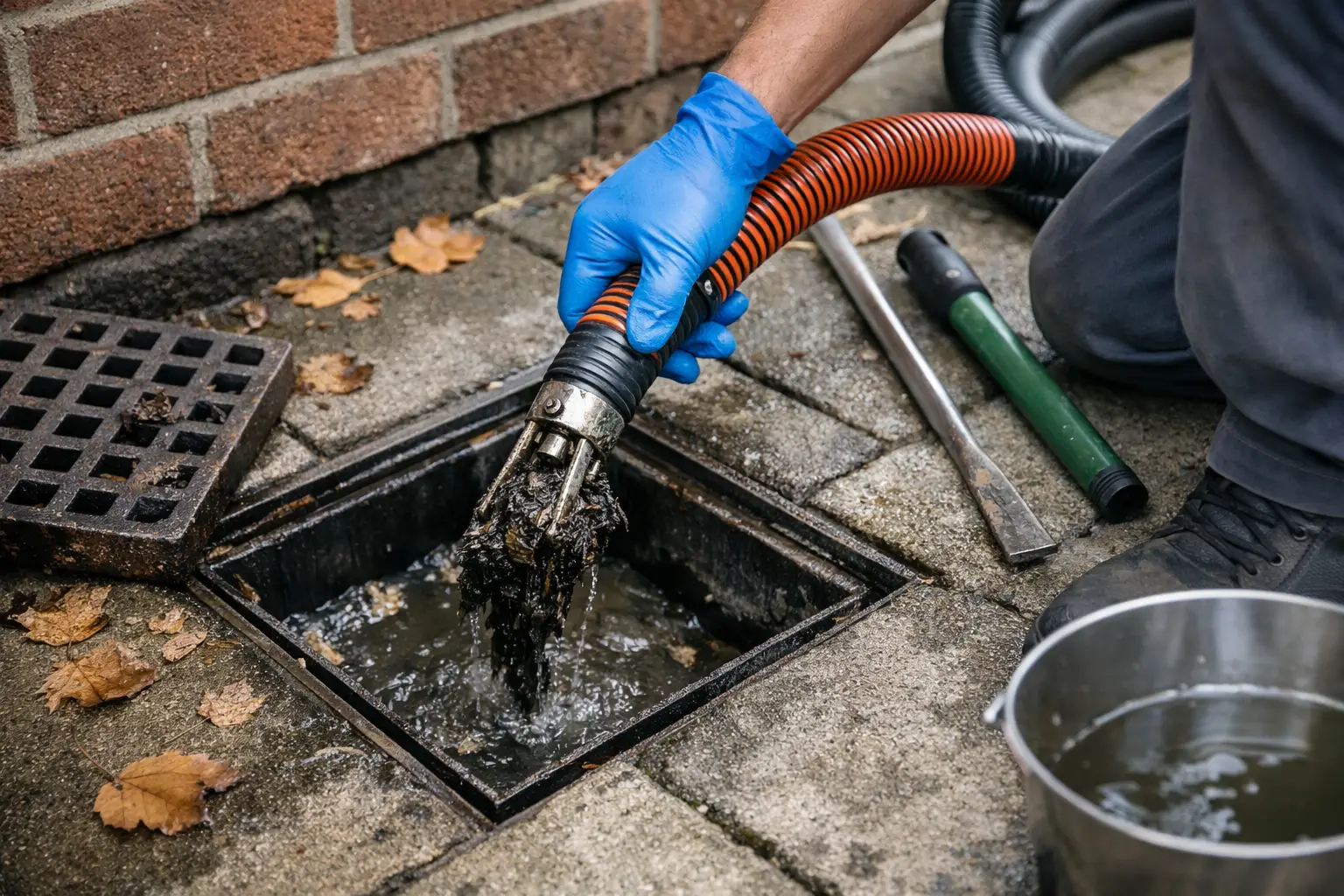
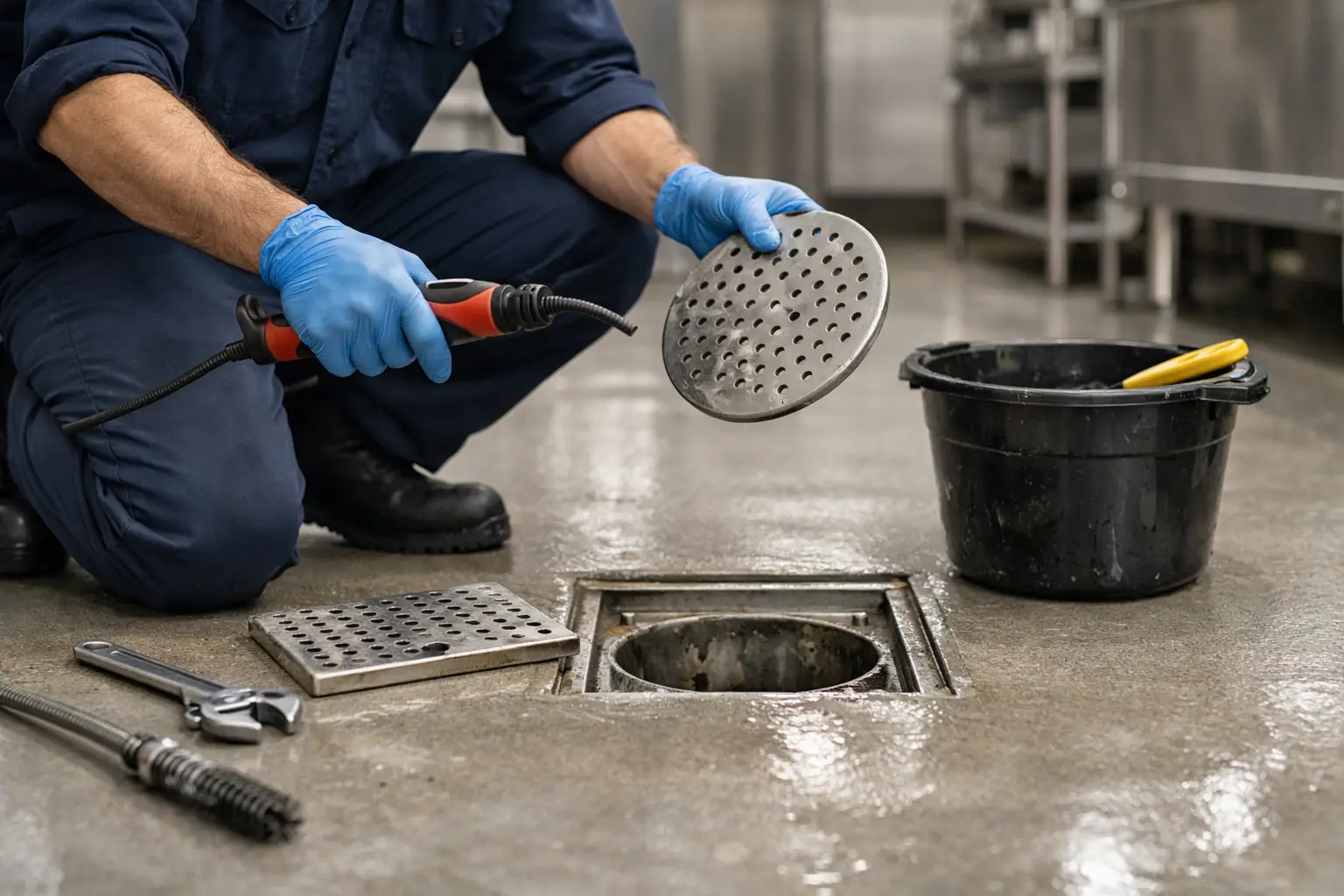
Lift off the gully grid or cover if there is one. In many cases, the blockage is visible straight away. Scoop out leaves, sludge, grit and any obvious debris from the top of the chamber. A small trowel, drain scoop or even a strong plastic dustpan can help. Put the waste into a bucket or heavy-duty bag rather than washing it elsewhere across the paving.
Once the top section is clear, pour in a bucket of water and watch what happens. If the water drains away steadily, you have probably dealt with a shallow blockage. If it rises quickly, drains very slowly, or sits there, the obstruction is likely deeper in the trap or pipe.
At that point, try a drain rod carefully if you have one. Feed it in gently and avoid forcing it around bends. Too much pressure can compact the blockage further or damage older pipework, especially if joints are already weak. Turn the rods steadily and keep control of the connection so they do not unscrew inside the drain.
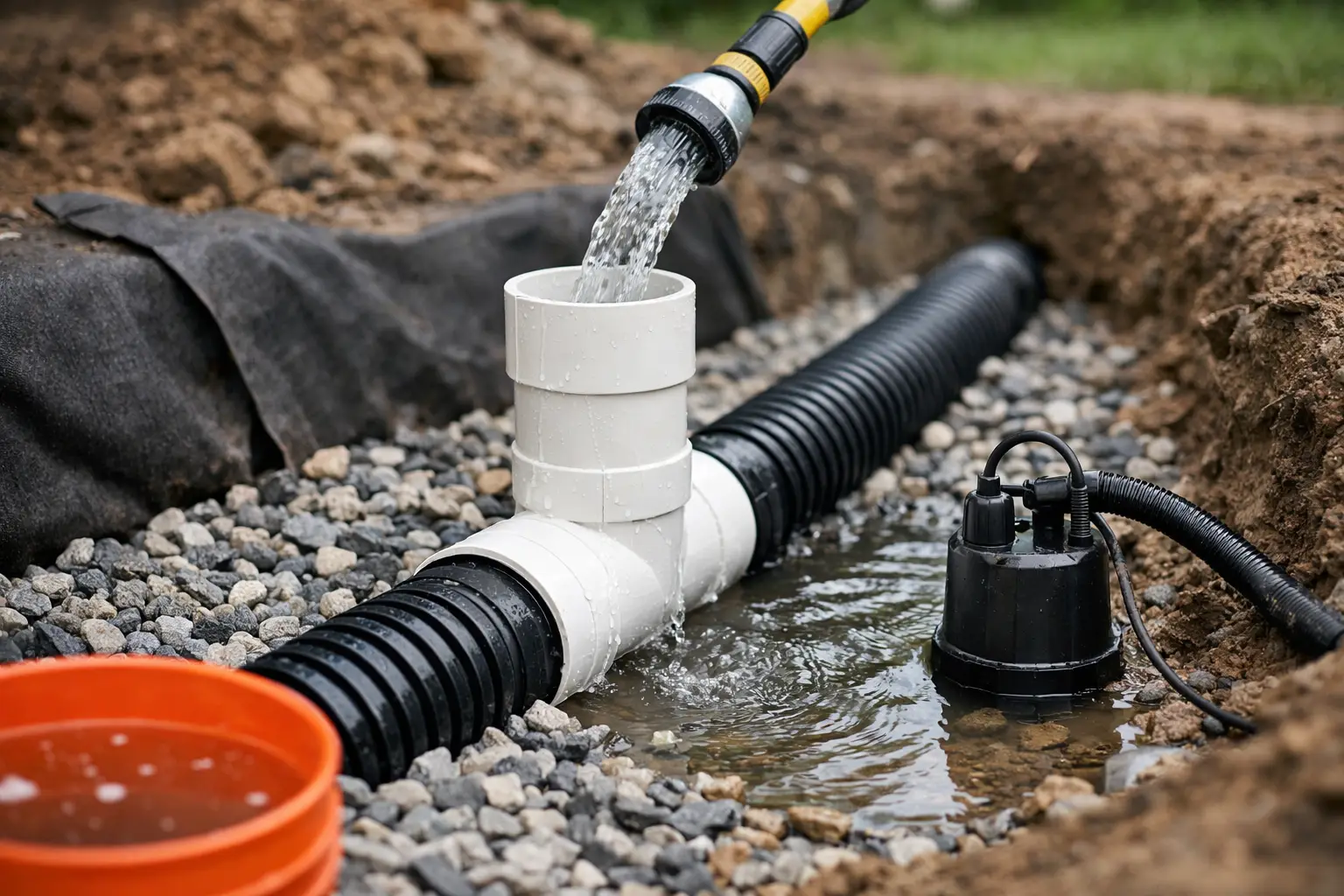
If you do not have rods, a hose can sometimes help shift loose silt after the visible debris has been removed. This works best on minor build-up, not on solid obstructions or root ingress. It is a flushing method, not a cure-all.
What not to do when clearing a blocked gully
A lot of damage happens because people go too hard, too early. Pouring strong chemicals into an outside gully is rarely the smart answer. They often do very little against leaves, mud or compacted silt, and some products can create fumes or cause splashing when you disturb the water later.
It is also worth avoiding makeshift tools that can snap off in the drain. Wire hangers, brittle sticks and random bits of metal tend to make a bad situation worse. If something breaks below the water line, the next step usually becomes more expensive.
Pressure washers are another one to treat with care. Used correctly, specialist water jetting is very effective. Used without the right nozzles, hose control and understanding of the pipe run, a domestic pressure washer can be messy and ineffective. It may clear the top while leaving the real restriction in place.
Signs the blockage is deeper than the gully
One of the biggest clues is repeated backing up. If you clear the chamber and it blocks again after the next shower or after using sinks, washing machines or outside taps, the problem is likely further along the drainage run.
Bad smells that do not improve after cleaning can also point to a deeper issue. The same goes for water coming back up from the gully when internal appliances discharge. That usually means the system is struggling downstream rather than at the surface.
In older properties, collapsed sections, displaced joints or root ingress are not unusual. In newer builds, construction debris and poor installation can also be factors. That is why a blockage that looks simple from above sometimes needs proper diagnosis instead of more poking and prodding.
When professional equipment makes the difference
For a straightforward domestic blockage, manual clearing may be enough. But if the gully is full of foul water, the blockage is stubborn, or the issue keeps returning, specialist equipment is usually the quickest route to a lasting fix.
High-pressure water jetting is designed to break down and remove compacted debris from the line, not just punch a small hole through it. Done properly, it cleans the pipe wall far more effectively than improvised methods. That matters because partial clearing is exactly how recurring drainage problems start.
If there is any doubt about the condition of the drain, a CCTV inspection helps identify the real cause. That could be root ingress, a cracked pipe, scale build-up, a displaced junction or a section holding water because of poor fall. Once you know what is actually wrong, you can decide on the right repair instead of paying for repeat unblocking.
For homeowners and landlords, that diagnosis-led approach usually works out better value. You are not just getting water moving for today. You are finding out why it stopped moving in the first place.
How to prevent another gully blockage
Prevention is not complicated, but it does need doing regularly. Keep gully grates clear of leaves and garden waste, especially in autumn and after windy weather. If the gully takes discharge from an area where mud and grit wash in, clean it before that build-up hardens.
Be careful what goes into connected waste lines. If the outside gully serves a kitchen waste pipe, fats and grease are common contributors to blockages further down. If it receives washing machine or utility waste, lint and detergent residue can build over time, particularly in systems that already have partial restrictions.
It is also sensible to keep an eye on how quickly water drains away during heavy rain. Slow drainage is often the early warning sign people miss. Dealing with it then is far easier than waiting until the gully overflows across the path or backs up against the property.
DIY or call a drainage specialist?
It depends on what you are seeing. If the blockage is clearly surface-level and you can remove it safely, a DIY clean-out is reasonable. That is often enough for minor rainwater gullies blocked by seasonal debris.
If the gully contains sewage, the water level will not drop, multiple drains are affected, or the issue keeps coming back, it is time to stop guessing. The same applies if you suspect root ingress, a collapsed line or damage to older clay pipes. Those jobs need more than a pair of gloves and a hosepipe.
A good drainage contractor should explain what they have found, what they are doing, and whether the blockage is a one-off or part of a bigger defect. Straight answers matter, especially when you are dealing with a messy problem under time pressure.
Across the West Midlands, that is exactly why many customers want a local team that can respond quickly, use the right equipment, and sort the cause rather than just shifting the symptom. West Midlands Drainage works that way – clear diagnosis, no hidden charges, and repairs that are meant to last.
How to spot an urgent drainage risk
Some gully blockages can wait a short while. Others should not. If foul water is overflowing near doors, paths or public access areas, treat it as urgent. The same goes for water pooling against walls, especially around older brickwork or low thresholds.
Commercial sites need particular care because blocked external drainage can become a hygiene and slip hazard very quickly. Landlords should also act promptly, as drainage issues that affect access, smells or wastewater disposal can escalate into tenant complaints and property damage faster than expected.
If you are unsure, the practical test is simple. If the blockage is causing overflow, contamination, or repeated backup, it is no longer a routine tidy-up job.
A blocked gully is often easy to dismiss until it turns into a much bigger headache. Clear what you can safely, watch how the system behaves afterwards, and if there is any sign the problem runs deeper, get it checked properly before the next downpour does the deciding for you.