A blocked outside drain that keeps returning is rarely solved by pushing a set of rods through it. Grease, silt, wet wipes, scale and tree roots can cling to pipe walls or sit further along the run, leaving the drain only partly clear. This guide to drain jetting explains how professional high-pressure cleaning works, when it is the right answer and when a closer investigation is needed.
What drain jetting actually does
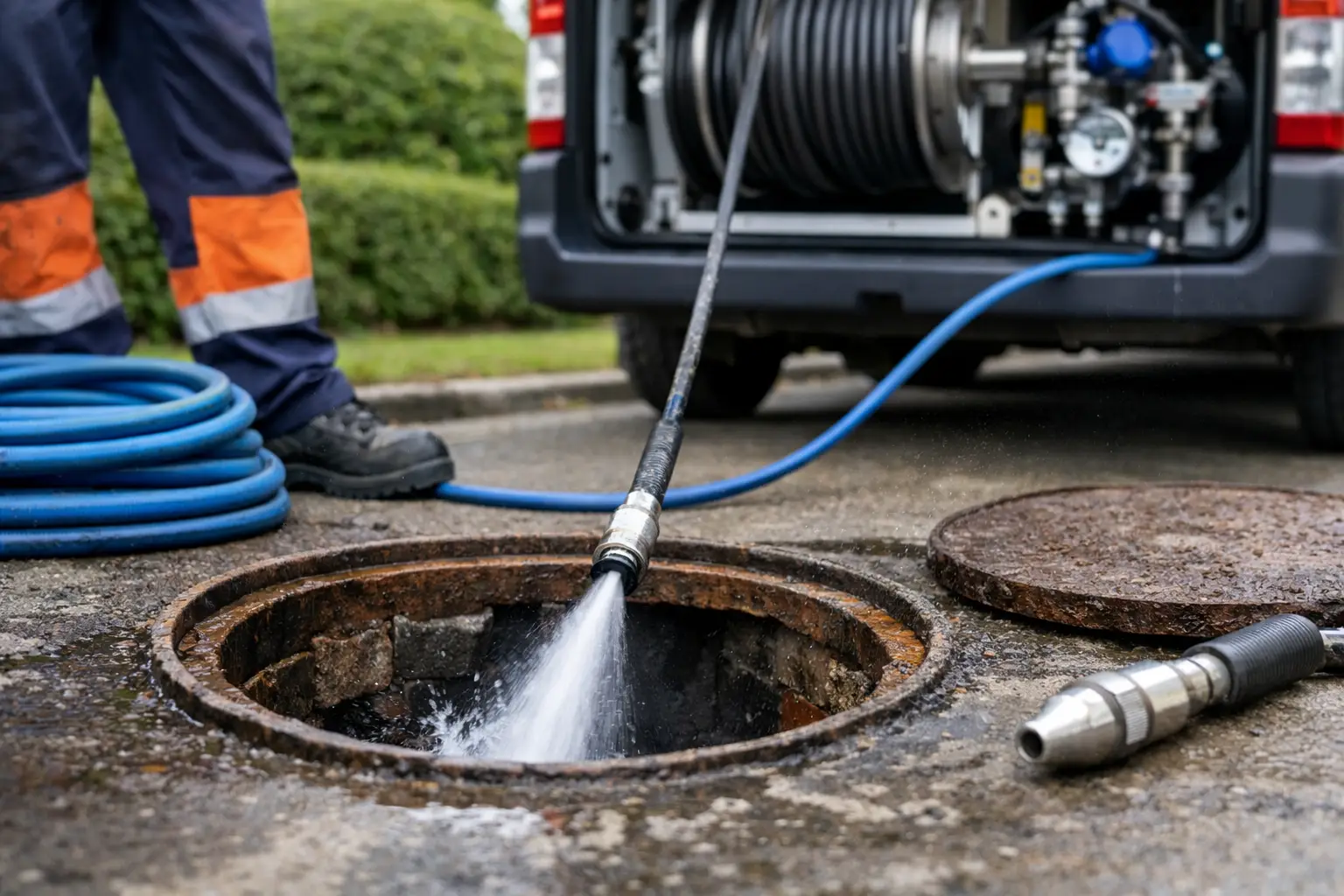
Drain jetting uses a specialist hose and nozzle connected to a high-pressure water jetting machine. The hose is fed into the drain, usually through an inspection chamber or access point. Water is then released at controlled pressure through rear-facing jets, which pull the hose through the pipe while breaking up and flushing debris back towards the chamber.
Unlike drain rods, which can make a hole through a blockage, jetting cleans much more of the pipe’s internal surface. That matters where a drain is narrowed by fat deposits, soap residue, scale, soil or compacted debris. It can also cut through lighter root growth and shift sediment that has settled in low sections of pipework.
The aim is not simply to get water moving again. Proper jetting should restore a clear flow path and remove the material likely to cause another blockage a few days or weeks later.
When high-pressure drain jetting is a good choice
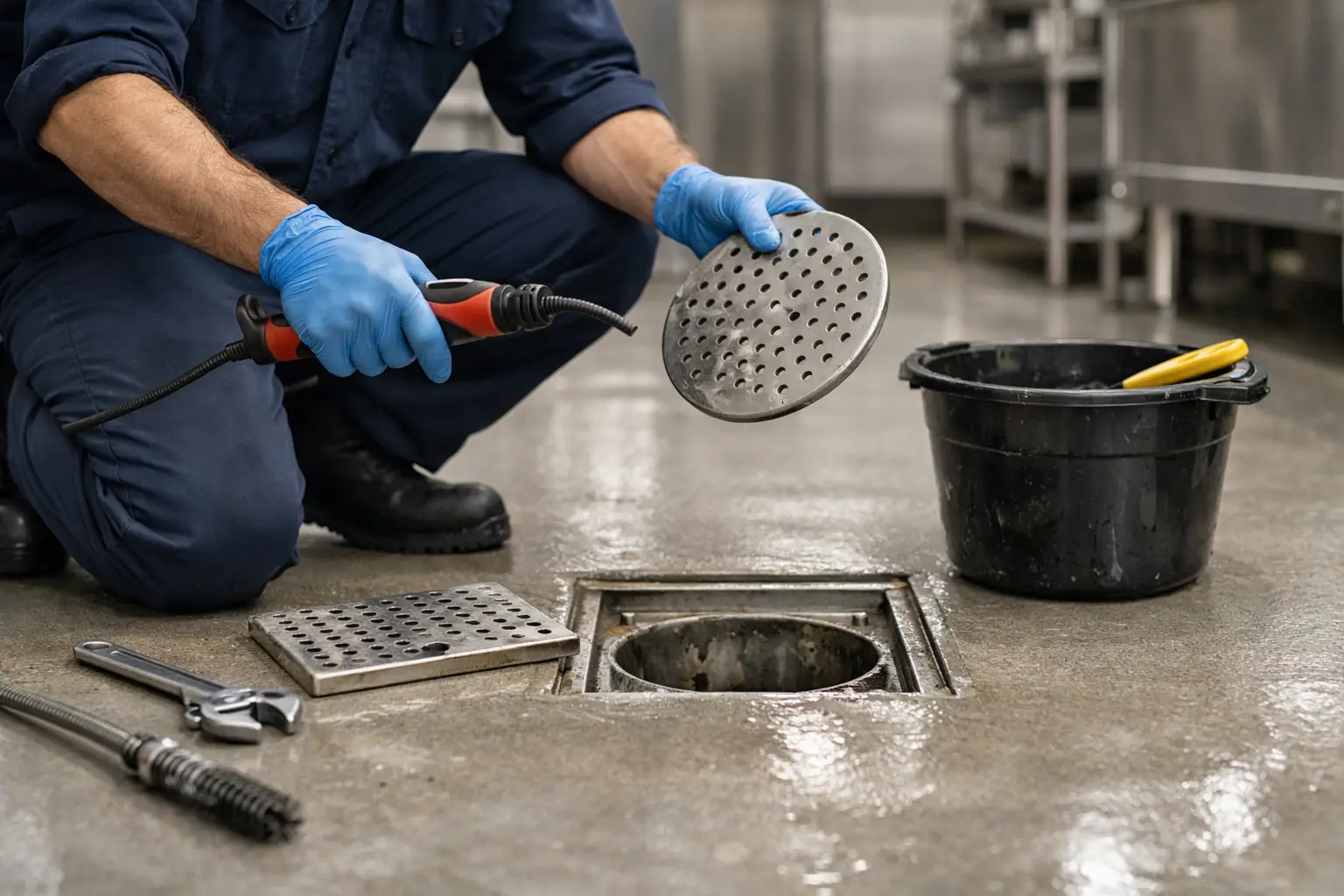
Jetting is commonly used for slow-running or blocked foul and surface-water drains. For homeowners, the signs may be a gully that overflows after washing machine use, unpleasant smells around an inspection chamber, toilets draining slowly or water backing up into a shower tray. Commercial premises may see recurring blockages in kitchen waste lines, yard gullies or shared drainage runs.
It is particularly useful when the same drain has blocked more than once. Repeated call-outs often suggest that the original obstruction was only disturbed, not fully removed, or that there is an underlying fault encouraging debris to build up.
Drain jetting is also useful as planned maintenance. Restaurants, care settings, landlords with shared properties and sites with heavy use can benefit from periodic cleaning before an emergency develops. The sensible frequency depends on the building, what enters the drains and the condition of the pipework. There is no value in selling a maintenance schedule that the site does not need.
What a professional jetting visit should involve
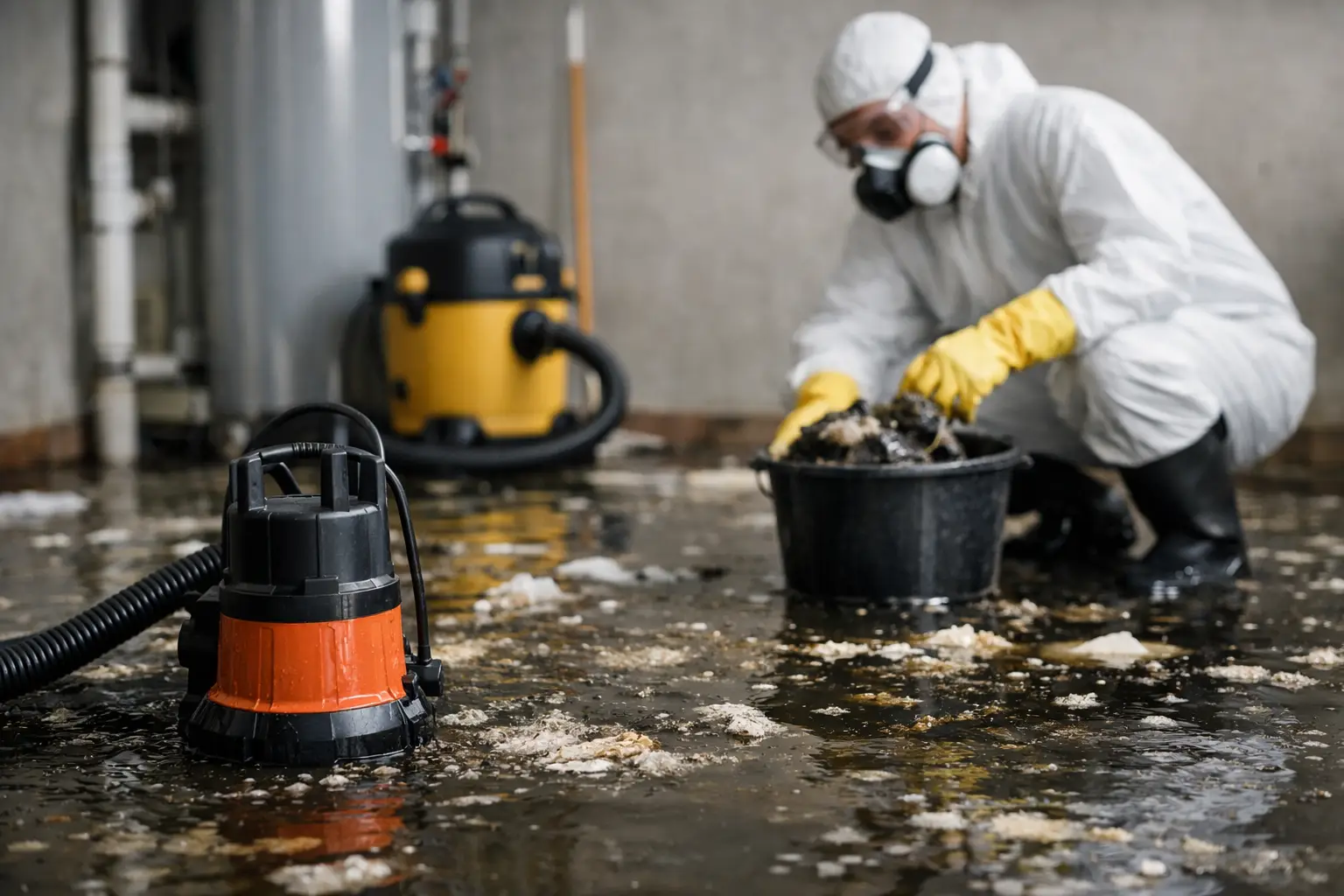
A reliable contractor starts by assessing the problem, not by automatically turning on the jetter. They should identify whether the affected line is foul water or surface water, find suitable access and ask what has happened so far. If sewage is backing up internally, the priority is to contain the problem safely and get the line flowing as quickly as possible.
The engineer will select a nozzle and working pressure suited to the blockage and pipe. Different nozzles are used for general cleaning, grease removal, root cutting and more stubborn obstructions. More pressure is not always better. Older clay pipes, poorly connected plastic sections or already damaged drains need a careful approach.
During the work, debris is brought back to the nearest chamber where possible and the flow is checked. A good job does not end with a quick glance at disappearing water. The engineer should make sure the line is running freely, explain what was removed and advise if there are signs of a defect.
For difficult or recurring cases, a CCTV drain survey after cleaning is often the sensible next step. Once the water and debris have been cleared, a camera can show whether there is a crack, displaced joint, root ingress, collapse or poor pipe gradient behind the blockage.
Why jetting is not always the complete fix
Drain jetting is highly effective, but it cannot repair broken pipework. If a drain has collapsed, has open joints or is holding water because it has settled, debris will keep collecting. Jetting may provide immediate relief, but it will not remove the cause.
Tree roots are a good example. A jetting nozzle can clear roots from inside the drain and restore flow, but roots entered through a gap in the first place. If the defect remains open, they can grow back. Depending on the pipe’s condition, the longer-term answer may be a local excavation or a no-dig repair such as CIPP drain relining.
Likewise, concrete, builders’ rubble and solid foreign objects may not move safely with water pressure alone. A camera inspection helps avoid guesswork and prevents repeated attempts that waste time and money.
Is drain jetting safe for your pipes?
In trained hands, drain jetting is safe for most serviceable drainage systems. Professional equipment allows the operative to control pressure, flow and nozzle choice rather than treating every pipe the same. The operator also needs to understand how the hose behaves in bends, junctions and damaged sections.
The risk comes from using unsuitable equipment, excessive pressure or attempting work without knowing the pipe condition. Consumer pressure washers and improvised drain attachments are not a substitute for professional jetting. They may lack sufficient cleaning power, can force dirty water back through an access point and can cause injury if the hose whips free. They also give no indication of whether the blockage is hiding structural damage.
If a property has older drains, a history of subsidence, large trees nearby or repeated drainage failures, inspection before or after jetting is a sensible safeguard. Diagnosis-led work costs less than paying for the same blockage to be cleared several times.
Common causes of drains that need jetting
The material found in a drain often points to the real problem. In domestic drains, fat, oil and food waste can cool and harden in kitchen pipes. So-called flushable wipes do not break down in the same way as toilet paper and can catch on joints or roots. Hair, soap residue and sanitary products also cause regular trouble.
Outside, leaves, moss, gravel and silt can fill gullies and surface-water pipes, particularly after heavy rain. Building work can introduce mortar, plaster, soil and rubble into drainage runs. At commercial sites, grease from food preparation and high volumes of paper products are frequent causes.
The practical prevention measures are simple: keep fats and food waste out of sinks, use bins rather than toilets for wipes and sanitary products, and clear leaves from gullies before they are washed into the pipe. These habits help, but they will not correct a damaged or badly laid drain.
Jetting, rodding or CCTV: which service do you need?
For a straightforward, accessible blockage, drain rods may be enough to restore flow. They are useful for certain local obstructions and can be the quickest first step. However, rodding does not clean the pipe walls thoroughly, so it is less reliable for grease, scale, silt and recurring blockages.
Jetting is normally the stronger option where the drain needs cleaning as well as unblocking. It is effective over longer runs and can deal with material that rods struggle to shift. The trade-off is that access, pipe condition and the nature of the blockage must be considered before work begins.
A CCTV survey is not a competing service. It is the diagnostic tool that answers why the drain blocked. It is especially worthwhile after repeated problems, before buying a property, after ground movement or where jetting reveals unusual resistance. West Midlands Drainage uses professional jetting and CCTV equipment to give customers a clear explanation rather than a temporary answer.
When to call for help
Call for professional drainage assistance promptly if sewage is backing up inside, an external chamber is overflowing, several fixtures are draining badly at once or the same drain keeps blocking. These can indicate a blockage in the main run rather than a simple local issue.
Avoid repeatedly flushing, pouring in harsh chemicals or forcing rods into a drain that will not clear. Caustic products can be dangerous, may damage fittings and rarely solve a substantial obstruction further down the line. If there is an inspection chamber, keep children and pets away from it and do not enter it under any circumstances.
A clear drain is useful. A clear drain with a known cause, sound pipework and an honest plan for any repair is what prevents the next emergency. If jetting gets things moving but the problem returns, treat that as a reason to investigate, not as bad luck.