A cracked drain under a driveway, patio or shop floor can turn into an expensive problem very quickly. When people start comparing drain relining vs excavation, what they usually want to know is simple – can this be fixed properly without digging everything up, and if not, why not?
The honest answer is that both methods have their place. Relining is often quicker, cleaner and less disruptive. Excavation is sometimes the only sensible choice when the pipe is too badly damaged, poorly laid or collapsed. The right option depends on the condition of the drain, the location of the damage and whether you want the shortest route to a repair or the best long-term answer for that specific pipe.
Drain relining vs excavation: the basic difference
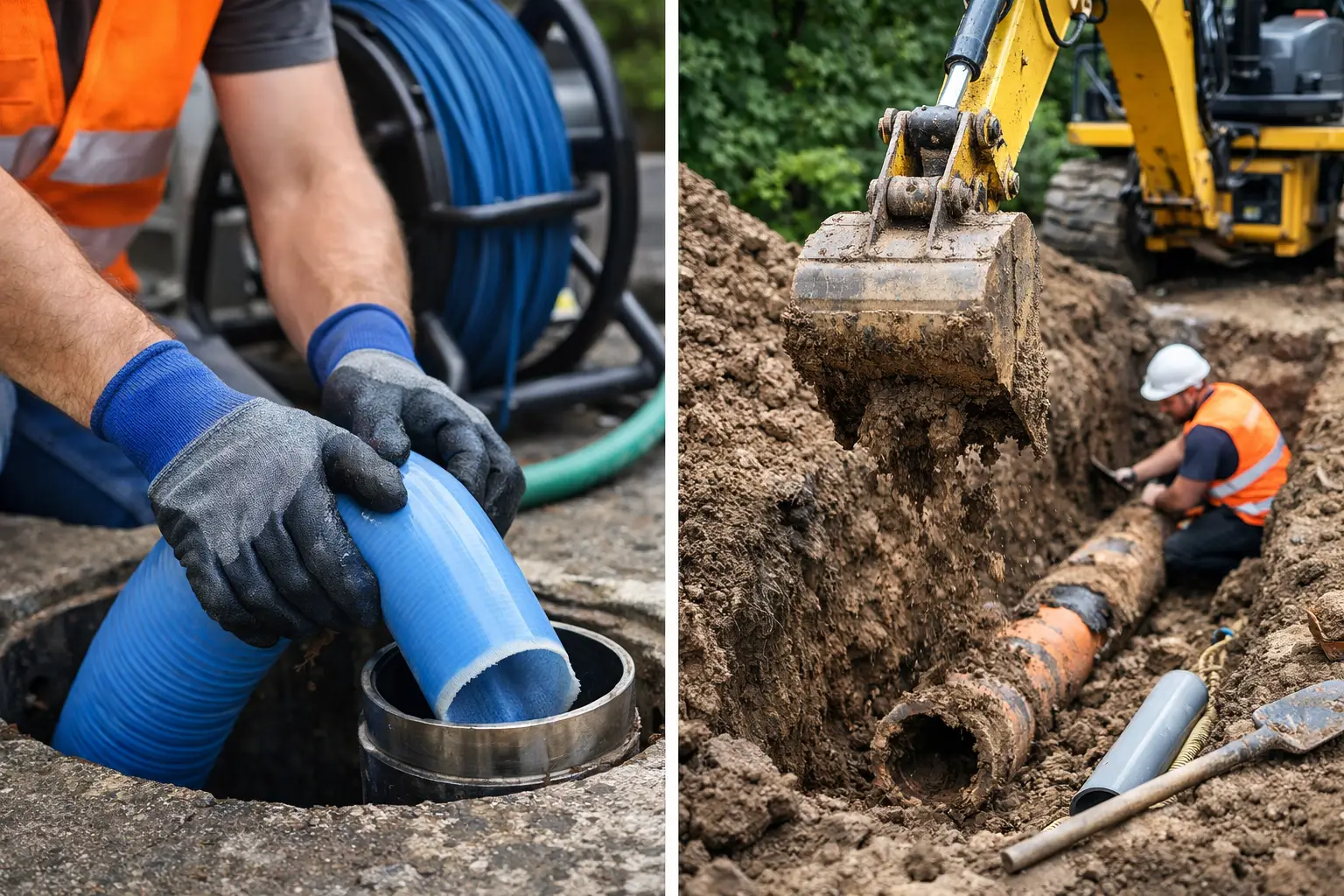
Drain relining is a no-dig repair. A resin-saturated liner is inserted into the damaged pipe and cured in place, creating a new inner pipe within the old one. It is commonly used for cracks, small fractures, root ingress and joints that have started to fail, provided the original pipe still has enough shape and structure to support the liner.
Excavation is exactly what it sounds like. The ground above the damaged section is opened up so the pipe can be accessed directly, removed if necessary, and replaced or rebuilt. This is more disruptive, but it allows a full repair where the original line is beyond saving or where there are wider issues with the pipe run.
A proper CCTV drain survey usually decides the question. Without that diagnosis, anyone recommending one method over the other is guessing.
When drain relining is the better option
If the pipe is still broadly intact, relining is often the most practical repair. It works well where there are localised cracks, minor displacement at joints, water escaping through defects, or roots entering through small openings. In many domestic and commercial settings, this avoids breaking out concrete, lifting paving or digging through landscaped areas.
That matters more than many customers first realise. The cost of a repair is not only about the drain itself. Once excavation starts, you may also be paying for reinstatement of tarmac, tiles, block paving, lawns or internal flooring. A no-dig repair can reduce that disruption considerably.
Relining is also attractive when speed matters. For landlords, businesses and homeowners dealing with an active issue, a repair that can be completed with minimal disturbance is often the difference between a manageable job and a major headache.
That said, relining is not a shortcut or a patch-up when carried out properly. Modern CIPP lining is designed as a durable structural repair, not a temporary fix. The key is whether the host pipe is suitable in the first place.
The main advantages of relining
The biggest advantage is reduced disruption. Gardens stay intact, driveways often remain untouched, and occupied buildings can usually carry on with far less mess. It can also be cost-effective once you factor in the avoided excavation and reinstatement work.
There is another benefit people often overlook. Because the pipe is repaired internally, access can often be gained through existing manholes or rodding points. That can make a difficult repair possible in places where digging would be awkward, expensive or highly disruptive.
When excavation is the right call
No-dig methods are useful, but they are not magic. If a pipe has fully collapsed, has severe deformation, has major sections missing, or has been badly installed to begin with, relining may not solve the real problem. In those cases, excavation is usually the correct route.
Excavation also makes sense where the drain has a belly or backfall – in other words, where water is sitting in the line because the pipe has dropped or the gradient is wrong. A liner cannot correct poor levels. It follows the existing shape of the pipe. If the line needs regrading or sections need replacing completely, the ground has to be opened and the drain rebuilt properly.
This is also true where there is extensive damage across multiple sections, repeated ground movement or issues at connections that need full access. Sometimes the most honest advice is that digging is the only way to put it right first time.
Why excavation still matters
Excavation gives full visibility and full access. That means damaged clay, pitch fibre or plastic sections can be removed entirely, junctions can be rebuilt, bedding can be corrected and the line can be reinstated to the right fall.
It is more invasive, but it allows for a complete reset where patching the inside of an already failed pipe would be false economy. A good contractor should tell you that plainly rather than trying to force a no-dig solution onto a drain that is not a suitable candidate.
Cost is not just the repair price
People often assume relining is always cheaper. Very often, it is. But not in every case.
If the damaged area is short, shallow and easy to access, excavation may be straightforward and competitively priced. If the defect is in a simple section of pipe with no expensive surface reinstatement, digging and replacing that section can be the sensible financial choice.
On the other hand, if the damaged drain runs beneath an extension, ornamental paving, a finished driveway or a busy commercial area, the true cost of excavation rises quickly. Labour, machinery, waste removal and reinstatement all add up. In those situations, relining can offer much better value.
This is why transparent pricing matters. A proper quote should reflect the actual repair and the full consequences of access, not just the pipework itself.
Lifespan and long-term performance
A fair comparison of drain relining vs excavation has to look beyond the day of the repair. You want a solution that lasts.
A professionally installed liner can provide a long service life and performs very well for many common drain defects. It seals cracks, prevents root ingress through repaired sections and restores the internal surface of the pipe. For many properties, that is a durable answer.
Excavation, however, can be the stronger option where the entire section is failing, where pipe material has deteriorated significantly, or where installation defects are part of the problem. Replacing the drain with new pipework may offer better long-term value if the original run is fundamentally unsound.
In simple terms, relining is excellent when the existing pipe still gives you something solid to work with. Excavation is better when the drain needs more than internal rehabilitation.
The role of CCTV surveys in choosing properly
No one should be deciding between these two methods from surface symptoms alone. Slow drainage, bad smells, recurrent blockages or a damp patch in the garden can all point to drain damage, but they do not tell you what kind of damage you are dealing with.
A CCTV drain survey shows whether the pipe is cracked, displaced, root-damaged, collapsed or suffering from poor alignment. It also helps identify access points, pipe material, depth and whether a local repair is enough or a replacement is more sensible.
This diagnosis-led approach is especially important for buyers, landlords and commercial property managers. You need evidence before agreeing to work. It protects you from paying for unnecessary excavation, and it also protects you from being sold relining where the drain really needs replacing.
Which option causes less disruption?
In most cases, relining wins easily on disruption. There is usually less noise, less mess and less impact on the property. That can be a major factor for occupied homes, tenanted properties, retail units, offices and sites with limited access.
Excavation brings more disturbance almost by definition. Surfaces may need to be broken out, spoil removed and areas made good afterwards. That does not make it the wrong choice. It just means the case for excavation needs to be clear and justified by the condition of the drain.
For many customers across the West Midlands, the balance comes down to this – if a no-dig repair will solve the problem properly, it is often the better route. If it will only disguise a bigger failure, excavation is the better investment.
The honest answer: it depends on the pipe
There is no blanket winner in drain relining vs excavation. Relining is not automatically better because it is less disruptive, and excavation is not automatically better because it involves full replacement. The right repair is the one that matches the actual defect.
A dependable drainage contractor should explain what the camera shows, why one method is suitable and where the limits are. If the pipe can be structurally relined and that gives you a durable repair with less disruption, that is a strong result. If the line is collapsed, misshapen or incorrectly laid, digging it out may be the only way to avoid repeated problems.
At West Midlands Drainage, that is how these decisions should be made – by diagnosis first, clear advice second and repair work that deals with the cause, not just the symptom.
If you are weighing up repair options, the best next step is not to guess. Get the drain inspected properly, understand what condition it is really in, and choose the method that fixes it once rather than bringing you back to the same problem six months later.