A blocked gully outside usually makes itself known at the worst time – heavy rain, overflowing water near the wall, or a smell that should not be there. If you are searching for how to clear outside drain problems, the first thing to know is this: some blockages are straightforward, and some are a sign of a bigger fault further down the line.
That matters because the right first step can save you time, mess, and a wasted call-out. The wrong one can push debris deeper into the system, leave standing water against the property, or mask cracked pipework that needs proper repair. A sensible approach is always to start with what you can see, work safely, and stop when it is clear the blockage is not just surface-level.
How to clear outside drain without making it worse
Most outside drains block because leaves, silt, moss, grease, food waste, or general debris have built up in the gully pot or just below the grid. In some properties, especially older homes or buildings with a lot of trees nearby, roots and collapsed pipe sections can also be part of the problem.
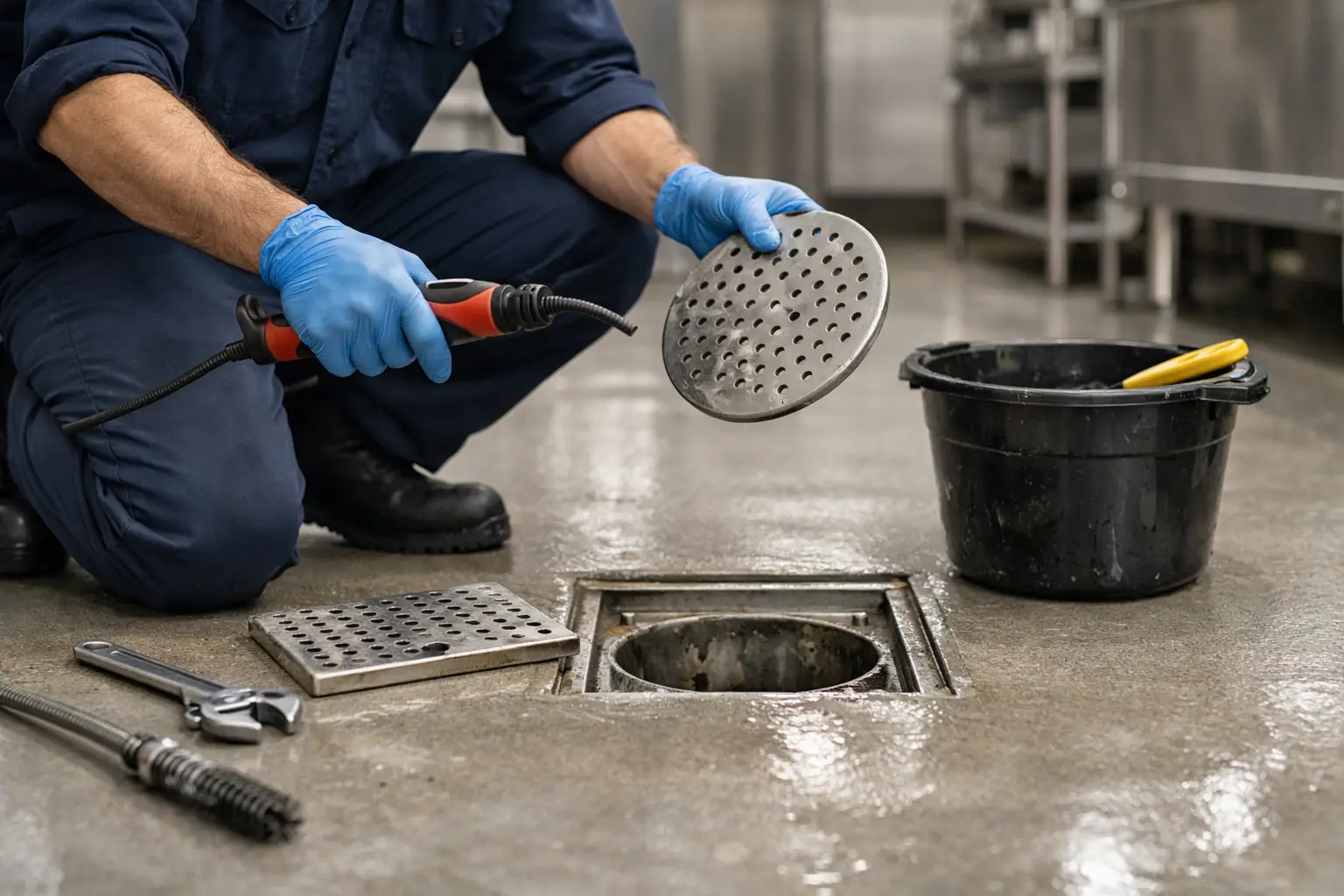
Before you do anything, put on gloves and old clothes or waterproofs. If there is standing water, take care around slippery paving. If the cover is heavy or awkward, do not force it. Some covers lift easily with basic tools, but deeper manhole covers may need proper lifting keys and safe handling.
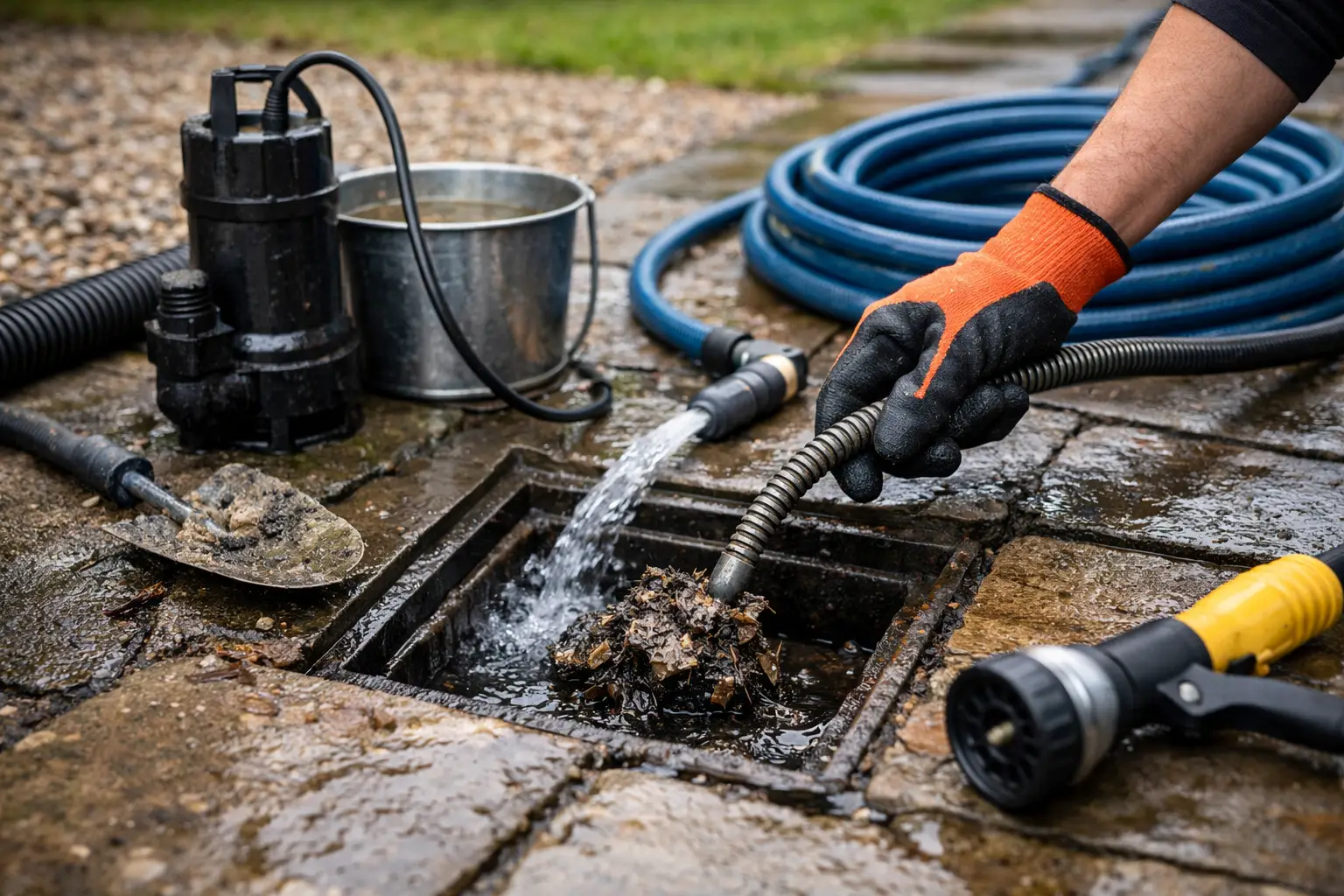
Start by removing surface debris from the drain cover. Leaves and mud often form a mat over the top, and clearing that alone can sometimes let trapped rainwater run away. If water is still sitting there, lift the grid or cover if it is safe to do so and check the gully underneath.
In many cases you will find a build-up of sludge, leaves, or waste near the top. Scoop this out carefully with a small shovel, trowel, or drain scoop and place it in a bucket. Do not wash it further into the drain. Once the loose debris is removed, pour a bucket of water down to see whether it flows away normally.
If the water drains slowly, try flushing with more water from a hose. A steady hose flow can shift minor soft blockages near the top of the run. What you should not do is keep blasting away if the water level rises quickly. That usually means the blockage is further down, and forcing more water in will only bring it back towards the surface.
What you can try yourself
If the blockage is still not clearing, a drain rod can help, but only if used properly. Feed the rods in gently and keep turning them clockwise as you work. That reduces the chance of the rods unscrewing underground. The aim is to break up or pull back the obstruction, not ram it forward aggressively.
This is where DIY can go wrong. If the drain run has bends, old pipework, or a solid obstruction, rods can get stuck or make little difference. It also depends on what is causing the problem. Soft silt and leaves are very different from fat deposits, roots, or a partially collapsed pipe.
You may also hear advice about using boiling water or shop-bought drain chemicals. For outside drains, these are rarely the best answer. Boiling water may help with light grease, but it will do very little for silt, leaves, roots, or structural defects. Chemical cleaners can be unpleasant to handle and may not even reach the blockage properly in an outdoor system filled with standing water. If they fail, you are then dealing with a blocked drain full of chemicals, which is not ideal for anyone trying to fix it afterwards.
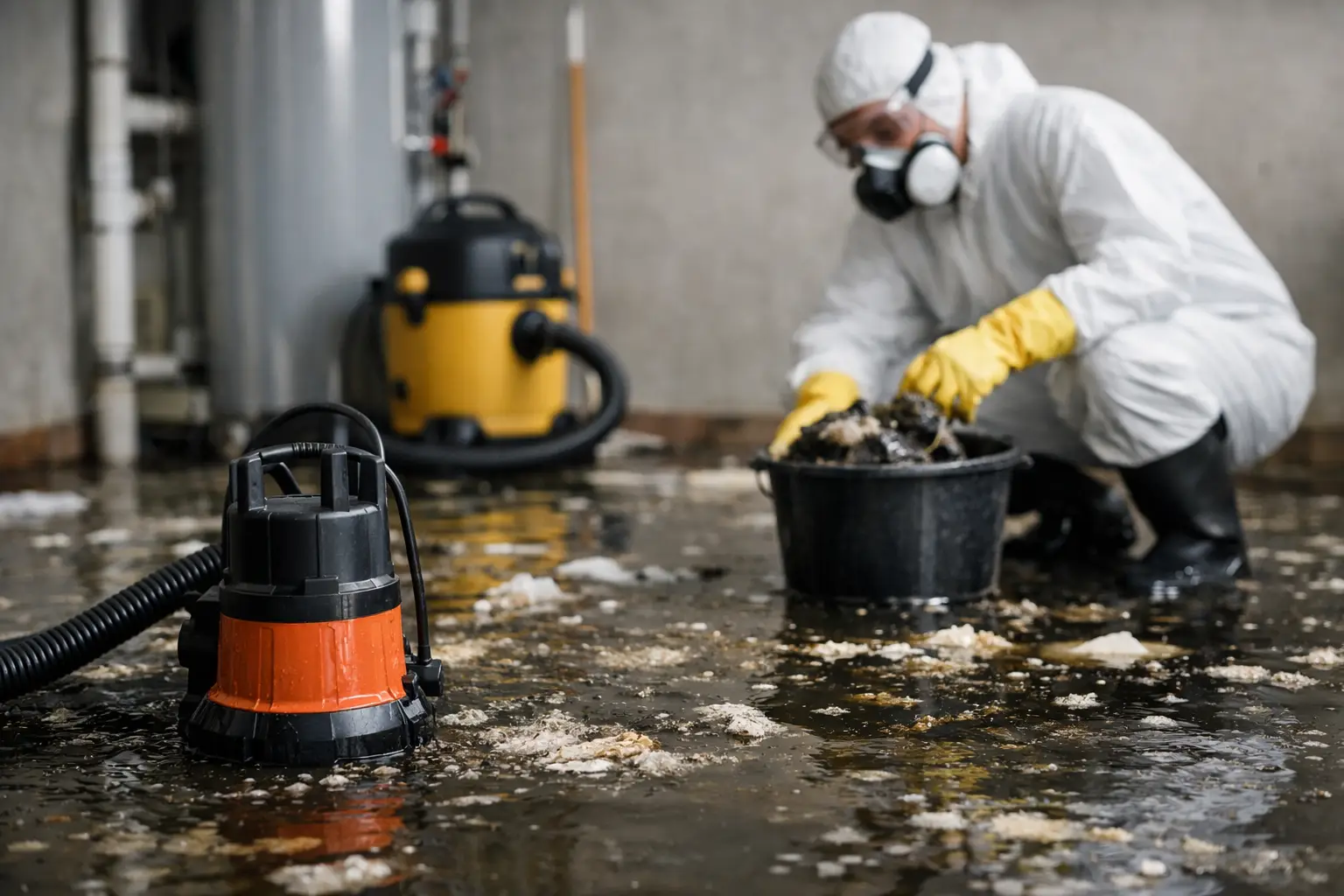
A wet and dry vacuum can sometimes remove shallow standing water and loose debris from a gully, particularly on patios or near kitchen waste outlets. It can be useful for clearing the top section, but again, it will not solve a blockage further along the line.
Signs the blockage is deeper than the gully
An outside drain is often just the point where the problem becomes visible. The actual blockage may be several metres away in the pipework. If you notice more than one fixture backing up, the issue is unlikely to be isolated to a single gully.
Watch for water coming back up elsewhere, toilets bubbling when sinks empty, repeated blockages after clearing the top, or foul smells that do not go away. Slow drainage across the property can also point to a downstream restriction. In commercial settings, gullies blocked with silt and waste may indicate poor maintenance, but recurring issues can just as easily point to damaged pipework.
If a drain keeps blocking, there is usually a reason. It could be a belly in the pipe holding waste, root ingress through joints, scale build-up, or cracked sections catching debris. Clearing the symptoms without finding the cause is why some people end up paying for the same problem again and again.
When to stop DIY and call a drainage specialist
There is no prize for spending half a day battling a blockage that needs professional equipment. If the drain is backing up into the property, overflowing near the building, affecting toilets or internal waste pipes, or returning after basic clearing, it is time to get it looked at properly.
A specialist can do more than just force the water through. High-pressure water jetting is far more effective than a garden hose for breaking up stubborn deposits and cleaning the pipe wall properly. That matters because a line that is only partly cleared will often block again quickly.
If the problem appears structural, a CCTV drain survey is usually the next sensible step. It shows what is happening inside the pipe rather than guessing from the surface. That means roots, fractures, displaced joints, scale build-up, and collapsed sections can be identified accurately. From there, you can decide whether the right fix is jetting, root cutting, repair, or no-dig relining.
That diagnosis-led approach is usually the difference between a short-term clear and a durable repair. It is also how you avoid paying for unnecessary work.
Safety points that are easy to overlook
Outside drains are unpleasant, but they can also be unsafe. Waste water may carry bacteria, and drain covers can be heavier than they look. If the blocked chamber is deep, avoid leaning in or attempting anything that puts you off balance.
Be especially cautious with older covers, broken paving, and shared drainage where the issue may involve a larger run serving several properties. If sewage is present rather than rainwater, treat it as a health risk. Keep children and pets away and clean any affected surfaces thoroughly afterwards.
Never mix cleaning chemicals or add more products to a drain that is already blocked. Aside from damaging pipework in some cases, it creates a hazard for whoever has to clear it next.
Preventing the next outside drain blockage
Prevention is not glamorous, but it is cheaper than repeated emergency visits. Keep drain covers free from leaves and soil, especially in autumn and after storms. If you have a kitchen waste line feeding into an outside gully, avoid washing fats, oils, and food scraps down the sink. Once they cool and combine with debris, they create the sort of blockage that sits stubbornly in the line.
If trees or large shrubs are close to the drain run, recurring issues are worth investigating rather than ignoring. Roots do not usually go where there is no weakness, so root ingress often tells you there is already a fault in the pipe. Landlords and commercial property operators can save themselves plenty of disruption by arranging planned maintenance where blockages are common.
For buyers and homeowners dealing with repeat problems, it can also be worth checking whether the drainage layout is doing the property any favours. Poor falls, old connections, and patched repairs from years ago can all contribute.
The practical answer to how to clear outside drain problems
If the blockage is visible and shallow, remove the debris, flush it through carefully, and test the flow. If that works and the drain runs normally afterwards, you may have solved it. If the water still sits there, returns quickly, or affects more than one part of the property, the problem is probably beyond a simple DIY clear.
That is where proper drainage equipment and a clear diagnosis matter. At West Midlands Drainage, the focus is always on finding the cause, not just shifting the mess and hoping for the best. For householders, landlords, and local businesses, that usually means less repeat disruption and a fix that lasts.
If your outside drain has blocked once, deal with it early. If it keeps happening, trust what the pattern is telling you.